
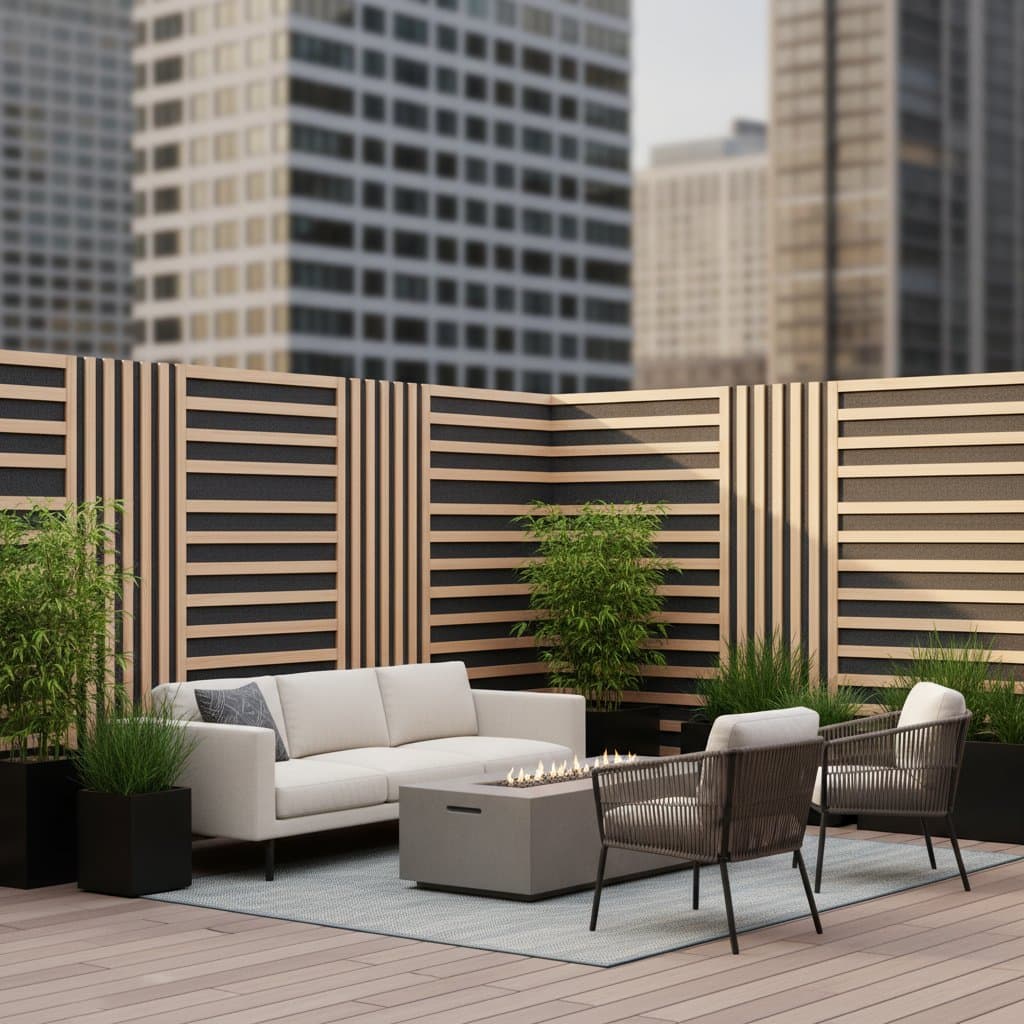
How Acoustic Panels Quiet City Decks
City decks offer fresh air and views, yet traffic, conversations, and hard surfaces often create distracting echoes. Acoustic panels address this by absorbing sound waves that would otherwise bounce back into the space. The result is a calmer area where normal conversation feels natural and privacy improves.
These panels serve dual purposes on decks. They reduce reflected noise while acting as visual screens that separate your area from neighbors or streets. Proper selection and placement deliver measurable improvements without enclosing the space completely.
What Acoustic Panels Achieve Outdoors
Acoustic panels trap sound in porous layers of foam, mineral wool, or perforated wood. Hard deck surfaces reflect sound, but these materials convert sound energy into small amounts of heat. On a typical city deck this approach lowers reflected noise by up to half.
Users notice several practical changes after installation. Conversations become easier to follow. Music or calls sound clearer. The deck feels more contained even when neighboring buildings remain visible.
Required Tools and Materials
Ready-made exterior panels save time, while custom builds allow exact sizing. Gather these items before beginning work:
- Acoustic panels sized for your railings or walls
- Stainless steel brackets or U-channel frames
- Weather-resistant screws and masonry anchors
- Measuring tape, level, and cordless drill
- Exterior-grade sealant and caulk gun
- Safety glasses and gloves
Custom builds also require pressure-treated wood strips, outdoor fabric, and two-inch acoustic insulation batts. Plan two hours for a short section or a full day for an entire perimeter.
Installation Process
Follow these steps in order for stable results.
- Measure the deck edges that face the loudest sources such as traffic or adjacent balconies.
- Choose a panel height between four and six feet to balance noise control with airflow and views.
- Mark straight mounting lines on posts or walls using a level.
- Pre-drill holes slightly smaller than the screws to avoid splitting.
- Secure brackets with weather-resistant hardware and verify alignment.
- Position panels into the brackets and fasten without over-tightening.
- Apply sealant along edges that meet walls to block moisture and vibration.
- Test the space by clapping once and listening for a softer, warmer echo.
Install only on dry days. Keep children and pets away from tools. Use only materials rated for outdoor exposure.
Common Issues and Solutions
Loose screws often cause buzzing or rattling. Tighten all connections and add rubber washers where metal touches metal. Water that pools at the base can be prevented by adding small drainage holes or lifting panels on spacers.
Mildew appears on fabric surfaces after prolonged dampness. Clean affected areas with mild soap and water, then allow full drying. Persistent noise after initial setup usually improves with a second layer of insulation or a row of dense planters placed in front of the panels.
Cost Considerations
Pre-made exterior panels range from forty to eighty dollars each. Building your own halves that expense. A twelve-foot section typically totals between two hundred and four hundred dollars including hardware. Contractor labor adds one hundred fifty to three hundred dollars for larger jobs.
Low-cost options include recycled wood for frames and leftover outdoor fabric for covers. Hanging planters filled with foliage provide extra absorption at minimal added cost. Never reduce quality on mounting hardware, because vibration from loose brackets undermines noise control.
Ongoing Care
Inspect panels twice each year. Brush away loose dust every few weeks. Wash surfaces with mild soap once per season and check fasteners for rust or movement. Reapply sealant wherever gaps appear. Store panels upright in a dry location during extended winter periods and label sections for easy reinstallation.
When Professional Help Makes Sense
Contact a soundproofing contractor or carpenter when decks attach to shared structural walls or when panels must integrate with lighting and seating. Local height limits may also require professional verification. A contractor can measure sound levels before and after work to confirm performance gains.
Start Small for Immediate Results
Measure the loudest side of your deck first. Install two or three test panels and listen for the difference. This focused approach delivers noticeable quiet within a single weekend while keeping the project manageable.