
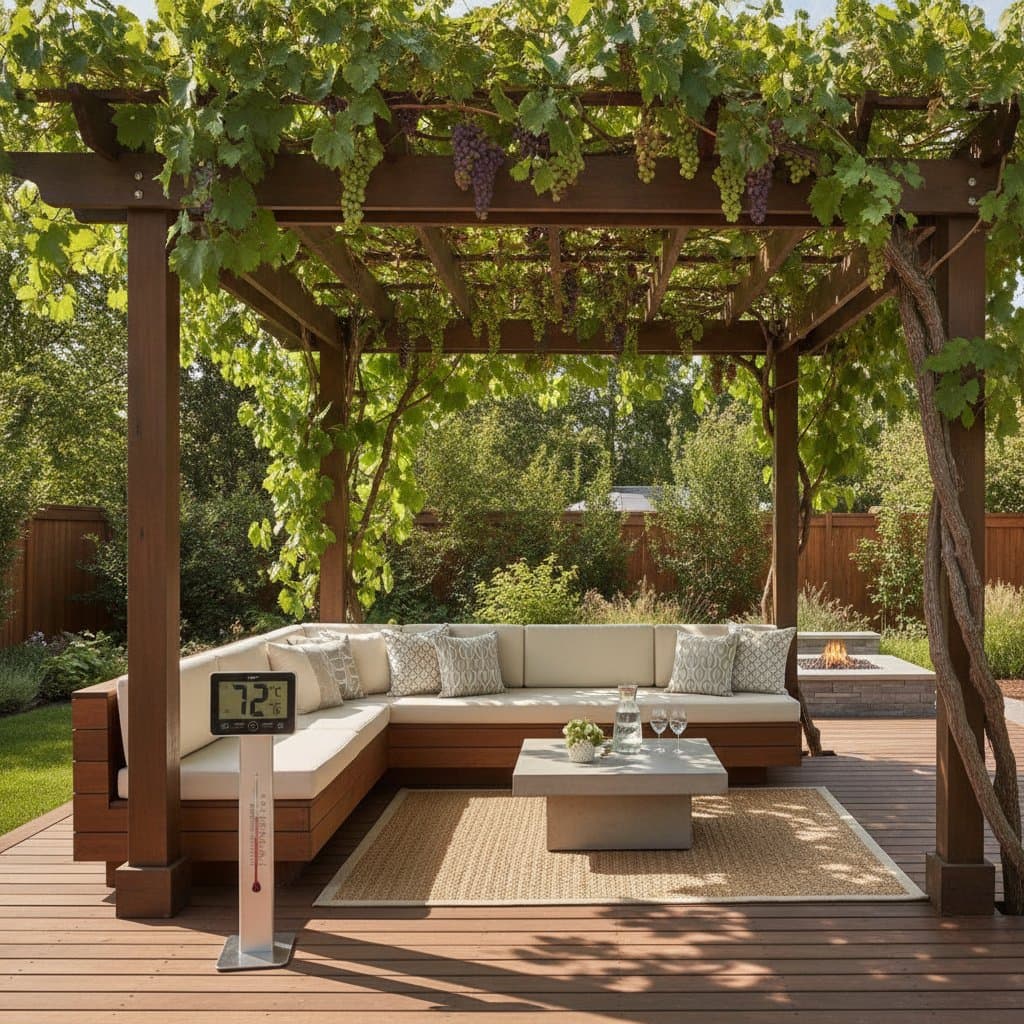
How Grapevines Create Natural Deck Cooling
Grapevines trained across a pergola produce dense foliage that blocks direct sunlight. This shade layer reduces surface temperatures on deck boards by as much as 15 degrees Fahrenheit compared with exposed areas. The effect appears once the canopy reaches full coverage, typically in the second or third growing season.
Air movement beneath the vines carries heat away and keeps the space comfortable during peak summer hours. The same structure also supplies seasonal privacy and a modest harvest of fresh fruit.
Choosing Suitable Varieties and Site Conditions
Select cold-hardy, disease-resistant cultivars such as Concord, Reliance, or Canadice for most northern climates. These varieties produce reliable fruit while tolerating the pruning required to maintain an overhead canopy.
Locate the planting area where vines receive at least six hours of direct sun each day. Prepare a planting hole twice the width of the root ball and amend the soil with compost to improve drainage and nutrient retention.
Planting and Initial Support
Set bare-root or container-grown vines in early spring after the last frost. Space plants four to six feet apart along the pergola posts. Drive a sturdy stake beside each vine and tie the main stem loosely with soft twine.
Install horizontal wires or wooden cross members at eight-foot intervals overhead. These supports guide the vines as they lengthen and prevent sagging once leaves expand.
Training for Even Canopy Coverage
During the first summer, allow two or three strong shoots to develop from the main trunk. Pinch off side shoots that grow toward the ground or crowd one another. In late winter of the second year, prune back to the strongest canes and tie them along the overhead supports.
Continue this pattern each dormant season. Limit pruning to the removal of dead wood and excess growth so the leaf layer remains thick enough to provide shade yet open enough for air circulation.
Watering, Mulching, and Seasonal Care
Apply one inch of water at the base of each vine once weekly during dry periods. Spread a three-inch layer of organic mulch in a two-foot radius around the trunk each spring to conserve moisture and suppress weeds.
Inspect twine ties every few months and replace any that have stretched or frayed. This prevents girdling and keeps the canopy weight distributed evenly across the pergola frame.
Addressing Growth and Fruiting Problems
Sparse foliage usually indicates insufficient sunlight. Relocate new plantings or thin nearby trees to restore six hours of direct exposure.
Wilting between waterings points to shallow irrigation. Soak the root zone thoroughly, then allow the top inch of soil to dry before the next application.
Absence of fruit often results from excessive nitrogen or overly severe pruning. Reduce fertilizer applications and retain only two or three healthy canes per vine each season.
Long-Term Advantages for Outdoor Spaces
A well-managed grapevine pergola delivers consistent shade, extends the life of deck materials, and supplies edible fruit without ongoing energy costs. With annual pruning and steady watering, the planting continues to perform for fifteen years or longer.