Loading...

Skip to main content
Urban Outdoors
Search
Home
  1. Home
  2. /
  3. Deck Construction & Remodeling
  4. /
  5. Mushroom Roots Are Replacing Wood Decks
Deck Construction & Remodeling

Mushroom Roots Are Replacing Wood Decks

byAnne Marion
2025-12-09 03:49:09December 9, 2025
6 min read
Featured image for Mushroom Roots Are Replacing Wood Decks

Categories

Navigation

  • Home
  • All Articles
  • About Us
  • Privacy Policy
  • Terms of Service

© 2026 Urban Outdoors. Crafted for bold city dwellers.

2025-12-10 03:36:12
Urban Outdoors - Small-Space Gardens, Rooftop Decks, Balconies, Decks, Backyard Design

Mycelium Decking: A Sustainable Alternative to Traditional Wood

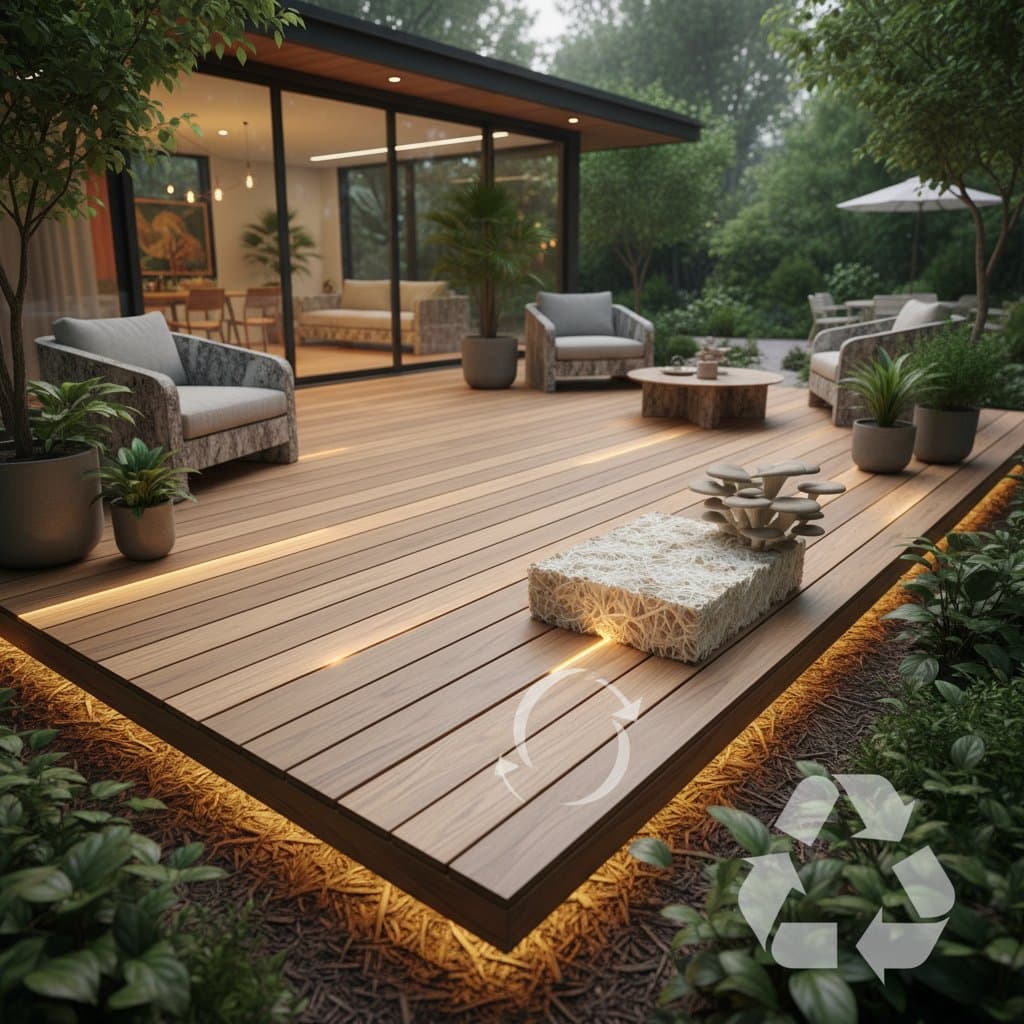
A backyard deck expands the living space of a home. It serves as an ideal location for morning coffee, weekend gatherings, or quiet evenings with a book. Traditional decks often use lumber or plastic composites that degrade quickly and contribute to environmental waste. Mycelium offers a promising solution. Derived from the root-like structure of mushrooms, this material grows into strong panels that mimic the appearance and feel of wood while decomposing naturally at the end of its useful life.

This guide details mycelium decking, its production process, installation methods, and maintenance requirements. Readers gain practical insights to evaluate this innovative option for their outdoor projects.

Understanding Mycelium Decking

Mycelium consists of a vast network of thread-like filaments that form the underground portion of fungi. In decking applications, these filaments bind with organic substrates such as hemp hurds, sawdust, or straw. The mixture grows in controlled environments, forming a solid, lightweight composite. Once matured, the material undergoes pressing and drying to create rigid boards suitable for outdoor use.

The primary advantages include resistance to rot and insects without synthetic preservatives. Mycelium boards remain cooler in direct sunlight compared to dark composites, enhancing comfort during summer months. Production requires minimal energy, and the end product supports a circular economy by utilizing agricultural byproducts. Homeowners achieve a lower carbon footprint while enjoying a surface that integrates seamlessly with natural landscapes.

Required Tools and Materials

For installing a modest mycelium deck section, assemble the following items:

  • Mycelium deck boards: Pre-manufactured panels measuring 1 to 1.5 inches (2.5 to 3.8 cm) in thickness, available in lengths up to 12 feet (3.7 meters)
  • Structural supports: Pressure-treated lumber joists or extruded aluminum framing spaced for optimal airflow
  • Fasteners: Stainless steel deck screws, 2.5 inches (6.4 cm) long, with corrosion-resistant coatings
  • Power tools: Cordless drill equipped with appropriate bits for pilot holes and countersinking
  • Measuring instruments: Bubble level, retractable tape measure, and framing square for precise alignment
  • Finishing products: Natural tung oil or linseed oil for weatherproofing, applied with a soft cloth
  • Safety equipment: Nitrile gloves, safety goggles, and dust masks to handle materials and cuttings

Calculate hardware needs based on deck size. For every 10 square feet (0.9 square meters), allocate 8 to 10 screws. Source boards from suppliers specializing in bio-based composites to ensure quality and availability.

Installation Process

Follow these steps to construct a mycelium deck. Work on a dry day to minimize handling challenges.

1. Site Preparation

Remove vegetation and debris from the installation area. Verify soil drainage by observing water flow after a recent rain. Install a 2-inch (5 cm) layer of compacted gravel to elevate the structure and prevent water accumulation. Position joists at 16-inch (40 cm) centers, securing them to concrete footings or ground anchors. Inspect all framing for levelness and stability before proceeding. Handle lumber with gloves to protect against splinters.

2. Board Placement

Lay mycelium boards perpendicular to the joists, starting from one edge of the frame. Maintain a consistent 1/8-inch (0.3 cm) expansion gap between boards to accommodate natural movement and promote ventilation. Use shims or spacers for uniformity. Check alignment with a level across multiple boards, adjusting as necessary to avoid uneven surfaces.

3. Securing the Boards

Pre-drill pilot holes at each joist intersection to avoid splitting the mycelium. Insert screws at a slight angle for enhanced hold, driving them flush without dimpling the surface. Space fasteners 12 to 16 inches (30 to 40 cm) apart along each board. Clear the work area of tools and debris to maintain focus during this phase.

4. Surface Finishing

Brush or wipe on a single layer of natural oil finish to enhance water resistance. Focus on end grains and joints where moisture ingress poses the greatest risk. Allow 24 hours for curing in moderate temperatures above 50 degrees Fahrenheit (10 degrees Celsius). Perform this application in an open area to ensure proper ventilation.

5. Initial Inspection and Cleaning

Remove sawdust and loose particles with a soft broom. Test the deck with light foot traffic after finishing dries. Examine all connections following the first rainfall, retightening any loose screws and resealing minor gaps.

Essential Safety Considerations

Support heavy panels with both hands and a partner to prevent strain or drops. Ensure the installation surface remains dry to eliminate slip hazards. Store unused boards in a sheltered location away from direct moisture. Select finishes that allow the material to breathe, avoiding petroleum-based products that could compromise its natural properties.

These practices safeguard the installer and preserve the deck's integrity throughout its service life.

Common Issues and Solutions

Board Warping: Excessive moisture retention often causes distortion. Improve under-deck ventilation by adding cross-bracing or elevating joists. Remove and dry affected boards if warping occurs early.

Surface Mold: While mycelium repels most fungal growth, organic buildup invites issues. Treat with a solution of one part white vinegar to ten parts water, followed by a thorough rinse. Prevent recurrence through regular sweeping.

Fastener Loosening: Seasonal expansion may shift connections. Inspect annually and replace screws with ones 1/4 inch (0.6 cm) longer if needed. Apply a non-toxic adhesive sparingly for added security.

Minor Cracking: Humidity fluctuations lead to superficial fissures. Fill with a compatible bio-resin or reapply oil to stabilize the surface. Monitor for progression to deeper damage.

Cost Analysis and Timeline

Mycelium decking typically costs 10 to 15 dollars per square foot, encompassing materials and basic hardware. This exceeds basic pressure-treated wood initially but offsets through reduced upkeep and longer durability, often spanning 20 years or more. Professional installation for 100 square feet requires one full day with a two-person team, factoring in preparation and finishing.

Seek contractors familiar with sustainable materials. Request a physical sample to assess weight, texture, and edge finish prior to commitment.

Ongoing Maintenance Practices

Sweep the deck weekly to remove leaves and dirt. Use a garden hose with low pressure for seasonal cleaning, avoiding abrasive brushes. Annually, probe for soft areas and apply fresh oil as needed.

When decommissioning, break down the deck into compostable segments. Mycelium biodegrades rapidly in a home compost system, enriching soil without harmful residues.

Storage Recommendations for Materials

Place surplus boards on elevated pallets in a dry shed, ensuring space between stacks for air circulation. Shield from prolonged sun exposure to maintain structural integrity. Organize by dimensions with clear labels for easy retrieval during repairs.

Professional Assistance Indicators

Engage experts for elevated decks exceeding 2 feet (0.6 meters) in height or those attached to the home. Professionals address critical elements such as:

  • Substructure drainage to channel runoff effectively
  • Precise board spacing to optimize expansion
  • Selection of permeable sealants that preserve material breathability

Verify credentials in green building practices.

Implementing Mycelium in Your Project

Mycelium decking bridges innovation and practicality in outdoor design. Begin with a small-scale application, such as a pathway or seating area, to observe performance firsthand.

Advance your project by:

  1. Identifying regional producers who incorporate local waste streams for boards.
  2. Experimenting with climate-appropriate finishes for optimal protection.
  3. Documenting experiences to contribute to the growing knowledge base on bio-materials.

Such initiatives demonstrate the viability of eco-conscious choices that enhance living spaces without environmental compromise.

You Might Also Like

Solar Drip Systems Keep Deck Gardens Watered Automatically

Solar Pavers Convert Steps and Sunlight Into Power

Glass Deck Floors That Skylight the Space Below

Mycelium Boards Replace Wood in Sustainable Decking

Cut Deck Noise with Acoustic Privacy Screens

Tagged:

sustainable,materials,deck,mycelium,decking,building,mushroom,mushroom-building-materials,mycelium-decking,boards

Recent by Anne Marion

Image for Solar Drip Systems Keep Deck Gardens Watered Automatically

Solar Drip Systems Keep Deck Gardens Watered Automatically

Feb 2, 2026
Image for Watering 50+ Pots From a Single Faucet

Watering 50+ Pots From a Single Faucet

Feb 2, 2026
Image for Simple Drip Systems That Water While You Work

Simple Drip Systems That Water While You Work

Jan 31, 2026
Image for How Urban Gardens Cut City Noise by 70%

How Urban Gardens Cut City Noise by 70%

Jan 31, 2026
Image for Micro-Pergola Pods Bring Patio Comfort to Tiny Balconies

Micro-Pergola Pods Bring Patio Comfort to Tiny Balconies

Jan 29, 2026

sustainable

Image for Solar Pavers Convert Steps and Sunlight Into Power

Solar Pavers Convert Steps and Sunlight Into Power

Feb 2, 2026
Image for Permeable Pavers Stop Flooding and Raise Property Value

Permeable Pavers Stop Flooding and Raise Property Value

Jan 29, 2026
Image for Mycelium Decks Replace Wood With Living Fungi Material

Deck Construction & Remodeling

Solar Drip Systems Keep Deck Gardens Watered Automatically

Elevate your deck gardening with solar-powered drip irrigation for precise, hands-free watering. This guide covers final setup steps, safety measures, common fixes, cost breakdowns, and year-round care to foster healthy plants with minimal intervention.

Feb 2, 2026

Solar Pavers Convert Steps and Sunlight Into Power

Elevate your outdoor paths with solar pavers that generate electricity from sunlight and movement. This comprehensive resource outlines functionality, step-by-step setup, budgeting, troubleshooting, and ways to apply the power for lighting or devices—all while promoting green living.

Feb 2, 2026

Glass Deck Floors That Skylight the Space Below

Elevate your deck design with glass floor panels that function as skylights, flooding lower areas with natural light while delivering a sleek, contemporary look. This resource provides in-depth coverage of benefits, essential materials, step-by-step installation, safety protocols, maintenance routines, and guidance on when to hire experts—all to optimize your outdoor environment for light, style, and longevity.

Categories

Deck Construction & Remodeling(158)
Balcony Design(146)
Small-Space Gardens(63)
Rooftop Decks(50)
Backyard Design(18)

Mycelium Decks Replace Wood With Living Fungi Material

Jan 27, 2026
Image for Fungal Fibers That Replace Wood Decks and Compost Clean

Fungal Fibers That Replace Wood Decks and Compost Clean

Jan 24, 2026
Image for Solar Pavers Turn Your Deck Into a Power Source

Solar Pavers Turn Your Deck Into a Power Source

Jan 18, 2026
Feb 2, 2026

Mycelium Boards Replace Wood in Sustainable Decking

Mycelium decking redefines sustainable outdoor design with boards cultivated from fungal roots and agricultural waste. These lightweight, compostable planks match wood's strength while minimizing environmental impact. This guide covers planning, installation, and care for a resilient, green yard addition.

Feb 1, 2026

Cut Deck Noise with Acoustic Privacy Screens

Turn urban deck noise into peaceful quiet with acoustic privacy screens. Explore sound-blocking options, step-by-step installation, upkeep advice, and cost-effective choices for a more enjoyable outdoor space throughout the year.

Feb 1, 2026

Deck Benches That Turn Scraps Into Garden Soil

Convert your deck into an eco-friendly oasis with a composting bench that serves as both comfortable seating and efficient soil producer. This comprehensive guide details construction steps, material needs, troubleshooting, and seasonal care to minimize waste and maximize garden yields.

Jan 31, 2026

Permeable Pavers Stop Flooding and Raise Property Value

Permeable pavers convert waterlogged areas into resilient, environmentally friendly surfaces. Water infiltrates through paver joints and stone bases, minimizing runoff, safeguarding structures, and elevating aesthetic appeal. This comprehensive guide details installation processes, upkeep routines, and financial considerations to demonstrate how these pavers promote sustainability, property enhancement, and enduring outdoor usability.

Jan 29, 2026

Turn Your Deck into a Clean Energy Generator

Elevate your deck into a sustainable solar energy source with integrated pavers that merge aesthetics and efficiency. This guide covers sunlight evaluation, circuit planning, durable tile installation, performance upkeep, expense details, safety protocols, and professional consultation needs to create a self-powered outdoor retreat.

Jan 29, 2026

Solar Pavers Turn Sunlight Into Outdoor Power

Elevate your outdoor areas with solar pavers, robust tiles that capture sunlight to generate power for lighting, charging stations, and appliances. This guide covers their functionality, required materials, and detailed installation instructions to build an efficient, wire-free environment that blends practicality with aesthetic appeal.

Jan 28, 2026

Mycelium Decks Replace Wood With Living Fungi Material

Mycelium, the intricate root system of fungi, emerges as a groundbreaking material for decking. This renewable and biodegradable option provides the durability of wood with a fraction of the environmental impact. Readers will gain insights into installation, maintenance, and benefits to create an outdoor haven that aligns with sustainable living principles.

Jan 27, 2026

Deck Pods Turn Open Decks into Year-Round Rooms

Convert your deck into a protected, inviting extension of your home using modular deck pods. This comprehensive guide covers planning, assembly, and upkeep for these adaptable structures, including required tools, safety protocols, and enhancements to achieve a durable, stylish outdoor space that provides year-round utility.

Jan 26, 2026

Solar Shade Sails Generate Power While Cooling Your Deck

Elevate your deck with solar shade sails that offer respite from the sun while harnessing solar power for everyday use. These versatile structures blend comfort with eco-friendly energy generation. Explore practical steps for installation, upkeep, and optimization to create an inviting, self-sustaining outdoor haven.

Jan 26, 2026

Cool Your Deck 15° with Solar Shade Sails

Counter summer deck heat with solar shade sails capable of reducing temperatures by up to 15 degrees. These tensioned fabric panels effectively block UV rays, improve airflow, and install in just one day. Gain insights into required tools, essential safety measures, and maintenance strategies for extended outdoor enjoyment.

Jan 25, 2026

Why Permeable Decks Stay 20 Degrees Cooler

Permeable decks address intense summer heat by facilitating airflow and water passage, which dissipates trapped warmth and maintains surfaces up to 20 degrees cooler. Incorporating light-colored materials, strategic gaps, and evaporative cooling, these decks foster inviting, sustainable outdoor areas that require low maintenance and provide enduring relief from hot surfaces.

Jan 25, 2026

Solar Pergolas Cut City Heat While Powering Your Deck

Elevate your compact urban deck with a solar pergola that delivers shade, produces renewable energy, and enhances sustainability. This comprehensive guide includes planning strategies, material choices, step-by-step installation, safety protocols, and upkeep tips to achieve a cooler, cost-effective outdoor area while increasing home value on a practical budget.

Jan 24, 2026

Fungal Fibers That Replace Wood Decks and Compost Clean

Mycelium decks redefine urban outdoor spaces through sustainable, compostable panels derived from fungal networks. These lightweight, durable alternatives to wood or plastic utilize agricultural waste. Follow this guide to cultivate, process, install, and maintain them for environmentally conscious urban design.

Jan 24, 2026

Misting Systems Drop Deck Temps 20° Fast

Misting systems transform hot decks into inviting spaces by reducing temperatures up to 20 degrees. This guide details planning, installation, maintenance, and optimization strategies for safe, effective cooling throughout the season.

Jan 22, 2026

UV Shade Sails Drop Deck Temps 20 Degrees

Combat summer heat and safeguard your deck using UV shade sails. This comprehensive guide details selection, installation, and upkeep strategies that reduce surface temperatures, avert color fading, and prolong deck longevity. Explore required tools, safety measures, common issues, and professional insights to create a fashionable, protected outdoor haven.

Jan 22, 2026

Shade Sails That Follow the Sun All Day Long

Automatic sun-tracking shade sails adjust their position to follow the sun, providing consistent shade and comfort on decks and patios. This comprehensive guide explains the technology, step-by-step installation, essential safety measures, ongoing maintenance, associated costs, and strategies to maximize durability and efficiency in your outdoor environment.

Jan 21, 2026

AI Cameras That Water Plants and Deter Deck Pests

Elevate your urban deck into an automated oasis with AI cameras that identify pests, optimize irrigation, and reduce upkeep. These intelligent systems leverage computer vision to safeguard plants, promote efficient water use, and deliver seamless outdoor enjoyment via straightforward installation and reliable performance.

Jan 21, 2026
Mycelium Decking: Replace Wood Decks with Sustainable Mushroom Roots | urbanoutdoorsnyc.com | Urban Outdoors - Small-Space Gardens, Rooftop Decks, Balconies, Decks, Backyard Design