Loading...

Rainwater Harvesting Shade Sails: 70 Gallons Per Storm | urbanoutdoorsnyc.com | Urban Outdoors - Small-Space Gardens, Rooftop Decks, Balconies, Decks, Backyard Design
Skip to main content
Urban Outdoors
Search
Home
  1. Home
  2. /
  3. Deck Construction & Remodeling
  4. /
  5. Shade Sails That Collect 70 Gallons Per Storm
Deck Construction & Remodeling

Shade Sails That Collect 70 Gallons Per Storm

byAnne Marion
2026-01-20 03:27:05January 20, 2026
6 min read
Featured image for Shade Sails That Collect 70 Gallons Per Storm

Categories

Navigation

  • Home
  • All Articles
  • About Us
  • Privacy Policy
  • Terms of Service

© 2026 Urban Outdoors. Crafted for bold city dwellers.

2026-01-22 03:54:42
Urban Outdoors - Small-Space Gardens, Rooftop Decks, Balconies, Decks, Backyard Design

Innovative Shade Sails That Harvest Rainwater

Shade structures provide essential relief from intense sunlight on decks and patios. Traditional options often overlook water conservation opportunities. Rain-harvesting shade sails address this gap by combining protective cover with efficient rainwater collection.

These sails deliver shade during dry periods and direct stormwater into storage systems. Homeowners benefit from enhanced comfort, reduced environmental impact, and a reliable source of water for irrigation or cleaning tasks. This article details the mechanics of these sails, material selections, installation procedures, and seasonal maintenance practices. Readers will also learn optimization techniques for slope, drainage, and storage to maximize efficiency.

System Overview

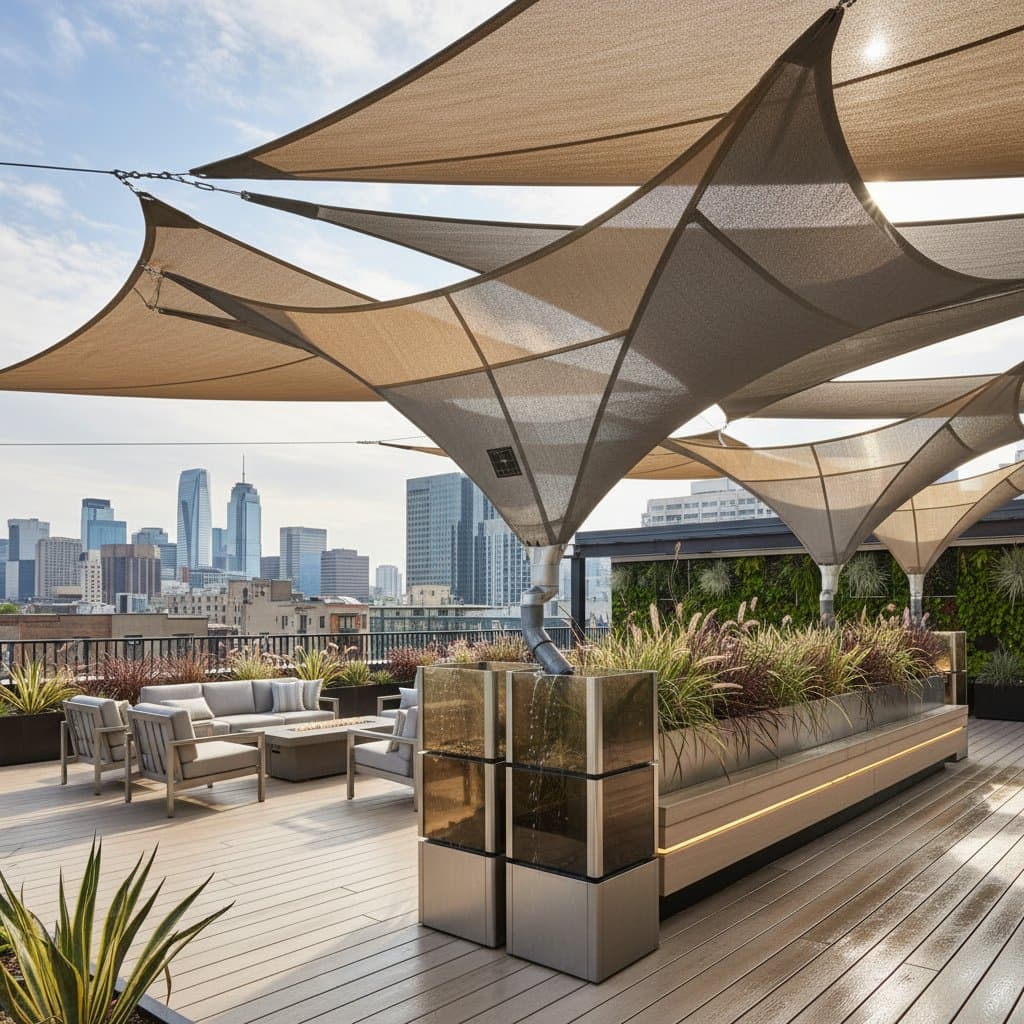
A shade sail consists of a tensioned fabric canopy anchored between fixed points to form a shaded zone. Advanced models incorporate waterproof coatings or integrated channels that funnel rainwater toward a designated edge. From there, the water routes through a downspout into barrels or cisterns for later use.

This integration serves dual purposes. It mitigates urban stormwater runoff, which helps prevent flooding and pollution. Additionally, it transforms a simple shade feature into a productive water resource. For instance, a 120-square-foot sail captures approximately 70 gallons during a one-inch rainfall event. That volume supports multiple garden watering sessions or surface cleaning applications.

Implementation requires minimal space, making it suitable for urban balconies, rooftop decks, or compact patios. These sails complement solar installations, drought-resistant landscaping, and other green home upgrades seamlessly.

Essential Tools and Materials

Assemble these components to construct or upgrade a rain-harvesting shade sail:

  • Shade sail fabric featuring a waterproof or channeling layer
    Preferred options: High-density polyethylene or polyester with UV-resistant coatings
    Recommended size: 100 to 200 square feet, scaled to the shaded area

  • Mounting hardware comprising turnbuckles, pad eyes, snap hooks, and stainless steel eye bolts

  • Support posts or wall anchors made from galvanized steel or pressure-treated wood
    Suggested height: 8 to 10 feet for typical deck installations

  • Downspout connector and tubing with 1- to 2-inch diameter (2.5 to 5 cm)
    Function: Channels water from the sail to storage

  • Rain barrel or storage tank holding 50 to 100 gallons for modest setups

  • Sealant and waterproof tape applied at seams and connections to eliminate leaks

  • Basic tools including a drill, wrench set, ladder, measuring tape, and protective gloves

Source these items from hardware stores or purchase pre-assembled kits. Kits streamline assembly at a modest premium. Budget $250 to $600 based on scale and component durability.

Installation Steps

1. Plan the Layout

Assess the dimensions of the deck or patio. Identify anchor locations forming a triangle or quadrilateral with intentional slope. Aim for a 1-inch drop per foot (2.5 cm per 30 cm) from the highest to lowest point. This gradient ensures rainwater flows toward the collection area without stagnation.

2. Install Anchor Points

Secure wall mounts or posts into solid substrates. For building attachments, target structural studs or beams rather than surface materials. Freestanding posts require embedding at least 2 feet (60 cm) in concrete footings. Always don gloves and eye protection during drilling or material preparation.

3. Attach the Sail

Link sail corners to anchors via turnbuckles and snap hooks. Adjust tension to eliminate sagging while maintaining even pull. Proper tautness prevents water accumulation and enhances structural integrity.

4. Integrate the Drainage System

Affix a gutter or tubing along the lowest edge. Route the conduit down the post or wall to the rain barrel inlet. Verify unobstructed flow paths free of bends or restrictions.

5. Seal and Test the Assembly

Apply tape or sealant along stitches and penetration points. Simulate rainfall by hosing the sail to observe drainage patterns and identify drips. Position ladders on stable surfaces and enlist assistance for balance during inspections.

Key Safety Considerations

  • Wind Resistance: Sails can catch gusts like sails on a vessel; remove them ahead of severe weather events.
  • Load Limits: Avoid suspending heavy fixtures such as lights or planters, as they risk dislodging anchors.
  • Storage Hygiene: Cover barrels to deter insects; install fine-mesh screens for air circulation.
  • Electrical Precautions: Position solar arrays or outlets clear of water routes to prevent hazards.

Adhering to these practices ensures a secure, hygienic system for ongoing operation.

Common Issues and Solutions

Water Pooling in Center:
Insufficient gradient or slack fabric causes this. Increase slope by adjusting one anchor lower and retighten all turnbuckles.

Seepage at Joints:
Degraded seals or slack connections lead to leaks. Reapply silicone sealant and secure fittings firmly.

Barrel Overflow:
Full capacity without diversion results in spillage. Install an auxiliary hose directing excess to permeable surfaces or expanded storage.

Excessive Movement in Breezes:
Imbalanced tension or fabric elongation produces noise. Evenly recalibrate attachments; replace material if elongation exceeds 3 percent.

Cost and Timeline Estimates

Materials for a basic single-sail setup total around $400. Two individuals complete the project in four to six hours. Hiring experts adds $200 to $400 for reinforced fixings and accurate setup.

Ongoing expenses remain low, limited to periodic sealant refreshes and barrel sanitation. Over time, the water savings surpass the initial outlay compared to conventional shade alternatives.

Seasonal Maintenance Routine

Preserve system performance through regular care:

  • Quarterly Cleaning: Combine mild detergent with water; use a soft brush for gentle scrubbing, followed by thorough rinsing. Steer clear of abrasives or bleaches.
  • Hardware Checks: Examine for corrosion or play in components. Swap out damaged parts promptly to avert fabric stress.
  • Winter Preparation: Drain barrels to avoid freeze damage from expanding ice.
  • Sealant Renewal: Refresh coatings when surfaces lose luster, focusing on edges and seams.
  • Off-Season Storage: Roll sails loosely in sheltered spots to avoid permanent folds.

Consistent upkeep prolongs durability and maintains water purity.

Effective Water Management

Optimize harvested rainwater with these strategies:

  • Site barrels adjacent to planting areas for effortless gravity distribution.
  • Incorporate a submersible pump for hose-compatible applications like surface washing.
  • Mark containers distinctly to separate non-potable rainwater from household supplies.
  • Shade storage units to inhibit algal proliferation.

A 55-gallon barrel tucks neatly beneath seating on small decks. For expansive areas, connect multiple units via hoses to expand volume.

Professional Assistance Indicators

Engage specialists when:

  • Anchors involve masonry, plaster, or metal exteriors.
  • Designs span multiple sails exceeding 300 square feet.
  • Integrations include photovoltaic systems or illumination.

Implementing Your Shade Sail System

Begin with a modest installation to experience immediate shade and water gains from the next downpour. Monitor tension bi-monthly, perform cleanings every three months, and secure sails during gales.

Rain-harvesting shade sails merge practical shelter with resource efficiency. They foster cooler spaces, trim utility expenses, and lessen urban water demands effectively.

You Might Also Like

Solar Drip Systems Keep Deck Gardens Watered Automatically

Solar Pavers Convert Steps and Sunlight Into Power

Glass Deck Floors That Skylight the Space Below

Mycelium Boards Replace Wood in Sustainable Decking

Cut Deck Noise with Acoustic Privacy Screens

Tagged:

deck,solar,rainwater,harvesting,shade,sails,solar-shade-sails,deck-shade,rainwater-harvesting

Recent by Anne Marion

Image for Solar Drip Systems Keep Deck Gardens Watered Automatically

Solar Drip Systems Keep Deck Gardens Watered Automatically

Feb 2, 2026
Image for Watering 50+ Pots From a Single Faucet

Watering 50+ Pots From a Single Faucet

Feb 2, 2026
Image for Simple Drip Systems That Water While You Work

Simple Drip Systems That Water While You Work

Jan 31, 2026
Image for How Urban Gardens Cut City Noise by 70%

How Urban Gardens Cut City Noise by 70%

Jan 31, 2026
Image for Micro-Pergola Pods Bring Patio Comfort to Tiny Balconies

Micro-Pergola Pods Bring Patio Comfort to Tiny Balconies

Jan 29, 2026

deck

Image for Solar Drip Systems Keep Deck Gardens Watered Automatically

Solar Drip Systems Keep Deck Gardens Watered Automatically

Feb 2, 2026
Image for Glass Deck Floors That Skylight the Space Below

Glass Deck Floors That Skylight the Space Below

Feb 2, 2026
Image for Mycelium Boards Replace Wood in Sustainable Decking

Deck Construction & Remodeling

Solar Drip Systems Keep Deck Gardens Watered Automatically

Elevate your deck gardening with solar-powered drip irrigation for precise, hands-free watering. This guide covers final setup steps, safety measures, common fixes, cost breakdowns, and year-round care to foster healthy plants with minimal intervention.

Feb 2, 2026

Solar Pavers Convert Steps and Sunlight Into Power

Elevate your outdoor paths with solar pavers that generate electricity from sunlight and movement. This comprehensive resource outlines functionality, step-by-step setup, budgeting, troubleshooting, and ways to apply the power for lighting or devices—all while promoting green living.

Feb 2, 2026

Glass Deck Floors That Skylight the Space Below

Elevate your deck design with glass floor panels that function as skylights, flooding lower areas with natural light while delivering a sleek, contemporary look. This resource provides in-depth coverage of benefits, essential materials, step-by-step installation, safety protocols, maintenance routines, and guidance on when to hire experts—all to optimize your outdoor environment for light, style, and longevity.

Categories

Deck Construction & Remodeling(158)
Balcony Design(146)
Small-Space Gardens(63)
Rooftop Decks(50)
Backyard Design(18)

Mycelium Boards Replace Wood in Sustainable Decking

Feb 1, 2026
Image for Cut Deck Noise with Acoustic Privacy Screens

Cut Deck Noise with Acoustic Privacy Screens

Feb 1, 2026
Image for Deck Benches That Turn Scraps Into Garden Soil

Deck Benches That Turn Scraps Into Garden Soil

Jan 31, 2026
Feb 2, 2026

Mycelium Boards Replace Wood in Sustainable Decking

Mycelium decking redefines sustainable outdoor design with boards cultivated from fungal roots and agricultural waste. These lightweight, compostable planks match wood's strength while minimizing environmental impact. This guide covers planning, installation, and care for a resilient, green yard addition.

Feb 1, 2026

Cut Deck Noise with Acoustic Privacy Screens

Turn urban deck noise into peaceful quiet with acoustic privacy screens. Explore sound-blocking options, step-by-step installation, upkeep advice, and cost-effective choices for a more enjoyable outdoor space throughout the year.

Feb 1, 2026

Deck Benches That Turn Scraps Into Garden Soil

Convert your deck into an eco-friendly oasis with a composting bench that serves as both comfortable seating and efficient soil producer. This comprehensive guide details construction steps, material needs, troubleshooting, and seasonal care to minimize waste and maximize garden yields.

Jan 31, 2026

Permeable Pavers Stop Flooding and Raise Property Value

Permeable pavers convert waterlogged areas into resilient, environmentally friendly surfaces. Water infiltrates through paver joints and stone bases, minimizing runoff, safeguarding structures, and elevating aesthetic appeal. This comprehensive guide details installation processes, upkeep routines, and financial considerations to demonstrate how these pavers promote sustainability, property enhancement, and enduring outdoor usability.

Jan 29, 2026

Turn Your Deck into a Clean Energy Generator

Elevate your deck into a sustainable solar energy source with integrated pavers that merge aesthetics and efficiency. This guide covers sunlight evaluation, circuit planning, durable tile installation, performance upkeep, expense details, safety protocols, and professional consultation needs to create a self-powered outdoor retreat.

Jan 29, 2026

Solar Pavers Turn Sunlight Into Outdoor Power

Elevate your outdoor areas with solar pavers, robust tiles that capture sunlight to generate power for lighting, charging stations, and appliances. This guide covers their functionality, required materials, and detailed installation instructions to build an efficient, wire-free environment that blends practicality with aesthetic appeal.

Jan 28, 2026

Mycelium Decks Replace Wood With Living Fungi Material

Mycelium, the intricate root system of fungi, emerges as a groundbreaking material for decking. This renewable and biodegradable option provides the durability of wood with a fraction of the environmental impact. Readers will gain insights into installation, maintenance, and benefits to create an outdoor haven that aligns with sustainable living principles.

Jan 27, 2026

Deck Pods Turn Open Decks into Year-Round Rooms

Convert your deck into a protected, inviting extension of your home using modular deck pods. This comprehensive guide covers planning, assembly, and upkeep for these adaptable structures, including required tools, safety protocols, and enhancements to achieve a durable, stylish outdoor space that provides year-round utility.

Jan 26, 2026

Solar Shade Sails Generate Power While Cooling Your Deck

Elevate your deck with solar shade sails that offer respite from the sun while harnessing solar power for everyday use. These versatile structures blend comfort with eco-friendly energy generation. Explore practical steps for installation, upkeep, and optimization to create an inviting, self-sustaining outdoor haven.

Jan 26, 2026

Cool Your Deck 15° with Solar Shade Sails

Counter summer deck heat with solar shade sails capable of reducing temperatures by up to 15 degrees. These tensioned fabric panels effectively block UV rays, improve airflow, and install in just one day. Gain insights into required tools, essential safety measures, and maintenance strategies for extended outdoor enjoyment.

Jan 25, 2026

Why Permeable Decks Stay 20 Degrees Cooler

Permeable decks address intense summer heat by facilitating airflow and water passage, which dissipates trapped warmth and maintains surfaces up to 20 degrees cooler. Incorporating light-colored materials, strategic gaps, and evaporative cooling, these decks foster inviting, sustainable outdoor areas that require low maintenance and provide enduring relief from hot surfaces.

Jan 25, 2026

Solar Pergolas Cut City Heat While Powering Your Deck

Elevate your compact urban deck with a solar pergola that delivers shade, produces renewable energy, and enhances sustainability. This comprehensive guide includes planning strategies, material choices, step-by-step installation, safety protocols, and upkeep tips to achieve a cooler, cost-effective outdoor area while increasing home value on a practical budget.

Jan 24, 2026

Fungal Fibers That Replace Wood Decks and Compost Clean

Mycelium decks redefine urban outdoor spaces through sustainable, compostable panels derived from fungal networks. These lightweight, durable alternatives to wood or plastic utilize agricultural waste. Follow this guide to cultivate, process, install, and maintain them for environmentally conscious urban design.

Jan 24, 2026

Misting Systems Drop Deck Temps 20° Fast

Misting systems transform hot decks into inviting spaces by reducing temperatures up to 20 degrees. This guide details planning, installation, maintenance, and optimization strategies for safe, effective cooling throughout the season.

Jan 22, 2026

UV Shade Sails Drop Deck Temps 20 Degrees

Combat summer heat and safeguard your deck using UV shade sails. This comprehensive guide details selection, installation, and upkeep strategies that reduce surface temperatures, avert color fading, and prolong deck longevity. Explore required tools, safety measures, common issues, and professional insights to create a fashionable, protected outdoor haven.

Jan 22, 2026

Shade Sails That Follow the Sun All Day Long

Automatic sun-tracking shade sails adjust their position to follow the sun, providing consistent shade and comfort on decks and patios. This comprehensive guide explains the technology, step-by-step installation, essential safety measures, ongoing maintenance, associated costs, and strategies to maximize durability and efficiency in your outdoor environment.

Jan 21, 2026

AI Cameras That Water Plants and Deter Deck Pests

Elevate your urban deck into an automated oasis with AI cameras that identify pests, optimize irrigation, and reduce upkeep. These intelligent systems leverage computer vision to safeguard plants, promote efficient water use, and deliver seamless outdoor enjoyment via straightforward installation and reliable performance.

Jan 21, 2026