Loading...

Mycelium Boards: Revolutionizing Eco-Friendly Decking | urbanoutdoorsnyc.com | Urban Outdoors - Small-Space Gardens, Rooftop Decks, Balconies, Decks, Backyard Design
Skip to main content
Urban Outdoors
Search
Home
  1. Home
  2. /
  3. Deck Construction & Remodeling
  4. /
  5. Why Mycelium Boards Are Decking's Eco Future
Deck Construction & Remodeling

Why Mycelium Boards Are Decking's Eco Future

byAnne Marion
2026-01-06 05:08:35January 6, 2026
5 min read
Featured image for Why Mycelium Boards Are Decking's Eco Future

Categories

Navigation

  • Home
  • All Articles
  • About Us
  • Privacy Policy
  • Terms of Service

© 2026 Urban Outdoors. Crafted for bold city dwellers.

2026-01-06 05:08:35
Urban Outdoors - Small-Space Gardens, Rooftop Decks, Balconies, Decks, Backyard Design

Introduction to Mycelium Decking

Homeowners seek durable outdoor surfaces that withstand weather while minimizing environmental impact. Mycelium boards emerge as a promising solution, grown from fungal networks rather than harvested from forests or manufactured with petroleum-based plastics. This material combines the resilience of natural fibers with the sustainability of biological processes, offering a viable alternative for patios, balconies, and garden decks.

Mycelium, the root-like structure of mushrooms, binds organic substrates such as agricultural byproducts into solid forms. Producers cultivate these boards in controlled environments, allowing the fungus to weave a dense matrix over weeks. The result yields panels that biodegrade fully at the end of their lifecycle, unlike composites that persist in landfills for centuries.

Key Benefits of Mycelium Boards

Mycelium decking excels in several areas that appeal to environmentally conscious builders and designers. First, it requires no trees or synthetic additives, reducing deforestation and pollution associated with traditional lumber and PVC composites. Each board incorporates waste materials like corn stalks or hemp hurds, diverting them from disposal sites.

Durability stands out as a core strength. These boards resist moisture and insects naturally, thanks to the antifungal properties of mycelium itself. Testing shows they endure freeze-thaw cycles better than some hardwoods, maintaining structural integrity over 20 to 30 years with proper care. Additionally, their low thermal conductivity keeps surfaces cooler in summer, enhancing comfort during barefoot walks.

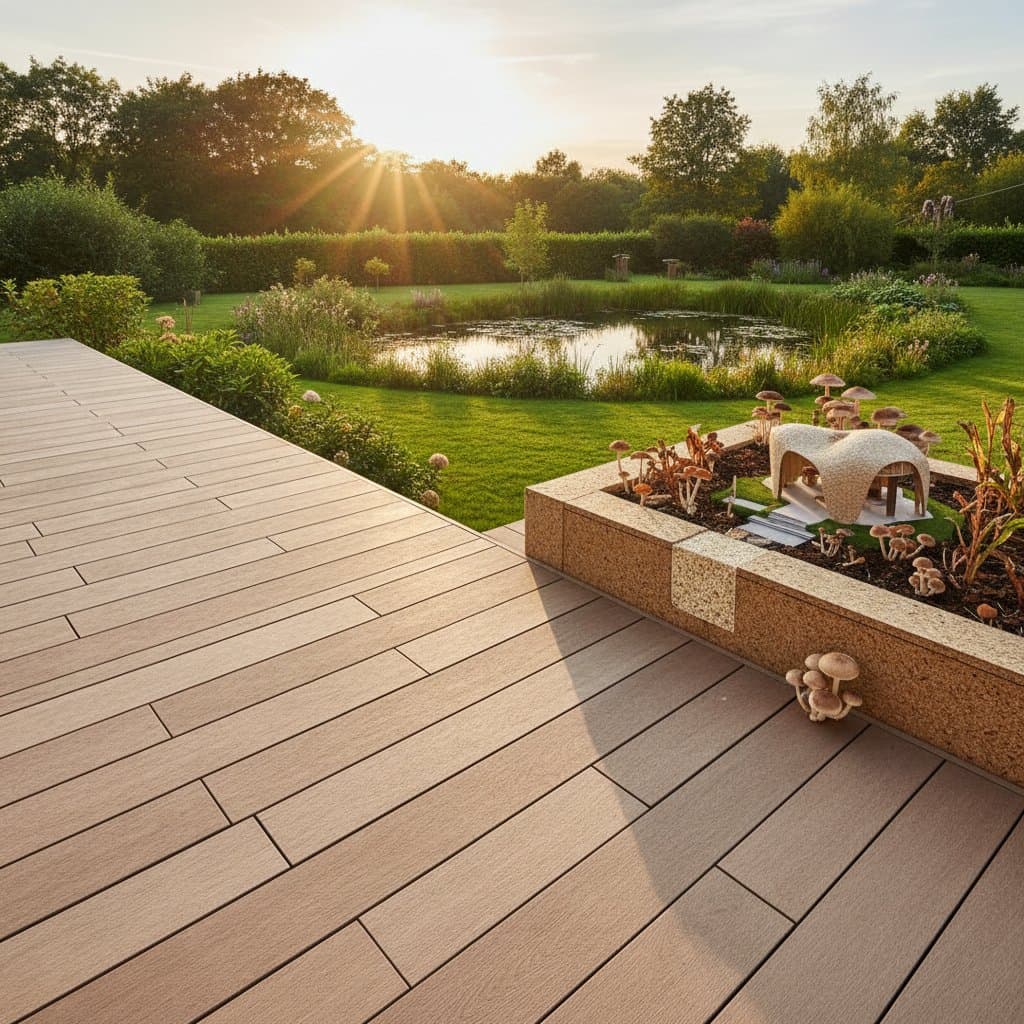
From an aesthetic perspective, mycelium boards mimic the grain and texture of wood, available in shades from light oak to rich walnut. Customization options allow staining or sealing to match existing landscapes. Weight savings prove practical too; at half the density of cedar, they simplify handling during installation and reduce transportation emissions.

Installation Considerations

Setting up mycelium decking follows familiar processes but incorporates unique advantages. Begin with a stable foundation, such as concrete footings or pressure-treated joists spaced 16 inches apart. Cut boards using standard carbide-tipped saws, as the material yields cleanly without splintering.

Secure panels with corrosion-resistant screws, pre-drilling to prevent cracking in denser sections. Expansion gaps of one-eighth inch accommodate humidity changes, though mycelium exhibits less swelling than wood. For elevated structures, integrate hidden fasteners for a seamless look that discourages moisture buildup.

Professional installers note the material's workability rivals composites, with no need for specialized tools. In urban settings, where space limits options, mycelium's modularity supports creative designs like curved edges or integrated planters. Always consult local building codes, as some regions recognize mycelium as a novel green building product.

Maintenance and Care

Routine care remains straightforward, preserving the boards' appearance and longevity. Remove debris such as leaves or pollen with a soft-bristle broom weekly, especially in fall. Clean surfaces by rinsing with a hose and wiping with mild soap diluted in water; avoid pressure washers that might erode the natural seal.

Annual maintenance involves applying a penetrating natural oil or beeswax coating to enhance water repellency. This step restores any faded areas and protects against UV exposure. For minor damage, sand scratches lightly with 220-grit paper, then reseal the spot. Unlike many synthetic options, mycelium allows targeted repairs without discarding entire sections.

In harsh climates, inspect for uplift from frost heaves annually. Reapply sealant more frequently in coastal areas exposed to salt air. These practices ensure the deck remains functional and attractive, often outlasting expectations without chemical treatments.

Costs and Availability

Initial costs for mycelium decking align with mid-range composites, ranging from 4 to 6 dollars per square foot for materials alone. Labor adds 5 to 10 dollars per square foot, depending on complexity. As production expands through larger facilities, experts predict prices will decrease by 20 to 30 percent within the next few years.

Availability grows steadily, with suppliers stocking standard sizes of 5/4 by 6 inches, in lengths up to 12 feet. Online retailers and specialty lumber yards offer samples for testing. Lighter weight cuts shipping expenses, making bulk orders more economical than heavy tropical hardwoods.

Insulation benefits extend to energy savings; decks stay 10 to 15 degrees cooler than metal or dark composites, reducing the need for shaded coverings. Long-term value includes zero disposal fees, as spent boards compost in garden beds or municipal programs.

Practical Next Steps

Approach mycelium decking with informed planning to maximize benefits. Start small by constructing a bench or low platform to evaluate performance in your climate. Contact manufacturers for detailed specifications on load-bearing capacity, typically 50 pounds per square foot for residential use.

Inquire about warranties, which often cover 15 to 25 years against rot and warping. Source from certified producers adhering to standards like those from the Forest Stewardship Council for sustainable sourcing. Store unused boards horizontally in a ventilated shed to prevent mold.

Consult architects or contractors experienced in bio-based materials for custom projects. Track innovations through industry updates, as research advances fire resistance and colorfastness.

Embracing Regenerative Outdoor Living

Mycelium decking integrates seamlessly into regenerative landscapes, where structures contribute positively to ecosystems. It supports biodiversity by sequestering carbon during growth and enriching soil upon decomposition. Homeowners gain reliable outdoor areas that evolve with nature, fostering relaxation amid greenery.

Selecting these boards advances personal sustainability goals while influencing broader market shifts. Each installation demonstrates practical environmental stewardship, inspiring neighbors and communities. Over time, widespread adoption could redefine decking as a cycle of growth, use, and renewal rather than extraction and waste.

You Might Also Like

Solar Drip Systems Keep Deck Gardens Watered Automatically

Solar Pavers Convert Steps and Sunlight Into Power

Glass Deck Floors That Skylight the Space Below

Mycelium Boards Replace Wood in Sustainable Decking

Cut Deck Noise with Acoustic Privacy Screens

Tagged:

materials,deck,mycelium,decking,building,mushroom,mushroom-building-materials,biodegradable,mycelium-decking,boards

Recent by Anne Marion

Image for Solar Drip Systems Keep Deck Gardens Watered Automatically

Solar Drip Systems Keep Deck Gardens Watered Automatically

Feb 2, 2026
Image for Watering 50+ Pots From a Single Faucet

Watering 50+ Pots From a Single Faucet

Feb 2, 2026
Image for Simple Drip Systems That Water While You Work

Simple Drip Systems That Water While You Work

Jan 31, 2026
Image for How Urban Gardens Cut City Noise by 70%

How Urban Gardens Cut City Noise by 70%

Jan 31, 2026
Image for Micro-Pergola Pods Bring Patio Comfort to Tiny Balconies

Micro-Pergola Pods Bring Patio Comfort to Tiny Balconies

Jan 29, 2026

materials

Image for Solar Pavers Convert Steps and Sunlight Into Power

Solar Pavers Convert Steps and Sunlight Into Power

Feb 2, 2026
Image for Mycelium Boards Replace Wood in Sustainable Decking

Mycelium Boards Replace Wood in Sustainable Decking

Feb 1, 2026
Image for Mycelium Decks Replace Wood With Living Fungi Material

Deck Construction & Remodeling

Solar Drip Systems Keep Deck Gardens Watered Automatically

Elevate your deck gardening with solar-powered drip irrigation for precise, hands-free watering. This guide covers final setup steps, safety measures, common fixes, cost breakdowns, and year-round care to foster healthy plants with minimal intervention.

Feb 2, 2026

Solar Pavers Convert Steps and Sunlight Into Power

Elevate your outdoor paths with solar pavers that generate electricity from sunlight and movement. This comprehensive resource outlines functionality, step-by-step setup, budgeting, troubleshooting, and ways to apply the power for lighting or devices—all while promoting green living.

Feb 2, 2026

Glass Deck Floors That Skylight the Space Below

Elevate your deck design with glass floor panels that function as skylights, flooding lower areas with natural light while delivering a sleek, contemporary look. This resource provides in-depth coverage of benefits, essential materials, step-by-step installation, safety protocols, maintenance routines, and guidance on when to hire experts—all to optimize your outdoor environment for light, style, and longevity.

Categories

Deck Construction & Remodeling(158)
Balcony Design(146)
Small-Space Gardens(63)
Rooftop Decks(50)
Backyard Design(18)

Mycelium Decks Replace Wood With Living Fungi Material

Jan 27, 2026
Image for Fungal Fibers That Replace Wood Decks and Compost Clean

Fungal Fibers That Replace Wood Decks and Compost Clean

Jan 24, 2026
Image for Cork Decking Renews Itself While You Walk On It

Cork Decking Renews Itself While You Walk On It

Jan 13, 2026
Feb 2, 2026

Mycelium Boards Replace Wood in Sustainable Decking

Mycelium decking redefines sustainable outdoor design with boards cultivated from fungal roots and agricultural waste. These lightweight, compostable planks match wood's strength while minimizing environmental impact. This guide covers planning, installation, and care for a resilient, green yard addition.

Feb 1, 2026

Cut Deck Noise with Acoustic Privacy Screens

Turn urban deck noise into peaceful quiet with acoustic privacy screens. Explore sound-blocking options, step-by-step installation, upkeep advice, and cost-effective choices for a more enjoyable outdoor space throughout the year.

Feb 1, 2026

Deck Benches That Turn Scraps Into Garden Soil

Convert your deck into an eco-friendly oasis with a composting bench that serves as both comfortable seating and efficient soil producer. This comprehensive guide details construction steps, material needs, troubleshooting, and seasonal care to minimize waste and maximize garden yields.

Jan 31, 2026

Permeable Pavers Stop Flooding and Raise Property Value

Permeable pavers convert waterlogged areas into resilient, environmentally friendly surfaces. Water infiltrates through paver joints and stone bases, minimizing runoff, safeguarding structures, and elevating aesthetic appeal. This comprehensive guide details installation processes, upkeep routines, and financial considerations to demonstrate how these pavers promote sustainability, property enhancement, and enduring outdoor usability.

Jan 29, 2026

Turn Your Deck into a Clean Energy Generator

Elevate your deck into a sustainable solar energy source with integrated pavers that merge aesthetics and efficiency. This guide covers sunlight evaluation, circuit planning, durable tile installation, performance upkeep, expense details, safety protocols, and professional consultation needs to create a self-powered outdoor retreat.

Jan 29, 2026

Solar Pavers Turn Sunlight Into Outdoor Power

Elevate your outdoor areas with solar pavers, robust tiles that capture sunlight to generate power for lighting, charging stations, and appliances. This guide covers their functionality, required materials, and detailed installation instructions to build an efficient, wire-free environment that blends practicality with aesthetic appeal.

Jan 28, 2026

Mycelium Decks Replace Wood With Living Fungi Material

Mycelium, the intricate root system of fungi, emerges as a groundbreaking material for decking. This renewable and biodegradable option provides the durability of wood with a fraction of the environmental impact. Readers will gain insights into installation, maintenance, and benefits to create an outdoor haven that aligns with sustainable living principles.

Jan 27, 2026

Deck Pods Turn Open Decks into Year-Round Rooms

Convert your deck into a protected, inviting extension of your home using modular deck pods. This comprehensive guide covers planning, assembly, and upkeep for these adaptable structures, including required tools, safety protocols, and enhancements to achieve a durable, stylish outdoor space that provides year-round utility.

Jan 26, 2026

Solar Shade Sails Generate Power While Cooling Your Deck

Elevate your deck with solar shade sails that offer respite from the sun while harnessing solar power for everyday use. These versatile structures blend comfort with eco-friendly energy generation. Explore practical steps for installation, upkeep, and optimization to create an inviting, self-sustaining outdoor haven.

Jan 26, 2026

Cool Your Deck 15° with Solar Shade Sails

Counter summer deck heat with solar shade sails capable of reducing temperatures by up to 15 degrees. These tensioned fabric panels effectively block UV rays, improve airflow, and install in just one day. Gain insights into required tools, essential safety measures, and maintenance strategies for extended outdoor enjoyment.

Jan 25, 2026

Why Permeable Decks Stay 20 Degrees Cooler

Permeable decks address intense summer heat by facilitating airflow and water passage, which dissipates trapped warmth and maintains surfaces up to 20 degrees cooler. Incorporating light-colored materials, strategic gaps, and evaporative cooling, these decks foster inviting, sustainable outdoor areas that require low maintenance and provide enduring relief from hot surfaces.

Jan 25, 2026

Solar Pergolas Cut City Heat While Powering Your Deck

Elevate your compact urban deck with a solar pergola that delivers shade, produces renewable energy, and enhances sustainability. This comprehensive guide includes planning strategies, material choices, step-by-step installation, safety protocols, and upkeep tips to achieve a cooler, cost-effective outdoor area while increasing home value on a practical budget.

Jan 24, 2026

Fungal Fibers That Replace Wood Decks and Compost Clean

Mycelium decks redefine urban outdoor spaces through sustainable, compostable panels derived from fungal networks. These lightweight, durable alternatives to wood or plastic utilize agricultural waste. Follow this guide to cultivate, process, install, and maintain them for environmentally conscious urban design.

Jan 24, 2026

Misting Systems Drop Deck Temps 20° Fast

Misting systems transform hot decks into inviting spaces by reducing temperatures up to 20 degrees. This guide details planning, installation, maintenance, and optimization strategies for safe, effective cooling throughout the season.

Jan 22, 2026

UV Shade Sails Drop Deck Temps 20 Degrees

Combat summer heat and safeguard your deck using UV shade sails. This comprehensive guide details selection, installation, and upkeep strategies that reduce surface temperatures, avert color fading, and prolong deck longevity. Explore required tools, safety measures, common issues, and professional insights to create a fashionable, protected outdoor haven.

Jan 22, 2026

Shade Sails That Follow the Sun All Day Long

Automatic sun-tracking shade sails adjust their position to follow the sun, providing consistent shade and comfort on decks and patios. This comprehensive guide explains the technology, step-by-step installation, essential safety measures, ongoing maintenance, associated costs, and strategies to maximize durability and efficiency in your outdoor environment.

Jan 21, 2026

AI Cameras That Water Plants and Deter Deck Pests

Elevate your urban deck into an automated oasis with AI cameras that identify pests, optimize irrigation, and reduce upkeep. These intelligent systems leverage computer vision to safeguard plants, promote efficient water use, and deliver seamless outdoor enjoyment via straightforward installation and reliable performance.

Jan 21, 2026