
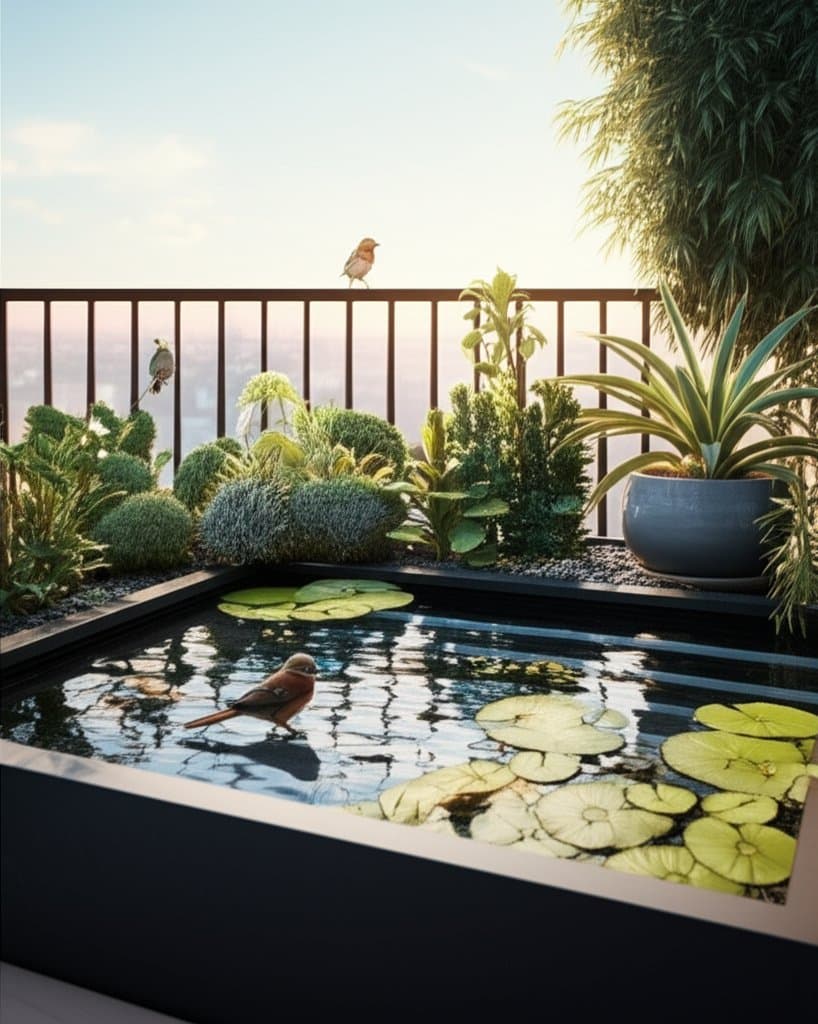
Creating Balcony Water Gardens to Attract Birds to Your Urban Space
Urban balconies often seem disconnected from the natural world, but a small investment in water can bridge that gap. A compact water garden introduces tranquility for residents while offering essential hydration for birds navigating cityscapes. This feature fits neatly into a single container, requires minimal startup costs, and infuses your outdoor area with vibrant colors and soothing sounds.
The objective remains straightforward: construct a modest, secure water garden designed to lure birds without demanding extensive ground area. By selecting an appropriate container, maintaining pristine water, and incorporating select plants, you integrate your balcony into the broader urban ecological network. Such setups not only support local wildlife but also elevate the aesthetic and sensory experience of your living space.
Overview of Balcony Water Gardens
A tiny water garden functions as a self-sustained pond housed within a basin, tub, or specialized planter. It maintains still water while accommodating aquatic plants that naturally filter and provide shade. Even modest installations offer birds convenient spots for drinking and bathing amid scarce natural resources in urban settings.
Several factors underscore the value of these gardens:
- Birds in metropolitan areas face limited access to clean water sources, making artificial ponds vital for their survival and migration patterns.
- The evaporative cooling from water features lowers ambient temperatures by several degrees, creating a more comfortable microclimate on hot days.
- Daily observations of visiting birds introduce a sense of routine and mindfulness, fostering relaxation during busy urban routines.
This guide adheres to a practical how-to framework, providing a comprehensive materials inventory, detailed assembly instructions, ongoing care protocols, and solutions for common challenges. Whether you reside in a high-rise apartment or a townhouse, these elements ensure accessibility and effectiveness.
Essential Tools and Materials
Assemble your balcony pond using items suited to constrained spaces. Prioritize waterproof, stable components that remain manageable even when filled to capacity.
Containers
Select a broad, shallow vessel measuring 18 to 24 inches (45 to 60 cm) in diameter and at least 8 inches (20 cm) in depth. Suitable options include durable ceramic bowls for an elegant look, galvanized metal tubs for rustic appeal, or reinforced plastic planters for lightweight portability. These choices resist cracking under urban weather variations.
Optional elevations, such as small bricks or flat stones, allow for tiered planting and varied water depths, mimicking natural pond edges.
Plants
Incorporate 2 to 3 compact aquatic or marginal species to establish a balanced ecosystem. Dwarf water lilies offer delicate blooms and shade, while water lettuce provides floating coverage to suppress algae. Pickerel rush adds vertical interest with its feathery foliage. For oxygenation, include submerged varieties like hornwort or anacharis, which release oxygen to maintain clarity without visible surface disruption.
Source plants from local nurseries specializing in aquatics to ensure they thrive in container conditions. Avoid invasive species that could overwhelm small setups.
Additional Supplies
Prepare approximately 5 pounds (2 kilograms) of clean gravel or smooth pebbles to line the base, securing plants and creating textured perches for birds. Use dechlorinated rainwater, distilled water, or tap water conditioned by standing overnight to eliminate harmful chemicals.
A compact floating thermometer monitors temperature fluctuations, ideally keeping water between 60 and 75 degrees Fahrenheit (15 to 24 degrees Celsius). For enhanced appeal, consider a solar-powered fountain that operates without wiring. In regions with safety regulations, install fine netting or mesh covers to prevent accidental falls while permitting bird access.
Tools
Basic implements include sharp scissors for root trimming, a dedicated small bucket for water handling and cleaning, and protective gloves to shield against abrasions from container edges or chilly water. These tools facilitate precise work without complicating the process.
Step-by-Step Assembly Instructions
1. Select an Optimal Location
Position the container to receive 4 to 6 hours of indirect sunlight daily, as excessive direct exposure accelerates algae proliferation. Verify that the supporting surface remains level and bears at least 50 pounds (23 kilograms) of weight when full, accounting for water, substrate, and plants. Proximity to a protective wall shields against strong winds that might cause spills.
Prioritize safety by situating the setup away from areas accessible to children or pets, reducing risks of tipping or contamination.
2. Prepare the Container Base
Thoroughly rinse the interior with fresh water to eliminate manufacturing residues or dust particles. Layer 1 inch (2.5 cm) of gravel across the bottom, which anchors root systems and forms gentle slopes for bird access. Position additional stones along the perimeter to serve as stable landing platforms, particularly for smaller species like finches or sparrows.
This foundation promotes natural filtration as water percolates through the substrate.
3. Integrate the Plants
Arrange taller marginal plants toward the rear for balanced aesthetics, and position floating varieties centrally to diffuse light. Trim excessive roots to ensure they submerge just below the surface without crowding. For potted specimens, elevate with bricks if necessary to keep foliage emergent.
Exercise care during handling to preserve plant integrity; ceramic edges can prove sharp, so gloves prevent minor injuries.
4. Introduce Water Gradually
Fill the container methodically to minimize sediment disturbance, aiming to leave 1 inch (2.5 cm) of freeboard at the top to accommodate rainfall. Condition tap water by allowing it to aerate for 24 hours prior to introducing plants or anticipating wildlife visits.
This step establishes the pond's hydrostatic equilibrium, preventing sudden overflows.
5. Incorporate Optional Water Movement
Install a diminutive solar fountain to circulate water gently, deterring stagnation and amplifying auditory allure for birds. Ensure the unit fits wholly within the confines of the container, with solar panels positioned for optimal exposure. Secure any components to avoid entanglement hazards in high-traffic balcony zones.
Moving water also oxygenates the environment, supporting healthier plant growth.
6. Finalize with Natural Accents
Scatter additional stones or weathered driftwood along the margins to provide secure perching sites. Designate a clear, plant-free zone in the shallows specifically for bathing, encouraging prolonged visits from feathered guests.
These touches replicate wild habitats, making your balcony pond irresistibly inviting.
Key Safety Considerations
Maintain all electrical elements, such as fountain pumps, in dry conditions and fasten cords securely to prevent tripping. Steer clear of chemical detergents or synthetic fertilizers, which could poison birds or disrupt the aquatic balance.
In freezing climates, drain and cover the container during winter to avert material fractures from ice expansion. When performing maintenance, don suitable gloves to mitigate irritation from algae or rough surfaces.
Adhering to these practices ensures a hazard-free environment that prioritizes both human and avian well-being.
Addressing Common Issues
If water develops a green tint, indicating algal overgrowth, relocate to shadier conditions and introduce additional floating plants to compete for sunlight and nutrients. Partial water changes with dechlorinated sources restore clarity without shocking the ecosystem.
To counter mosquito breeding, employ a subtle fountain ripple or pond-safe biological controls like Bacillus thuringiensis israelensis. Harsh chemicals such as bleach compromise safety for birds and plants.
Should plants exhibit wilting, assess for overheating or insufficient depth; replenish to optimal levels and shift to a cooler locale. For birds hesitant to approach, patience proves key—supplement with a temporary shallow dish nearby and uphold cleanliness to build trust.
These strategies resolve most setbacks efficiently, preserving the garden's functionality.
Cost Breakdown and Timeline
Establishing a basic balcony water garden typically costs under fifty dollars, rendering it an accessible enhancement:
- Container: 20 to 30 dollars
- Aquatic plants: 10 to 15 dollars
- Gravel and accent stones: 5 dollars
- Solar fountain (optional): 10 to 20 dollars
Assembly requires approximately one hour, followed by a 24-hour settling period for water stabilization. Weekly upkeep demands mere ten minutes for inspections and debris removal.
Economize further by repurposing household items like an aged ceramic bowl or propagating plants from established sources. However, invest reliably in sturdy containers and pure water to guarantee longevity and safety.
Ongoing Maintenance Protocols
Conduct weekly evaluations of water levels, topping up as evaporation occurs, and skim away accumulated leaves or debris to sustain hygiene.
Every month, gently rinse the gravel using reserved pond water to preserve beneficial microbial communities, avoiding disruptive tap water introductions.
Seasonally, excise faded vegetation and cleanse the container interior with a soft-bristled brush dipped in pond water; soaps introduce toxic residues.
Over extended periods, inspect for structural weaknesses like fissures, applying aquarium-grade sealants for repairs. A pristine pond fosters repeat avian visits; perform complete water renewals if odors suggest stagnation.
Consistent care transforms a simple setup into a thriving, enduring feature.
Practical Storage Solutions
When seasonal storage becomes necessary, partially drain the container to lighten the load and transport with assistance from a second person. Relocate plants to indoor buckets filled with their native water, placed near sunlit windows to sustain vitality.
Bag gravel and stones in mesh for air-drying, preventing mold. Upon reinstallation, meticulously rinse components and refill with fresh, conditioned water to eliminate potential contaminants and reaffirm appeal to birds.
These methods minimize disruption, ensuring seamless transitions across seasons.
Extending Your Balcony Oasis
With your water garden established, consider complementary elements to amplify wildlife engagement. Introduce native seed mixes in nearby pots to provide foraging opportunities, or install simple bird feeders at a respectful distance to avoid territorial conflicts.
Monitor visitor patterns through a journal, noting species and behaviors to refine the setup over time. This evolving approach not only sustains bird populations but also deepens your connection to urban nature, yielding profound personal rewards.