
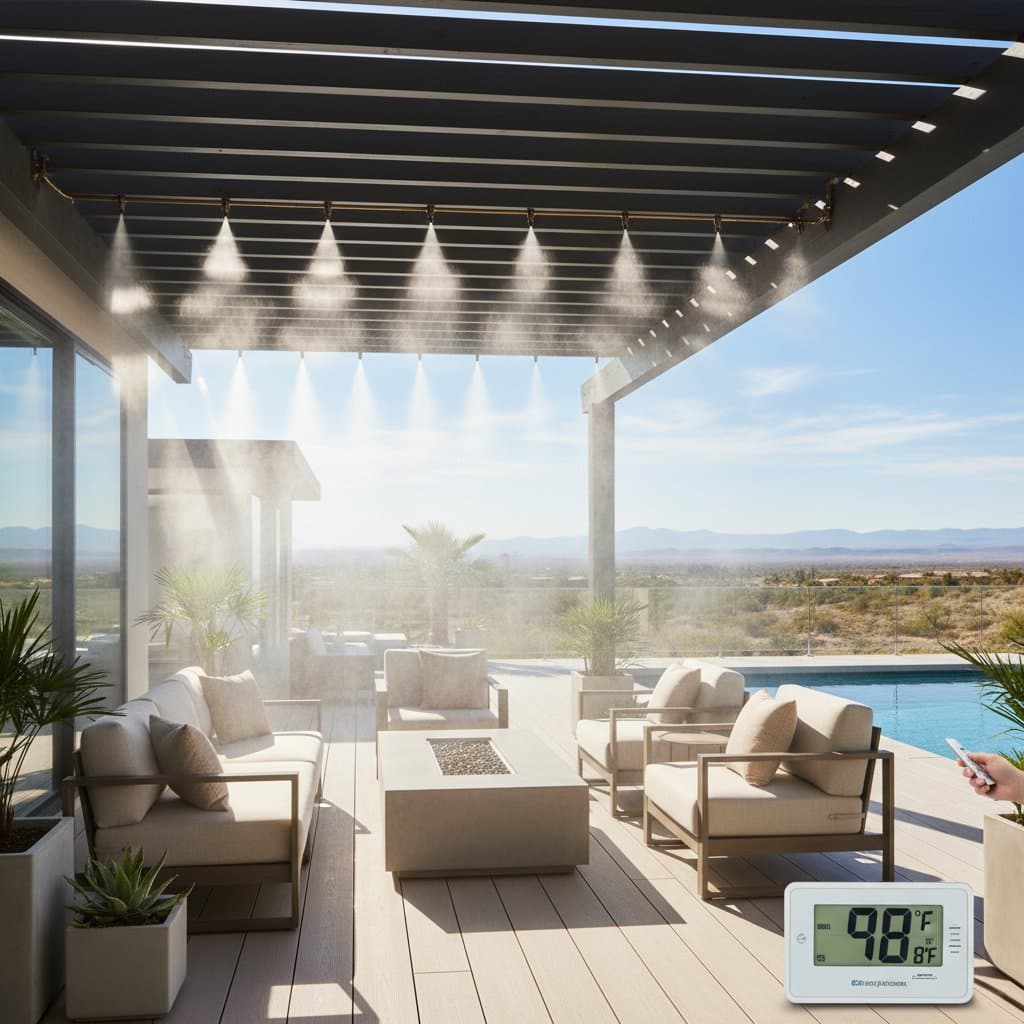
Understanding Deck Misting Systems
Deck misting systems provide an effective way to combat summer heat by evaporating fine water droplets in the air. These systems create a cooling effect through evaporation, which absorbs heat from the surrounding environment and can reduce deck temperatures by up to 20 degrees Fahrenheit. Homeowners appreciate this method because it offers a low-cost alternative to extensive shading structures or energy-intensive air conditioning units.
The core principle relies on high-pressure pumps that force water through small nozzles, producing a light mist rather than heavy sprays. This mist hangs briefly in the air before evaporating, leaving no puddles and ensuring surfaces remain dry. Such systems prove ideal for urban decks, patios, and rooftop spaces where space constraints limit other cooling options.
Essential Components and Tools
To assemble a basic misting system, gather a few key items that ensure reliable performance. Start with a high-pressure pump rated for at least 1000 PSI to generate the necessary force for fine mist dispersion. Include tubing made from durable polyethylene, which resists UV damage and withstands outdoor conditions.
Nozzles form the heart of the system; select stainless steel models with orifice sizes between 0.006 and 0.012 inches for optimal droplet size. An inline filter prevents debris from clogging components, while fittings and couplings secure connections without leaks. For tools, prepare a tubing cutter for clean cuts, adjustable wrenches for tightening, and zip ties or clips for mounting along railings or beams.
Budget for a starter kit, which typically costs between 150 and 300 dollars, depending on length and features. Add an optional timer or pressure regulator to automate operation and maintain consistent output. These elements allow customization to fit decks of various sizes, from compact balconies to expansive wooden platforms.
Step-by-Step Installation Guide
Installing a misting system requires careful planning to maximize coverage and efficiency. Begin by measuring the deck perimeter and identifying high-heat areas, such as sunny exposures facing south. Sketch a layout that positions nozzles every 2 to 4 feet along railings, overhead beams, or pergola structures for even distribution.
Connect the pump to a standard garden hose bib or dedicated water line, ensuring access to clean, filtered water. Cut tubing to length using the cutter, then attach nozzles by screwing them into tee fittings. Secure the tubing with clips to avoid sagging, and route lines away from walkways to prevent tripping hazards.
Test the system after assembly by running water at low pressure to check for leaks. Gradually increase to full pressure and observe the mist pattern; adjust nozzle angles to direct cooling toward seating areas. The entire process usually takes 2 to 4 hours for a standard deck, allowing immediate use on the same day.
Common Troubleshooting Issues
Even well-installed systems encounter occasional problems that simple fixes resolve. If nozzles sputter or fail to spray evenly, mineral deposits often cause the issue. Remove each nozzle and soak it in white vinegar for 30 minutes to dissolve buildup, then rinse thoroughly before reinstalling.
Leaks near fittings indicate worn or improperly seated connections. Inspect the affected area, cut out the damaged section of tubing with a sharp cutter, and insert a new coupling to restore a tight seal. Tighten all fittings with a wrench, but avoid over-tightening to prevent cracking.
When mist appears heavy or forms puddles, pressure levels or nozzle size may need adjustment. Verify the pump maintains adequate PSI; if low, clean the filter or check the water supply. Switch to nozzles with smaller orifices to produce finer droplets that evaporate quickly without wetting surfaces.
Rapid cycling of the pump suggests air trapped in the lines, disrupting flow. Bleed the system by opening the valve at the farthest nozzle and running water until a steady stream emerges without bubbles. This step restores normal operation and prevents premature wear on the pump.
Maintenance and Storage Practices
Regular maintenance extends the lifespan of a misting system and ensures consistent performance. Clean nozzles and filters monthly during peak use by flushing with a vinegar solution to remove scale. Inspect tubing for cracks or UV degradation, replacing sections as needed to maintain pressure integrity.
In regions with freezing winters, proper storage prevents damage from ice expansion. Drain all water by disconnecting the supply line and tilting the pump to empty residual moisture. Use a hand pump or compressed air at low pressure, around 30 PSI, to blow out lines completely.
Wrap nozzles in soft cloths to protect threads, and store them in a labeled plastic bag. Organize connectors, spare parts, and tools in a dedicated box near the deck storage area. This preparation simplifies spring setup and avoids unexpected repairs.
Seasonal Care Schedule
Adopting a seasonal routine keeps the system in top condition year-round. In spring, examine all tubing and fittings for winter-induced cracks or brittleness; replace any compromised parts before initial use. Test the full system to confirm even misting across the deck.
During summer, operate the system in controlled bursts of 10 minutes to cool effectively without over-wetting. Monitor water quality and refresh the filter biweekly to sustain fine mist production. This approach preserves deck surfaces from prolonged moisture exposure.
As autumn arrives, drain any remaining water and perform a thorough cleaning of all components. Remove filters for deep washing and store them dry. In winter, keep all parts indoors in a cool, dry space, and protect the outdoor spigot with an insulated cover to guard against freeze damage.
Following this schedule minimizes downtime and reduces the need for expensive replacements, ensuring the system delivers reliable cooling season after season.
Key Benefits and Scalability
Misting systems excel in providing targeted cooling through evaporative principles, achieving temperature drops of up to 20 degrees Fahrenheit without high energy costs. Installation demands minimal tools and time, making it accessible for DIY enthusiasts. Routine care focuses on cleaning nozzles, using filtered water sources, and storing components dry to avoid corrosion.
Compared to alternatives like retractable awnings or built-in fans, misting offers a budget-friendly option with initial investments under 500 dollars for full setups. Scale the system easily by adding more nozzles or extending tubing to cover adjacent patios, pergolas, or even rooftop decks. This flexibility suits diverse outdoor configurations.
Steps to Implement Your System
Transforming your deck starts with practical actions that build confidence in the technology. A small-scale trial demonstrates the cooling power before full commitment. Begin with 8 nozzles connected to a garden hose adapter to cover a key seating zone.
Observe the rapid change in air temperature and humidity as the mist activates, creating an inviting space even during peak heat. If satisfied, expand coverage and integrate automation like a digital timer or app-controlled switch for effortless operation.
Take these three steps today to move forward:
-
Measure the deck's perimeter and mark sunny hotspots requiring priority cooling.
-
Source a basic misting kit and inline filter from a local home improvement store or reputable online retailer.
-
Install and test a pair of nozzles on a hose to experience the evaporative chill firsthand.
Beyond temperature relief, this upgrade restores usability to your outdoor area for daily routines, gatherings, and relaxation. Misting systems deliver shaded comfort and gentle breezes directly to your backyard, regardless of soaring summer highs.