
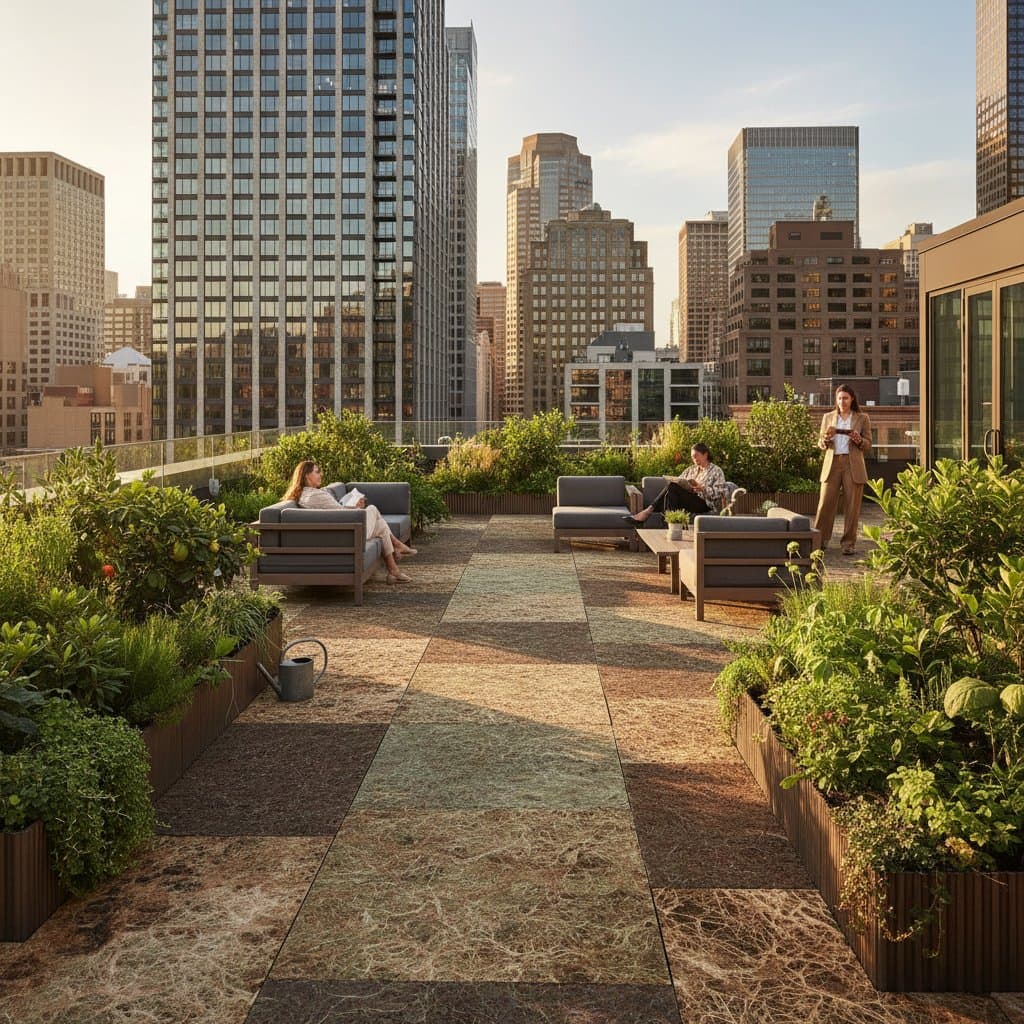
The Fungus Decks Revolutionizing Urban Outdoor Spaces
City balconies and rooftops are getting a quiet upgrade. Instead of plastic or pressure-treated planks, some are turning to fungus-based decking made from mycelium. Mycelium is the root structure of mushrooms, a natural network that binds materials together. When grown into molds, it forms strong, lightweight panels that can replace wood or composite boards. The goal is simple, to build outdoor spaces that feel natural, last through the seasons, and return safely to the earth when retired.
Overview
Urban outdoor areas face heavy wear from sun, moisture, and foot traffic. Traditional decking holds up, but it can shed microplastics or leach chemicals. Mycelium decking offers an alternative that is both biodegradable and sturdy. It looks similar to cork or pressed fiberboard, yet it grows instead of being manufactured. You can use it for balconies, roof gardens, patio paths, or modular terrace panels.
The benefit is twofold. You reduce synthetic waste and create a tactile surface that stays cooler underfoot. The texture feels closer to wood grain but without splinters or resin fumes. For city dwellers limited by square footage, it brings a calm, organic look to small outdoor zones.
Tools and Materials
You do not need lab equipment to work with mycelium decking. Most panels arrive pre-cured and sealed. To install or maintain them, you will need:
- Measuring tape for accurate cuts and spacing
- Circular saw with a fine-tooth blade
- Stainless screws or bolts resistant to rust
- Drill and countersink bit
- Outdoor sealant made for biodegradable materials
- Protective gloves and mask if sanding
Each panel usually measures around 24 inches by 48 inches and weighs about 10 pounds. That makes it light enough for rooftop transport without special lifting gear.
Steps
- Measure your space. Mark the total deck area and subtract any cutouts for planters or vents.
- Prepare the surface. Sweep away grit and ensure even footing. Mycelium planks perform best on a flat, ventilated base.
- Lay the foundation grid. Use treated lumber or recycled plastic risers spaced every 16 inches. This keeps panels lifted about 1 inch off the surface for airflow.
- Cut panels to size. Use slow, steady pressure on the saw. Wear a dust mask since fine fibers can irritate lungs.
- Anchor panels. Drill pilot holes and secure each corner with stainless screws. Avoid over-tightening to prevent compression marks.
- Seal edges. Brush on a thin coat of biodegradable outdoor sealant. Let it dry at least 12 hours before use.
- Inspect joints. Make sure no gap exceeds ⅛ inch. Tight joints shed water better and prevent softening.
Safety Tips
- Keep panels dry during storage. Moisture before sealing can cause early decay.
- Avoid direct flame or high heat exposure. Mycelium is organic and can scorch.
- When cutting, ventilate the area well. Fine dust can irritate eyes and skin.
- Reapply sealant every two seasons to preserve surface strength.
Troubleshooting
Soft spots appearing: Check for trapped water under the deck. Lift panels, clean the base, and add a drainage layer of gravel or rubber pads.
Color fading: Light bleaching is normal. Apply a natural oil finish to deepen tone.
Edges flaking: Sand lightly and reseal. Mycelium fibers are dense yet flexible, so surface wear is cosmetic more than structural.
Mold or odor: This means trapped moisture. Remove affected boards, dry them flat in sunlight for at least 24 hours, then reseal.
Budget and Time
Expect to spend about $12 to $18 per square foot including fasteners and sealant. For a 100-square-foot rooftop, that totals roughly $1,200 to $1,800. Installation time runs 6 to 8 hours for two people. The main costs are the panels themselves and the protective coating. You can save by mixing mycelium decking with stone pavers or reclaimed wood for contrast.
Maintenance
Wipe the deck clean every few weeks with mild soap and a damp cloth. Avoid harsh bleach. For small spills, blot instead of scrubbing. Reseal edges once every second season or sooner if water no longer beads on the surface. If a panel cracks, replace only the damaged piece. Panels interlock with screws, so removal takes under ten minutes.
When the deck reaches the end of its life, you can compost the material. Break it into smaller sections and mix it into soil or send it to a local composting facility. That return cycle is what makes mycelium unique among deck materials.
Seasonal Reminders
In hot months, check that airflow under the panels remains open. Remove any leaves or debris blocking drainage. In cold or wet seasons, brush off snow to prevent ice buildup. Avoid using salt, which can discolor the surface. A broom and warm water are enough for winter cleanup.
If your deck gets heavy rainfall, tilt panels slightly by about 1 degree so water runs off naturally. Small adjustments like this extend the deck life and keep walking surfaces safe.
Smart Storage Moves
Keep extra panels flat and dry, stacked with thin spacers between them. Do not wrap in plastic, since trapped humidity can trigger early mold. Store sealant and tools together in a labeled bin so you can handle repairs quickly. Mark each panel’s orientation on the underside with a pencil to keep grain direction consistent when reinstalling.