Loading...

Plants That Halve City Noise in Small Yards | urbanoutdoorsnyc.com | Urban Outdoors - Small-Space Gardens, Rooftop Decks, Balconies, Decks, Backyard Design
Skip to main content
Urban Outdoors
Search
Home
  1. Home
  2. /
  3. Small-Space Gardens
  4. /
  5. Plants That Cut City Noise by Half in Small Yards
Small-Space Gardens

Plants That Cut City Noise by Half in Small Yards

bySheila Spaulding
2026-01-08 04:32:01January 8, 2026
6 min read
Featured image for Plants That Cut City Noise by Half in Small Yards

Categories

Navigation

  • Home
  • All Articles
  • About Us
  • Privacy Policy
  • Terms of Service

© 2026 Urban Outdoors. Crafted for bold city dwellers.

2026-01-11 03:49:09
Urban Outdoors - Small-Space Gardens, Rooftop Decks, Balconies, Decks, Backyard Design

Creating Urban Tranquility with Noise-Reducing Plants

Urban environments pulse with relentless sounds from traffic, construction, and machinery. These disturbances disrupt concentration and elevate stress levels. While complete silence remains elusive, strategic use of vegetation offers a viable solution to dampen noise by up to 50 percent in confined spaces such as small yards or balconies.

Plants function as natural acoustic barriers by absorbing sound waves, particularly higher frequencies, through their leaves and stems. Dense foliage scatters incoming noise, while rustling leaves provide a soothing mask. The key lies in selecting species with thick, layered growth and arranging them to maximize coverage without overwhelming limited areas.

This approach requires thoughtful planning, from identifying noise sources to maintaining healthy growth. The result is a balanced auditory environment that promotes relaxation and well-being.

Understanding Noise Reduction in Gardens

Sound travels in waves that bounce off hard surfaces like concrete and glass, amplifying urban din. Vegetation interrupts this path. Broad-leafed plants excel at trapping sound energy, converting it into minor vibrations rather than echoes.

For optimal results, target a reduction of 5 to 10 decibels, which perceptually halves noise intensity. Combine evergreen and deciduous species for year-round effectiveness. In small yards, vertical elements like walls and fences amplify the barrier effect.

Measure initial noise levels with a smartphone app to track improvements. Focus efforts on prevailing sound directions, such as street-facing sides.

Selecting the Right Plants for Acoustic Control

Choose species known for density and resilience in urban conditions. Prioritize natives or low-maintenance varieties that thrive in partial shade and varied soils.

  • Evergreen Shrubs: Arborvitae (Thuja occidentalis) forms tight hedges up to 6 feet tall, absorbing mid-range sounds effectively. Plant 3 feet apart for a seamless screen.
  • Dense Foliage Bushes: Holly (Ilex species) with its glossy, thick leaves deflects traffic noise. Varieties like inkberry suit wetter soils and reach 8 feet.
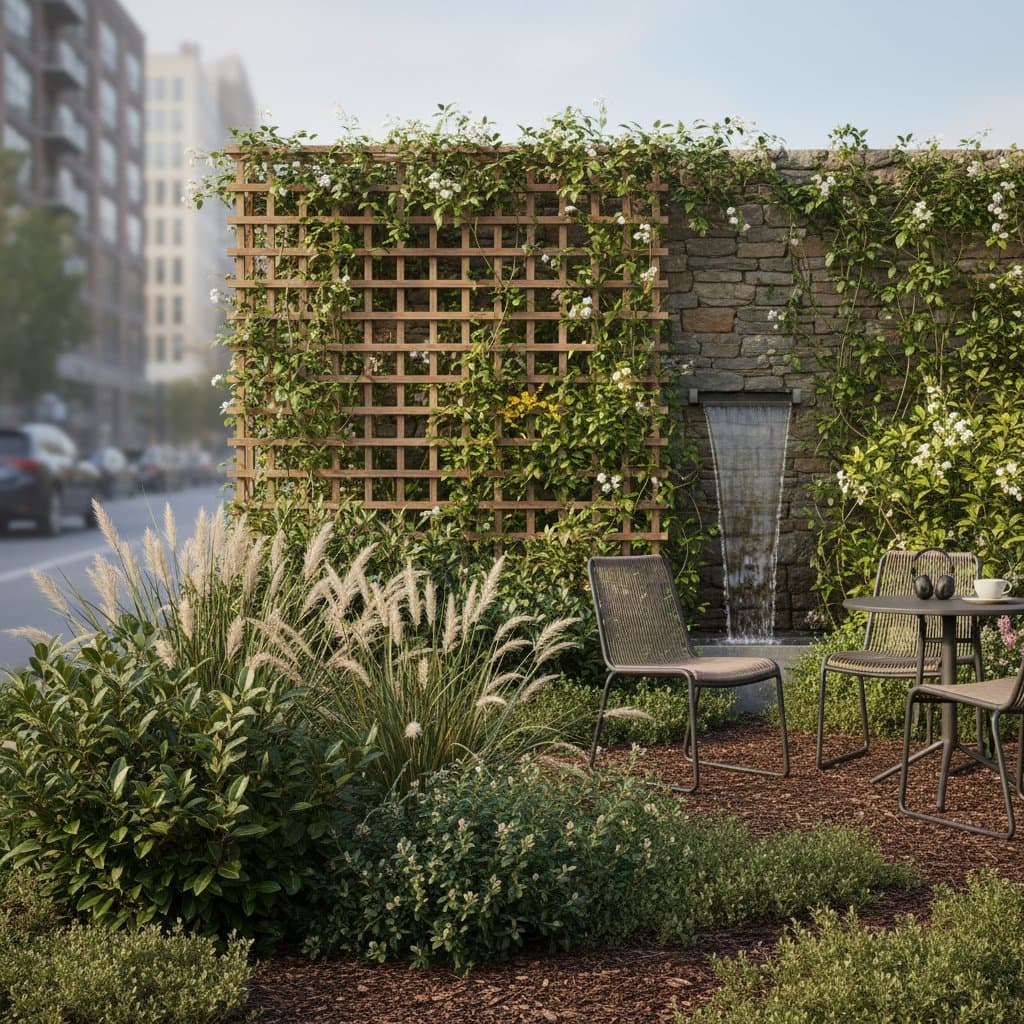
  • Climbing Vines: English ivy (Hedera helix) or Virginia creeper (Parthenocissus quinquefolia) cover fences quickly, adding 20 to 30 percent more sound diffusion when trained on trellises.
  • Ornamental Grasses: Switchgrass (Panicum virgatum) or miscanthus sways to mask low-frequency rumbles. These reach 4 to 6 feet and require minimal pruning.
  • Ground Covers: Pachysandra or vinca form a low layer that dampens footfall and minor vibrations from nearby paths.

Avoid sparse or deciduous-only plants in noise-heavy zones, as bare branches reduce winter performance. Consult local nurseries for zone-appropriate options to ensure longevity.

Designing Your Noise-Blocking Layout

Map your space first. Identify hot spots by noting where noise enters most—often gates, windows, or low walls. Aim for a layered approach: tall elements at the back, medium shrubs in front, and ground covers below.

For a 10-by-10-foot yard, allocate 60 percent to vertical screens and 40 percent to underplanting. Space plants to allow 2 to 3 years for filling gaps, promoting air circulation.

Incorporate hardscape sparingly, such as a short brick wall topped with vines, to enhance reflection control. Water features like small fountains add white noise to further obscure intrusions.

Essential Tools and Materials

Basic equipment suffices for most installations. Gather these items to streamline the process:

  • Spade or hand trowel for digging precise holes
  • Compost or peat moss to enrich poor urban soil
  • Organic mulch to suppress weeds and conserve water
  • Pruning shears for regular shaping and maintenance
  • Measuring tape to ensure even plant spacing
  • Watering can or hose with a gentle nozzle for initial establishment

Download a free decibel meter app to quantify before-and-after changes. Baseline readings guide adjustments.

Safety Considerations

Protect yourself during setup and upkeep. Wear thick gloves when working with prickly species like holly to avoid scratches.

Use sturdy ladders for securing vines to overhead structures, ensuring three points of contact at all times. Position large shrubs at least 5 feet from foundations to prevent root damage.

Maintain sharp, sanitized pruning tools to minimize injury risk and disease spread. Allow 12 inches of clearance between plants and walls for ventilation, reducing fungal issues in humid cities.

Budgeting and Timeline

Initial costs range from $150 to $400 for a compact setup, depending on plant maturity. Starter shrubs cost $20 to $50 each, while mature ones exceed $100.

A 10-foot barrier takes four hours for two people, covering soil preparation and planting. Factor in one additional hour for mulching and irrigation checks.

Save money by propagating cuttings from friends' gardens or sourcing from community swaps. Invest in quality soil amendments, as robust roots form the foundation of effective noise control.

Storage and Organization

Organize supplies for efficiency. Store pruning shears, gloves, and stakes in a labeled plastic bin near the hose for easy retrieval.

Place it in a waterproof shed to shield from elements. Elevate bags of soil or mulch on pallets, stacking no more than three to prevent tipping—each weighs around 40 pounds.

Maintenance Schedule by Season

Consistent care sustains acoustic benefits. Adjust routines to weather patterns.

Spring Preparation: Apply a balanced fertilizer in early March. Inspect for frost damage and replant gaps promptly to maintain density.

Summer Vigilance: Provide deep watering weekly, targeting roots during dry spells. Mist foliage lightly to settle dust and enhance leaf absorption.

Fall Cleanup: Remove fallen debris from shrub bases to prevent rot. Refresh mulch layers before temperatures drop.

Winter Protection: Encircle young plants with burlap screens against desiccating winds. This preserves needle retention in evergreens.

Advanced Strategies for Enhanced Results

Layer sound-masking elements, such as wind chimes or bird feeders, to introduce natural sounds. Rotate plant positions annually if growth patterns shift noise paths.

Monitor decibel levels seasonally and thin overcrowded areas to optimize airflow. For balconies, use hanging planters with trailing vines to extend coverage vertically.

Integrate technology sparingly, like solar-powered misters, to boost humidity and plant health without complicating maintenance.

Realizing the Benefits of Your Sanctuary

Once established, your garden evolves into a refuge that not only quiets the city but also boosts biodiversity and property appeal. Residents report improved sleep and productivity in these green oases.

Reassess and refine yearly to adapt to changing urban sounds. This living barrier delivers enduring peace, proving that small spaces hold great potential for serenity.

You Might Also Like

Solar Drip Systems Keep Deck Gardens Watered Automatically

Cut Deck Noise with Acoustic Privacy Screens

Stop Balcony Noise With Layers That Block and Absorb Sound

How Urban Gardens Cut City Noise by 70%

Cool Balconies 15° Cheaper with Micro-Misting Systems

Tagged:

garden,Privacy,plants,urban,barrier,noise,reduction,sound,noise-reduction-plants,sound-barrier-garden

Recent by Sheila Spaulding

Image for Solar Pavers Convert Steps and Sunlight Into Power

Solar Pavers Convert Steps and Sunlight Into Power

Feb 2, 2026
Image for Grow 30 Plants in 2 Feet Using Nutrient Mist

Grow 30 Plants in 2 Feet Using Nutrient Mist

Feb 1, 2026
Image for Mycelium Boards Replace Wood in Sustainable Decking

Mycelium Boards Replace Wood in Sustainable Decking

Feb 1, 2026
Image for Solar Pergolas Turn Small Patios Into Power Sources

Solar Pergolas Turn Small Patios Into Power Sources

Feb 1, 2026
Image for Stop Balcony Noise With Layers That Block and Absorb Sound

Stop Balcony Noise With Layers That Block and Absorb Sound

Jan 31, 2026

garden

Image for Solar Drip Systems Keep Deck Gardens Watered Automatically

Solar Drip Systems Keep Deck Gardens Watered Automatically

Feb 2, 2026
Image for Microclimate Pods Extend Growing Season on Balconies

Microclimate Pods Extend Growing Season on Balconies

Jan 26, 2026
Image for Three Square Feet of Balcony That Feeds Urban Bees

Small-Space Gardens

Watering 50+ Pots From a Single Faucet

Convert your balcony's potted plants into a low-maintenance green haven using a micro-drip irrigation system. This practical guide details automatic watering for more than 50 pots, eliminating daily tasks while ensuring optimal hydration. Explore essential tools, installation from testing to timing, plus solutions for common issues and upkeep strategies for sustained success.

Feb 2, 2026

Grow 30 Plants in 2 Feet Using Nutrient Mist

Transform a narrow balcony into a productive aeroponic farm by 2026. These soil-free towers support up to 30 plants with efficient nutrient mist, delivering year-round greens while minimizing water use, space demands, and maintenance.

Feb 1, 2026

Simple Drip Systems That Water While You Work

Elevate your urban balcony garden with a simple, app-free micro drip irrigation system. This practical guide covers tools, installation steps, troubleshooting, and maintenance to ensure reliable watering and vibrant plants, even during busy schedules.

Jan 31, 2026

Categories

Deck Construction & Remodeling(158)
Balcony Design(146)
Small-Space Gardens(63)
Rooftop Decks(50)
Backyard Design(18)

Three Square Feet of Balcony That Feeds Urban Bees

Jan 25, 2026
Image for AI Cameras That Water Plants and Deter Deck Pests

AI Cameras That Water Plants and Deter Deck Pests

Jan 21, 2026
Image for Map Your Deck's Hot Spots Before You Zone

Map Your Deck's Hot Spots Before You Zone

Jan 19, 2026

How Urban Gardens Cut City Noise by 70%

Convert your bustling urban garden into a tranquil haven using layered vegetation and sound-dampening materials. This comprehensive guide details how evergreens, grasses, mulch, and permeable surfaces can diminish noise by up to 70 percent, fostering a soothing space that filters out urban clamor while enhancing natural serenity.

Jan 31, 2026

Living Sound Filters for City Apartments

Convert urban clamor into tranquility using acoustic plants as living sound barriers. This guide details optimal plant selection, strategic placement, and upkeep for effective noise reduction in tight city dwellings. Affordable and aesthetically pleasing, these green solutions deliver enduring calm without major alterations.

Jan 30, 2026

Mini Bog Gardens Bring Wetland Habitats to Balconies

Turn a standard balcony into a vibrant mini bog garden that mimics natural wetlands. Assemble a self-sustaining system with layered substrates, precise watering techniques, and native plants to foster biodiversity and create an engaging urban green space.

Jan 28, 2026

Why Shade Apps Unlock Perfect Balcony Gardens

Elevate your balcony garden using shade apps to precisely map sunlight exposure. Gain insights on plant selection for specific light zones, easy scanning techniques, and cost-effective tools. Uncover strategies for seasonal adjustments to cultivate a vibrant, sustainable urban oasis.

Jan 28, 2026

Microclimate Pods Extend Growing Season on Balconies

Turn your balcony or rooftop into a productive garden that defies seasonal limits with microclimate pods. These innovative enclosures maintain optimal warmth, humidity, and airflow. Follow this comprehensive guide for construction, plant selection, safety measures, and ongoing care to harvest greens and herbs throughout the year.

Jan 26, 2026

Three Square Feet of Balcony That Feeds Urban Bees

In the heart of urban living, three square feet of balcony can become a thriving haven for bees. This guide details plant selections, container arrangements, and maintenance practices to attract pollinators throughout the year. With modest investment and simple routines, your compact space contributes to healthier ecosystems and serene outdoor moments.

Jan 25, 2026

Aeroponic Towers Fit Full Veggie Gardens in 4 Feet

Convert a compact balcony into a productive, soil-free vegetable garden using aeroponic towers. This detailed guide covers planning, assembly, and maintenance for a lightweight system that delivers abundant yields while fitting urban constraints like limited space and sunlight.

Jan 24, 2026

Balcony Microclimates That Triple Your Harvest

Transform your balcony garden by identifying and leveraging microclimates—warm pockets, windy perimeters, and shaded retreats—that influence plant success. Map exposure to light, air, and temperature; assign suitable crops to zones; and adapt seasonally for a bountiful, year-round harvest in compact settings.

Jan 23, 2026

Balcony Mushroom Farms That Pay for Themselves

Transform your shaded balcony into a profitable mushroom farm producing gourmet varieties like oyster and shiitake. This guide covers setup, maintenance, harvesting, and sales strategies to generate steady income from urban space with minimal effort.

Jan 21, 2026

Acoustic Walls Cut Neighbor Noise Without Renovating

Achieve tranquility in bustling urban environments through acoustic walls, strategic sealing, and sound-absorbing plants. This guide provides practical installation steps, affordable material recommendations, and maintenance tips to create a serene home without extensive renovations.

Jan 18, 2026

Plants Cut City Noise With Layers and Smart Placement

Convert urban balconies or courtyards into tranquil refuges with sound-absorbing plants. Discover layering techniques featuring bamboo, evergreens, and grasses to diffuse noise, plus essential tips on selection, positioning, care, and affordability for compact green spaces.

Jan 17, 2026

Turn Your Balcony Into a Pollinator Stopover

Convert your balcony into a vibrant pollinator habitat that draws in bees, butterflies, and hummingbirds. Employ native plants, fresh water sources, and basic containers to promote urban biodiversity, improve air quality, and establish a serene green oasis, all achievable for less than seventy dollars with minimal weekly maintenance.

Jan 17, 2026

Dwarf Fruit Trees Turn Tiny Balconies into Orchards

Even the tiniest balcony can become a productive orchard with dwarf fruit trees. Compact options like Meyer lemon and dwarf apple varieties yield full-sized fruit in containers. This guide provides essential steps for setup, ongoing care, and troubleshooting to help city dwellers cultivate fresh produce just steps from their living spaces.

Jan 15, 2026

Turning Nine Square Feet Into a Pollinator Haven

Convert a modest 3x3 balcony into a dynamic micro-meadow that supports bees, butterflies, and birds. This comprehensive guide explains the process of designing, planting, and sustaining a lightweight, low-maintenance native plant habitat that delivers seasonal blooms, tranquility, and environmental benefits to city dwellers.

Jan 15, 2026

AI Garden Cams Catch Plant Problems Before They Spread

AI garden cameras leverage smart sensors and machine learning to track plant health, identify stress indicators promptly, and provide targeted care recommendations. This comprehensive guide covers device selection, installation procedures, data interpretation, and optimization strategies for watering and lighting, enabling urban gardeners to sustain healthy plants with reduced uncertainty and minimal effort.

Jan 14, 2026

Why Wildflower Balconies Supercharge Urban Pollinators

Convert your balcony into a buzzing mini-ecosystem that sustains urban pollinators. Explore native wildflower choices, efficient container arrangements, and simple maintenance routines to build lasting habitats in compact city areas. Gain insights into budget-friendly supplies, time commitments, and year-round strategies for a pollinator paradise.

Jan 12, 2026

AI Sensors Stop Deck Plants From Drying Out

AI sensors revolutionize deck gardening with automated watering based on real-time environmental data. This comprehensive guide covers installation, calibration, troubleshooting, and maintenance to ensure thriving plants, water savings, and minimal effort in compact urban spaces.

Jan 9, 2026