
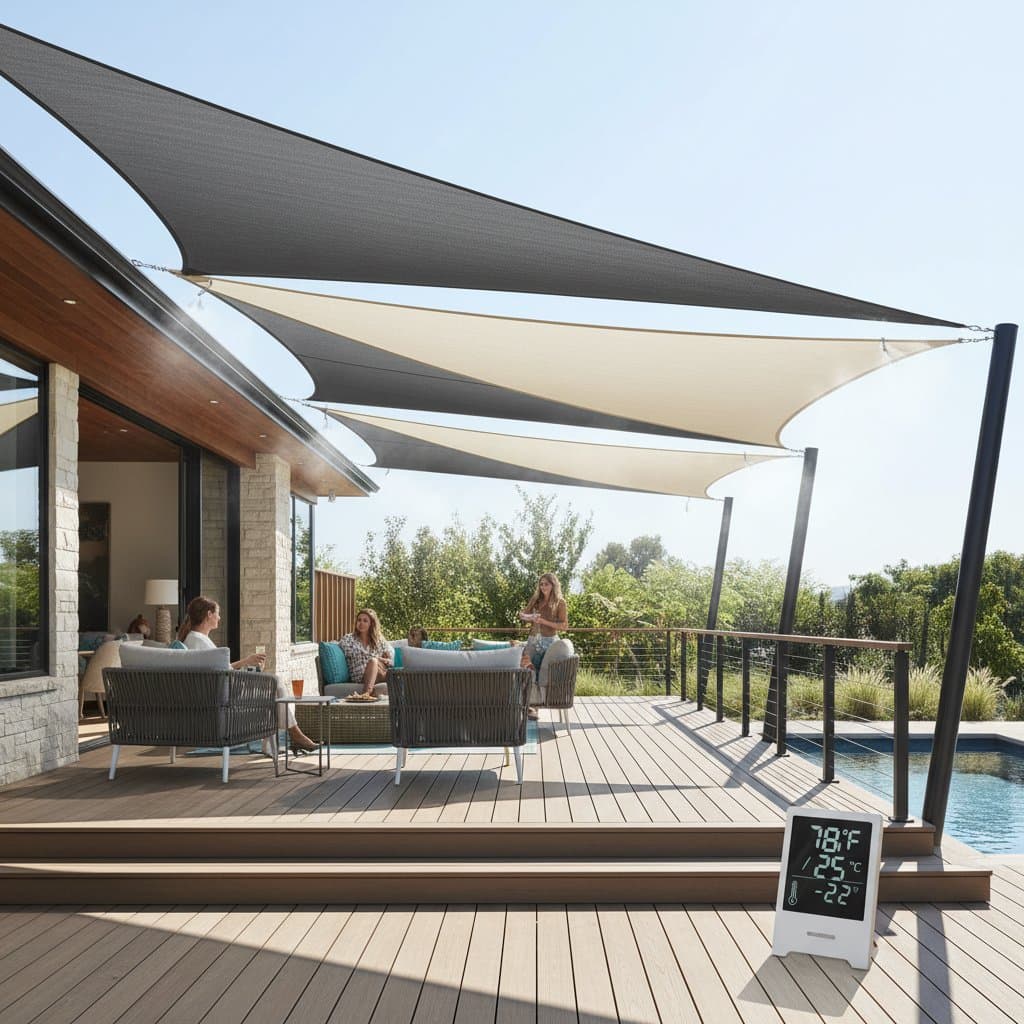
Why Shade Sails Are 2026 Top Deck Cooling Trend
A hot deck can make even the most beautiful backyard uncomfortable. You step outside for a meal or a quiet moment, and the heat from direct sunlight drives you back in. Shade sails solve that problem with simple geometry and smart fabric. They give you cool air, soft light, and a design edge that fits almost any space.
The goal is to make outdoor decks usable and inviting on warm days. This guide explains what shade sails are, why they work so well for cooling, and how you can plan, install, and maintain them at home.
Overview
A shade sail is a piece of heavy, UV-resistant fabric stretched tightly between anchor points to create shade. The idea comes from sailboat design, where tension and curve control movement and strength. In the home setting, the same principle cools decks, patios, and play areas.
Shade sails matter because they block heat before it settles on your deck. They also let air move freely underneath, keeping the space cooler than a solid roof or awning. When installed correctly, they can lower surface temperatures by as much as 20 degrees Fahrenheit (11 degrees Celsius). That difference turns a harsh deck into a livable outdoor room.
You can use one sail for a small reading corner or layer several for a sculptural look. The material options and shapes make them easy to match with many kinds of architecture.
Tools and Materials
Before starting, gather the right materials and hardware. This ensures proper tension and safety once the sail is up.
Materials include one to three shade sails depending on deck size, mounting hardware kits with turnbuckles, pad eyes, and snap hooks, stainless steel cables or chains for adjustable tension, posts of aluminum or powder-coated steel for open areas, concrete mix if setting posts in the ground, UV-resistant rope for temporary setups, a ladder for installation, and measuring tape, level, and marker.
A basic single-sail setup with hardware averages between 150 and 300 dollars. Multi-sail or custom shapes can reach 800 dollars or more depending on material quality.
Steps
1. Plan the layout
Start by measuring your deck. Mark where you want shade during the hottest part of the day. The sail should cover seating or dining zones without blocking essential views or walkways.
Sketch the design. Triangular sails give more visual movement and easier tensioning. Square sails shade larger areas but need stronger anchors. Leave at least 1 foot (30 centimeters) of clearance between the sail edge and nearby walls or railings.
Avoid attaching sails to weak structures like old fences or deck rails. Use solid framing or dedicated posts.
2. Choose anchor points
Each sail corner must attach to a fixed point capable of holding high tension. Good choices include house walls with strong studs, steel or aluminum posts set in concrete, and large masonry surfaces.
Mark each anchor point at a slight angle so the sail slopes downward. This lets rainwater drain off instead of pooling. Keep a slope of about 10 to 15 degrees. For a 12-foot (3.6-meter) span, make one corner about 2 feet (60 centimeters) lower than the highest point.
3. Install hardware
Secure each pad eye or anchor plate with heavy-duty screws or bolts. Use washers to spread the load. If you are drilling into masonry, insert expansion bolts. Attach turnbuckles and snap hooks to the plates or posts.
Wear gloves and safety glasses when drilling or tightening hardware. Stainless steel edges can be sharp.
4. Attach and tension the sail
Connect the sail corners to the anchor points using your turnbuckles and cables. Begin lightly, then adjust tension evenly across all corners. The fabric should be tight enough to avoid sagging but not so tight that it strains the seams.
Check that the curve looks smooth and the fabric does not flap in wind. Tighten turnbuckles a half-turn at a time until you reach full tension.
5. Test and adjust
Walk under the sail at different times of day. Observe how sunlight moves. Adjust tension or height if glare appears or water collects. Once satisfied, trim any excess rope and close turnbuckle locks.
Always use a stable ladder and have another person nearby when working above shoulder height.
Safety Tips
Remove sails before strong storms. Even strong fabrics can tear under heavy wind pressure. Never install near grills or open flames. Many fabrics are heat resistant but not fireproof.
Keep a firm stance and avoid reaching too far. Move the ladder instead. Check metal fittings twice a season for wear or corrosion. Replace any part showing cracks or rust.
Troubleshooting
If the fabric droops, tighten all turnbuckles evenly. If sagging continues, adjust anchor points to increase slope or tension range. A flat sail collects water and stretches fabric. Increase the angle between high and low points. Use a middle support cable if needed.
Loose edges make noise and wear out faster. Recheck cable tightness and confirm all corners have equal pull. Move anchors slightly or overlap multiple sails. A layered setup can balance light and airflow.
Budget and Time
A single-sail installation can take two to three hours for a small deck. Adding posts or multiple sails can extend the project to a full day. Hiring a pro installer costs about 400 to 700 dollars for labor on a medium deck.
Use existing wall anchors or sturdy beams instead of adding posts. Select high-density polyethylene fabric, which is durable and affordable. Buy hardware kits as complete sets to avoid mismatched parts.
Do not skip stainless steel hardware. Cheaper metals rust and stain decks. Do not rely on rope alone for long-term tension. Use metal connectors for strength.
Maintenance
Shade sails need light care to stay effective. Clean once each season with mild soap and a soft brush. Rinse thoroughly and let dry before retensioning. Inspect anchors, turnbuckles, and seams. Replace any frayed cords or cracked fittings.
Store sails during winter or windy periods. Roll instead of folding to avoid creases. Retension after storms or heavy rain. Fabric stretches slightly over time. With regular checks, a good sail lasts five to ten years depending on fabric quality and exposure.
Smart Storage Moves
If you remove sails seasonally, set up a simple storage system. Label each sail with its location using waterproof tags. Roll sails around a lightweight PVC pipe to prevent creasing. Store hardware in labeled bags. Keep everything in a dry, shaded place such as a shed or garage. These steps make next season setup quick and prevent lost parts.
When to Call a Pro
Some decks need expert help, especially when anchor points involve structural walls or unusual shapes. Call a professional if you need wall mounts on brick or stucco, the sail spans more than 20 feet (6 meters), you want a multi-layer design that requires precise geometry, or you plan to install posts in concrete near utilities.
Ask the installer about load ratings, fabric warranties, and drainage angles. A brief consultation can prevent costly mistakes later.
Why Shade Sails Work
Shade sails cool by blocking radiant heat while allowing airflow. Unlike solid roofs, they do not trap warm air underneath. The breathable weave reflects sunlight while releasing heat through the fabric.
Tests show that deck temperatures under shade sails can drop by 15 to 25 degrees Fahrenheit (8 to 14 degrees Celsius). The difference depends on color, height, and fabric density. Light colors reflect more heat, while darker shades give stronger UV protection.
Homeowners choose them for flexibility too. The adjustable tension lets you change height or angle with the season. You can lower a corner to block late-day sun or raise it for winter light.
Planning Your Installation
Start by walking around your deck at midday. Notice where you need shade most. Sketch a simple plan with two or three anchor points and a slope for drainage. Measure each span carefully to know what sail size fits best.
Then decide whether to mount to existing structures or install new posts. Order one high-quality sail and hardware kit first to test the look and performance. Once you see the cooling difference, expand with more sails or a different shape.
Keep the process simple. Measure twice, anchor safely, and tension evenly. A well-installed shade sail turns a hot deck into a comfortable retreat that stays bright but never harsh.