
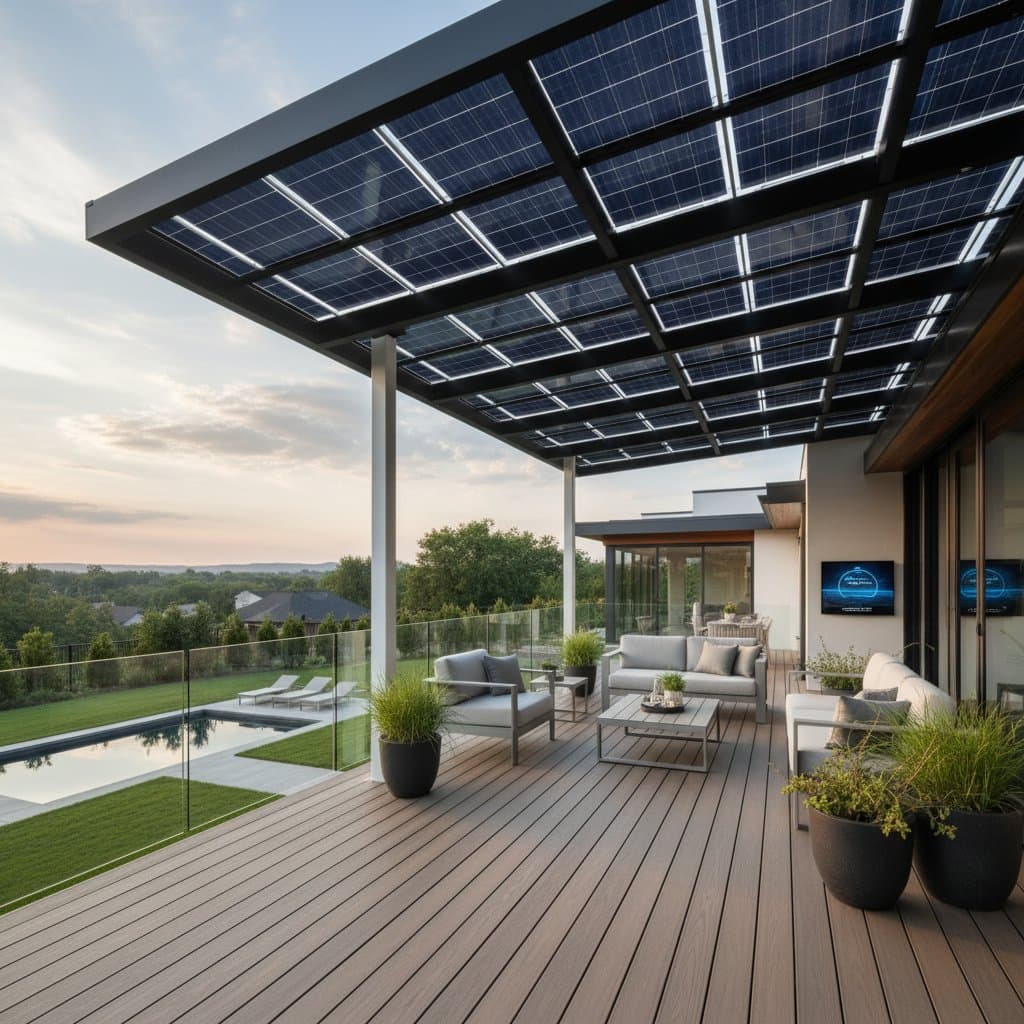
Energy-Generating Decks: Integrating Shade and Solar Power
Homeowners seek outdoor spaces that provide comfort, aesthetic appeal, and energy efficiency. Energy-generating decks achieve these qualities through solar canopy panels. These panels deliver shade and convert sunlight into usable electricity, fostering a balanced environment.
This article explains the components of such decks, their operational principles, and implementation strategies for residential or commercial settings.
Core Components
An energy-generating deck consists of a raised platform topped with a solar canopy. The canopy supports photovoltaic panels that capture sunlight and transform it into direct current electricity. The underlying deck remains protected from direct rays, maintaining lower temperatures for extended use.
Such designs repurpose underutilized areas like yards or rooftops into productive energy assets. Panels integrated into decks or pergolas offset household consumption, diminish reliance on utility grids, and mitigate heat gain that increases air conditioning demands. A properly sized canopy typically yields 1 to 3 kilowatts, sufficient to power outdoor lighting, compact devices, or electric vehicle chargers.
Required Tools and Materials
Projects range from modest additions to comprehensive builds. Essential items include:
- Solar canopy kits featuring frames and panels matched to deck dimensions, often covering 80 to 120 square feet
- Inverters for transforming direct current to alternating current
- Outdoor-rated wiring and protective conduit
- Framing elements like pressure-treated wood or steel beams
- Corrosion-resistant fasteners and weatherproof sealants
- Grounding systems and junction boxes for electrical safety
Verify compliance with local regulations prior to procurement.
Installation Process
Step 1: Evaluate Solar Exposure
Determine daily sunlight availability using solar tracking applications or a basic compass. Target areas receiving at least four hours of unobstructed light. Steer clear of locations overshadowed by foliage or adjacent structures.
Step 2: Determine Canopy Dimensions and Tilt
Position the canopy 7 to 9 feet above the deck floor for adequate clearance. Angle panels 25 to 35 degrees southward in the Northern Hemisphere to optimize energy capture throughout the day.
Step 3: Strengthen the Deck Foundation
Incorporate support posts or crossbeams engineered to bear the canopy's load. Each square foot of paneling contributes 2 to 4 pounds of weight. Fasten connections with galvanized hardware to ensure stability.
Step 4: Secure the Panels
Follow manufacturer specifications to affix panels to the frame. Route wiring through conduit to prevent exposure and hazards. Disconnect power sources before any electrical work.
Step 5: Integrate with Electrical Infrastructure
Engage a certified electrician to install the inverter and link it to the home's electrical panel. This phase guarantees adherence to codes and operational reliability.
Essential Safety Measures
Deactivate electrical circuits prior to manipulating wires. Don insulated gloves and footwear with strong traction for all tasks. Employ stable platforms or ladders for elevated work to minimize fall risks.
Common Issues and Resolutions
Reduced performance may stem from accumulated dust on panel surfaces, which diminishes light absorption. Inspect connections for looseness that could interrupt flow. Reassess for encroaching shadows from seasonal plant growth or construction nearby. Routine cleaning restores efficiency in most cases.
Upkeep and Long-Term Care
Keep spare fasteners and sealants in a sealed, moisture-free container. Conduct seasonal examinations of the frame for signs of rust or instability. Prompt repairs preserve structural integrity and energy output.
Cost Estimates and Timeline
Basic kits with panels begin at approximately 2,000 dollars for small-scale installations. Complete systems, including reinforcements, approach 10,000 dollars. Simple assemblies require one weekend, while extensive modifications extend to several days.
Year-Round Management
In spring, wash panels thoroughly and verify electrical performance ahead of peak sunlight periods. During summer, leverage the shaded deck for gatherings as panels operate at maximum capacity. Autumn demands removal of fallen leaves to avoid blockages. Winter maintenance involves soft-bristled sweeping to clear snow without damaging surfaces.
Professional Assistance Indicators
Consult solar specialists or engineers for decks exhibiting decay, grid-tied systems, or permitting needs. Inquire about incentives such as tax credits for solar installations and guidelines on load-bearing capacities.
Advancing Your Project
- Document deck measurements and track sunlight patterns.
- Research canopy options aligned with your spatial and energy objectives.
- Arrange an electrician review prior to electrical integration.
Implementing solar elements in your deck transforms routine shade into a source of renewable energy. This approach enhances home efficiency while contributing to broader environmental goals.