
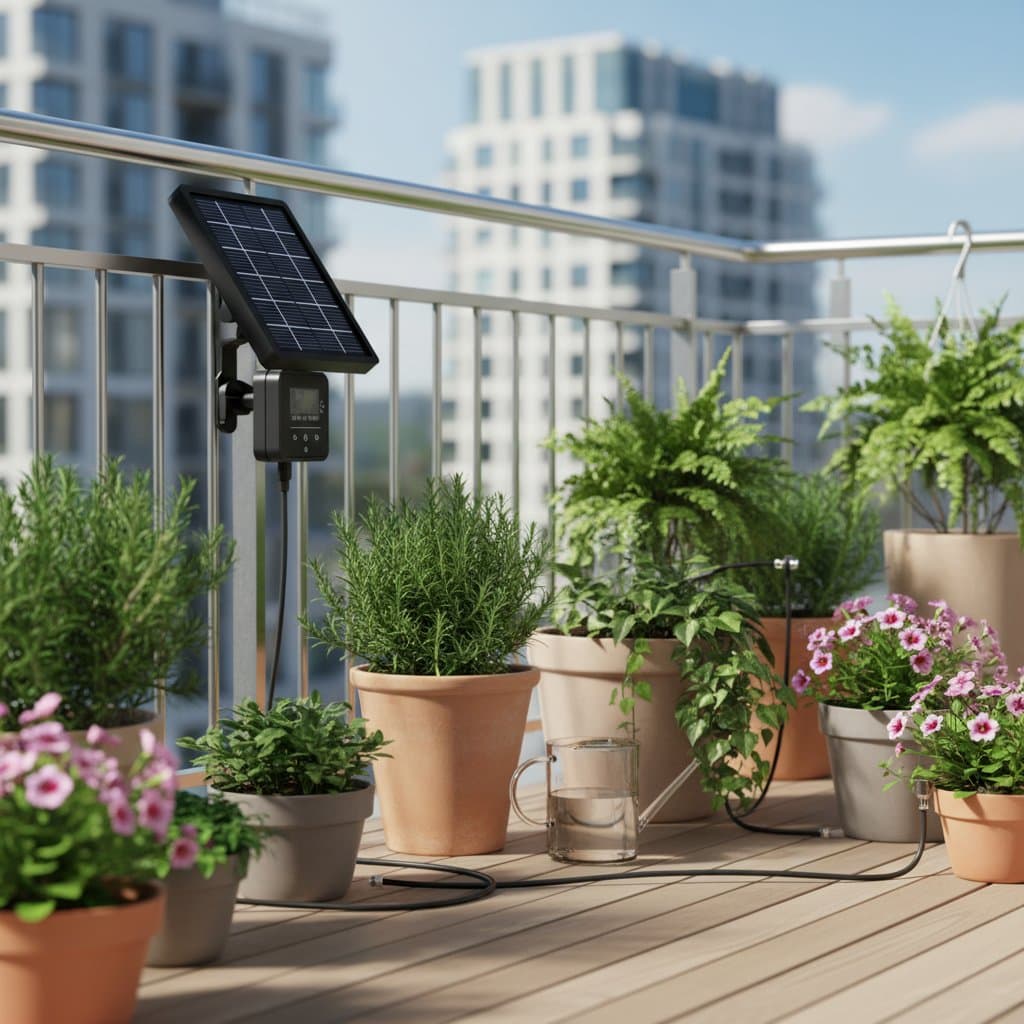
Micro-Drip Solar Kits for Self-Watering Balconies
Balcony gardens provide tranquility and vibrancy to urban environments, yet maintaining plants during heat waves or absences poses challenges. A micro-drip solar kit offers a reliable watering solution powered by sunlight rather than electricity. The system ensures consistent moisture with minimal effort, allowing installation in one afternoon using basic tools and thoughtful planning.
This guide details the operation of these kits, essential purchases, installation procedures, and maintenance practices for an automated balcony watering setup.
System Overview
A micro-drip system employs narrow tubing and precise emitters to supply water directly to plant roots. Each emitter dispenses a controlled trickle, typically ranging from 0.3 to 0.5 gallons per hour. Integrated with a compact solar pump and timer, the system operates autonomously, with adjustable flow rates and intervals suited to planters, window boxes, or vertical gardens.
Solar energy renders the setup outlet-free and battery-independent. The panel captures daylight to drive water from a reservoir, yielding efficient hydration without energy loss. This approach suits urban gardeners who desire sustainable, hands-off plant care.
Required Tools and Materials
Acquire kits from online retailers or garden stores, budgeting fifty to one hundred dollars for a complete balcony system. Assemble the following items prior to starting:
- Solar-powered pump featuring an integrated or separate panel
- Water reservoir, such as a five-gallon bucket or narrow storage bin
- Micro-drip tubing, approximately thirty feet for modest balconies
- Emitters or drippers, numbering ten to twenty based on plant quantity
- Connectors and stakes for line branching and fixation
- Timer unit, if absent from the pump
- Scissors and measuring tape
- Waterproof sealant for joint connections
Prepare a towel and small bucket for flow testing and adjustments.
Installation Steps
1. Measure and Plan Layout
Assess the length of each planter and determine emitter needs. Allocate one emitter per eight to ten inches for herbs or petite flowers; larger pots require two. Diagram the tubing route, ensuring segments remain under twenty feet from the pump to preserve pressure.
2. Position the Reservoir
Locate the container on a level surface exposed to sunlight. Position it marginally below the uppermost planter to prevent gravity-induced backflow. Fill to half capacity with filtered water; strain rainwater through mesh to eliminate particles.
3. Install the Solar Panel
Secure the panel to a railing or wall receiving at least five hours of direct sun. Orient it southward, avoiding obstructions from adjacent structures. Employ zip ties or weatherproof brackets, routing cables clear of pathways to minimize hazards.
4. Attach the Pump and Tubing
Submerge the pump in the reservoir and link the outlet to the primary tubing. Extend the main line along the balcony perimeter, securing with clips or hooks at twelve-inch intervals. Branch lines to individual planters and affix emitters at terminal points.
5. Prime and Verify Operation
Activate the pump in daylight and monitor emitter output. Water may require thirty seconds to traverse all lines. Regulate flow via emitter adjustments; inspect and seal any connector leaks.
6. Configure the Timer
Establish cycles according to plant requirements. For typical balcony setups, schedule ten to fifteen minutes once or twice daily. Monitor soil dampness initially and refine timings accordingly.
7. Finalize and Secure
Fasten tubing with stakes or clips for neatness. Store excess line coiled by the reservoir. Clean the panel with a moist cloth to clear debris.
Essential Safety Considerations
Maintain dry, elevated electrical connections. Select food-grade or UV-resistant tubing to prevent contaminant release. Avoid operating the pump without water to avert overheating. Verify that balcony supports bear the reservoir's loaded weight, approximately forty pounds.
Common Troubleshooting Solutions
Reduced Flow: Confirm panel sun exposure and clear pump intake. Perform monthly filter cleanings.
Inconsistent Distribution: Trim extended tubing or install auxiliary lines; pressure diminishes beyond twenty feet.
Insufficient Moisture Despite Operation: Extend cycles by five minutes or substitute obstructed emitters.
Reservoir Algae Growth: Apply an opaque cover to limit light. Clean with diluted vinegar monthly.
Cost and Time Estimates
Basic kits with ten emitters average sixty dollars; expanded versions with twenty emitters and robust pumps approach one hundred twenty dollars. Initial setup demands two hours, with monthly upkeep at fifteen minutes. Individual emitter replacements cost under one dollar. With routine care, solar components endure multiple seasons.
Ongoing Maintenance Practices
Inspect tubing weekly for bends. Flush lines monthly with fresh water. Remove algae from the reservoir and panel as observed. Swap damaged tubing promptly to forestall leaks. In winter, drain fully and indoor-store the pump to guard against frost.
Maintain a record of schedules and modifications to optimize per plant variety.
Efficient Storage Strategies
House reserve connectors and emitters in a weatherproof container by the entry. Tag tubing by plant category for simplicity. Bundle lines with clips into zones like herbs, blooms, or produce to streamline reconfiguration.
Relocate shaded panels seasonally for optimal performance; models with ten-foot leads facilitate this.
Professional Assistance Indicators
Engage a gardening specialist or electrician for recurrent pump issues or plumbing integrations. Inquire about sealed enclosures and approved low-voltage cabling. Experts assist in crafting tiered systems for expansive balconies or roofs.
Seasonal Care Guidelines
Spring: Reassemble components, leak-test, and sanitize the reservoir pre-planting.
Summer: Daily reservoir checks during intense heat; deploy shade if wilting occurs.
Autumn: Diminish frequencies with cooling weather; purge lines prior to stowage.
Winter: Drain and shelter the pump indoors; protect or relocate planters from freezes.
Achieving Optimal Results
Select emitters calibrated to specific plant needs, such as lower rates for succulents. Integrate rain sensors on timers to conserve water during wet periods. Monitor overall system efficiency by tracking reservoir refill frequency, adjusting for seasonal variations. These steps ensure a thriving, low-maintenance balcony garden that enhances urban living year-round.