
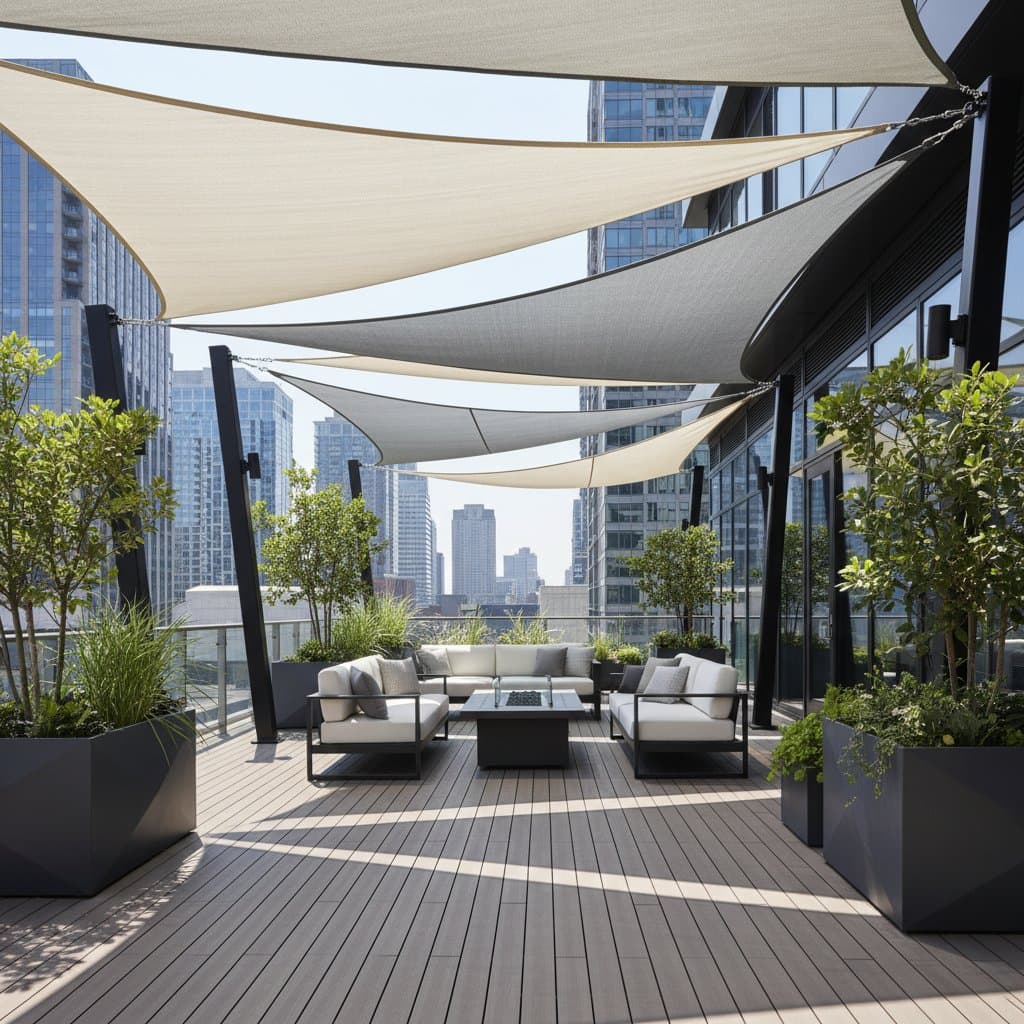
Understanding Shade Sails and Their Cooling Effect
Shade sails consist of durable, UV-resistant fabric stretched between anchor points to form a canopy. They block direct sunlight, reducing radiant heat on deck surfaces. Studies indicate that these installations can lower temperatures by up to 20 degrees Fahrenheit, creating a more tolerable environment during peak summer hours.
The cooling mechanism relies on the fabric's ability to reflect solar radiation while permitting airflow beneath. This design prevents the heat buildup common on exposed wood or composite decks, which can exceed 140 degrees Fahrenheit in full sun. Homeowners in urban settings benefit from this passive shading, as it extends usable outdoor time without mechanical cooling systems.
Beyond temperature control, shade sails protect decking materials from fading, cracking, and warping caused by prolonged UV exposure. They also minimize glare, fostering a serene space for gatherings or quiet reflection.
Selecting the Right Shade Sail
Choose fabric composed of high-density polyethylene (HDPE) for optimal UV resistance and breathability. Look for sails rated for at least 90 percent UV blockage and certified for outdoor structural applications. Triangle or rectangle shapes suit most decks, with triangles offering versatile coverage for irregular spaces.
Consider deck size and orientation when deciding coverage. A 10-foot by 10-foot deck requires a sail spanning at least 12 feet per side to ensure overlap. Opt for colors like beige or gray to blend with urban aesthetics while maximizing heat reflection.
Evaluate anchor points early. Existing posts, walls, or beams simplify setup, but ensure they support at least 300 pounds per attachment. For freestanding options, select powder-coated steel poles rated for wind loads up to 50 miles per hour.
Installation Basics
Begin by mapping anchor locations to achieve a 20 to 30-degree slope for water runoff. Secure turnbuckles and stainless steel cables to distribute tension evenly across the fabric. Start with corner attachments, then tighten incrementally to avoid stress points.
Use eye bolts or lag screws drilled into solid wood or masonry. For concrete posts, embed expansion anchors at least 3 inches deep. Test stability by applying manual pressure before full tensioning.
Position the sail to capture prevailing breezes, enhancing natural ventilation. A single sail covers basic needs, but multiple sails in a layered configuration provide adjustable shading patterns throughout the day.
Safety Considerations
Inspect attachments twice each season and replace any corroded components immediately. Avoid suspending lights or heavy decorations from the sail unless load capacity exceeds the added weight by a factor of three.
Remove the sail prior to severe storms to avert fabric tears or hardware failure. When adjusting fittings, maintain ladder stability and employ a spotter for support.
A properly installed shade sail endures five to ten years with routine care. Fabric integrity and UV protection determine longevity, so select products designated for structural outdoor use.
Addressing Common Issues
If the sail sags following rainfall, adjust turnbuckles or reduce height at one corner to enhance drainage slope.
Excessive wind noise or flapping signals insufficient tension; increase it uniformly or install a cable guide along an edge for stabilization.
When anchor bolts loosen, upgrade to larger diameters or longer eye bolts embedded deeper into walls or posts.
For inconsistent shade distribution, modify corner elevations. Elevating two corners higher than the others balances coverage with airflow.
Upkeep Practices
Clean the sail quarterly using mild soap and a soft brush, followed by a thorough rinse from a garden hose. Allow complete drying before storage to prevent mildew.
Avoid bleach or abrasive cleaners, as they compromise fiber strength. After intense winds or rain, verify tension levels and examine seams for wear.
Patch minor tears promptly with UV-resistant fabric tape to halt progression. During off-seasons, store indoors by rolling the sail to preserve shape.
Apply silicone spray to metal hardware annually to inhibit rust formation.
Storage Strategies
Label corners before disassembly to streamline reinstallation. Store hardware in airtight containers with desiccant packets to control humidity.
Mark anchor positions on surfaces with durable adhesive labels for precise realignment. On compact urban decks, utilize stackable storage under furniture to organize tools and spares.
If managing multiple sails, categorize items by size in labeled compartments for efficiency.
Cost and Timeline Estimates
A small sail project requires half a day, while larger configurations demand a full day. Expenses vary by scale and components:
- Small deck (10 by 10 feet or 3 by 3 meters): 150 to 250 dollars
- Medium deck (12 by 16 feet or 3.6 by 4.8 meters): 300 to 450 dollars
- Large deck with multiple sails: 600 to 900 dollars or higher
Leverage existing structures to minimize hardware expenses. Prioritize premium fabric and corrosion-resistant fittings for long-term reliability and safety.
Engaging Professional Services
Consult experts for decks requiring concrete drilling or attachments to brick and stucco. Professionals assess structural integrity and load-bearing capacity to ensure compliance.
Budget 200 to 400 dollars for standard labor. In high-wind zones, request sails with reinforced hems and doubled stitching for added resilience.
Experts often recommend hybrid systems, pairing fixed sails with retractable elements for adaptable shading.
Essential Insights
- Shade sails reduce deck temperatures by up to 20 degrees Fahrenheit (11 degrees Celsius).
- Correct tension and incline avoid sagging and moisture accumulation.
- Stainless steel hardware and UV-durable fabrics prolong service life.
- Consistent cleaning and checks maintain safety and appeal.
- Experts prove valuable for extensive or intricate projects.
Implementing Your Shade Solution
Commence with a modest triangular sail in one deck area to experience the cooling impact firsthand.
Schedule biannual inspections for tension and fabric condition. Document your configuration photographically to facilitate seasonal setup.
Integrate sails thoughtfully to optimize ventilation and illumination. This approach not only cools surfaces but also shields materials, converting intense summer heat into enjoyable outdoor living.