
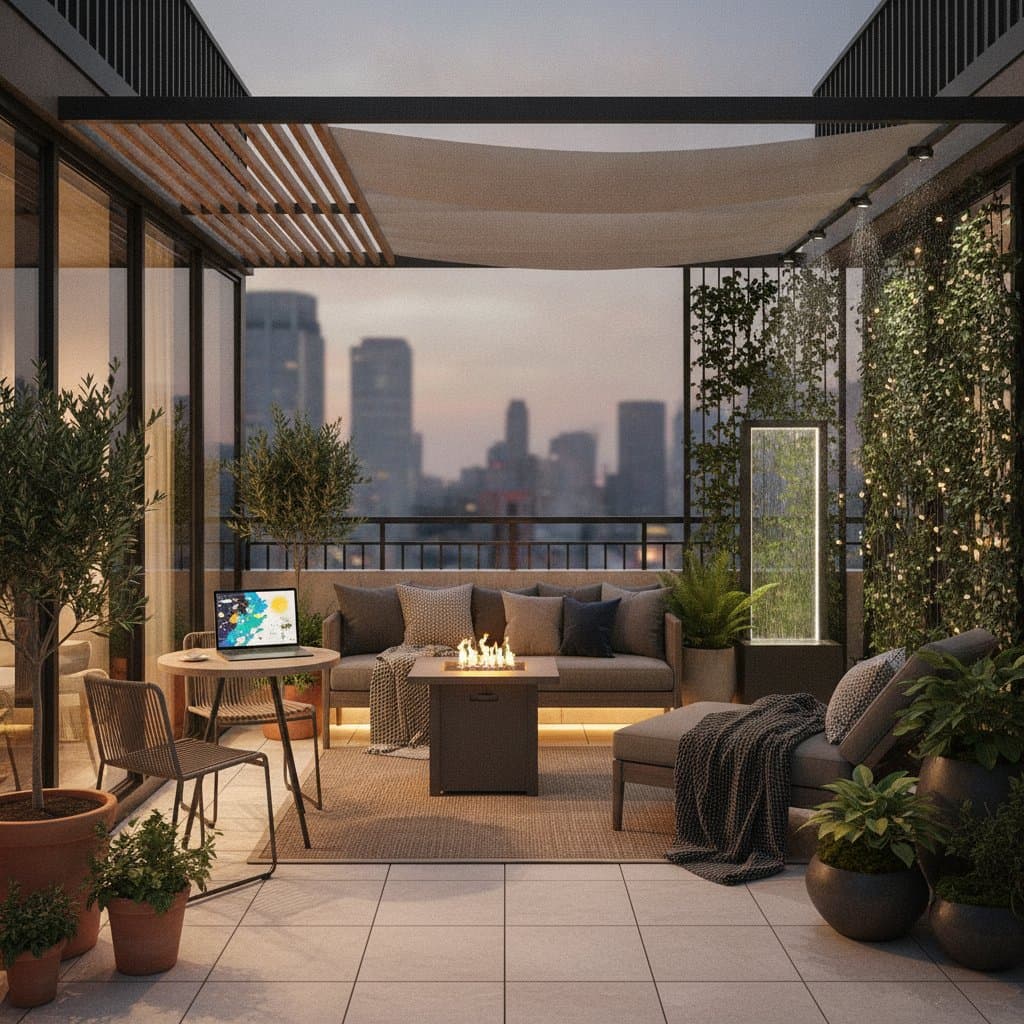
Managing Wind and Heat
Combine planters with screens to control airflow. Position tall plants such as bamboo or ornamental grasses along the windward side. These elements reduce wind speed while preserving views. For added protection, install a three foot high bamboo or mesh screen.
Portable outdoor heaters provide warmth during colder months. Position any heater at least two feet from walls or fabrics. One fifteen hundred watt unit typically covers an eighty square foot space. Always disconnect the power before leaving the area.
Regulating Surface Temperatures
Concrete and metal surfaces change temperature rapidly. Cover them with outdoor rugs or modular deck tiles. This approach stabilizes temperatures underfoot by about ten degrees. Add a waterproof cushion or insulated mat beneath seating in winter. Remove heavier coverings during summer to avoid excess heat.
Incorporating Plants for Balance
Plants help regulate moisture and temperature. Cluster at least three planters to create a sheltered green area. Select evergreens or hardy succulents to maintain texture throughout the year. Secure pots with small stones in windy locations.
Water plants early in the morning to minimize evaporation. Test soil moisture weekly with a meter. This routine maintains stable humidity and cooler air.
Adding Lighting and Texture
Lighting extends usability into the evening. String LED lights along the railing and place a lantern near seating. Warm white bulbs create a natural evening glow.
Introduce texture through cushions, throws, and woven mats. A few well chosen pieces make the space inviting. Store fabrics in sealed bins ahead of rain.
Safety Practices
Keep electrical cords away from wet areas. Select only certified outdoor equipment for heaters and lights. Avoid blocking drainage points on the building. Inspect railing attachments twice annually for signs of corrosion. Wear gloves when working with metal or glass.
These measures support safe use across seasons.
Addressing Common Problems
If the space remains drafty, add another row of plants or a partial screen. Look for gaps beneath the railing.
For condensation on surfaces, operate a small fan for twenty minutes after watering. Shift pots two inches from walls to improve air movement.
Should a heat lamp trip the breaker, connect it to a dedicated outdoor outlet. Never link multiple extension cords together.
Each adjustment requires minimal time yet prolongs material durability.
Budget Planning
Functional zones are achievable at various price points. A basic setup with screens, planters, and lights costs around one hundred fifty dollars. Mid level investments between three hundred and five hundred dollars include a heater and quality awning. Higher end options at eight hundred dollars or more provide custom panels and sensors.
Allocate one weekend for initial setup and one hour weekly for maintenance. The result is consistent outdoor access without major construction.
Routine Maintenance
Inspect fabrics and cords every two months. Clean panels and lights using mild soap. Rotate planters for even light exposure. Replace cushion covers at the first sign of wear.
Adjust zone layouts each season. Shift seating toward sunlight in winter and shade in summer. This strategy maximizes existing furniture.
Adjustments by Season
In spring, examine anchors and remove accumulated dust. Introduce flowering plants for added color.
During summer, emphasize ventilation with fans and shade cloth.
In autumn, remove weaker plants and store cushions. Verify heater function before cold weather arrives.
Winter requires prompt snow and ice removal. Maintain one heated area for brief outdoor visits.
Storage Strategies
Vertical racks organize tools and cushions efficiently. A three tier shelf accommodates smaller items. Seal fabrics in bins with secure lids. Bring heaters and lights indoors during storms.
Label bins according to season for quick retrieval. Keep a small tote by the door for frequent items such as blankets.
When Professional Assistance Is Needed
Engage specialists for wiring modifications, custom glass, or heavy structural work. Specify outdoor rated materials and request a layout plan in advance.
Year Round Enjoyment
Consistent microclimate management turns a balcony into a reliable retreat. Simple adjustments deliver comfort regardless of weather.