
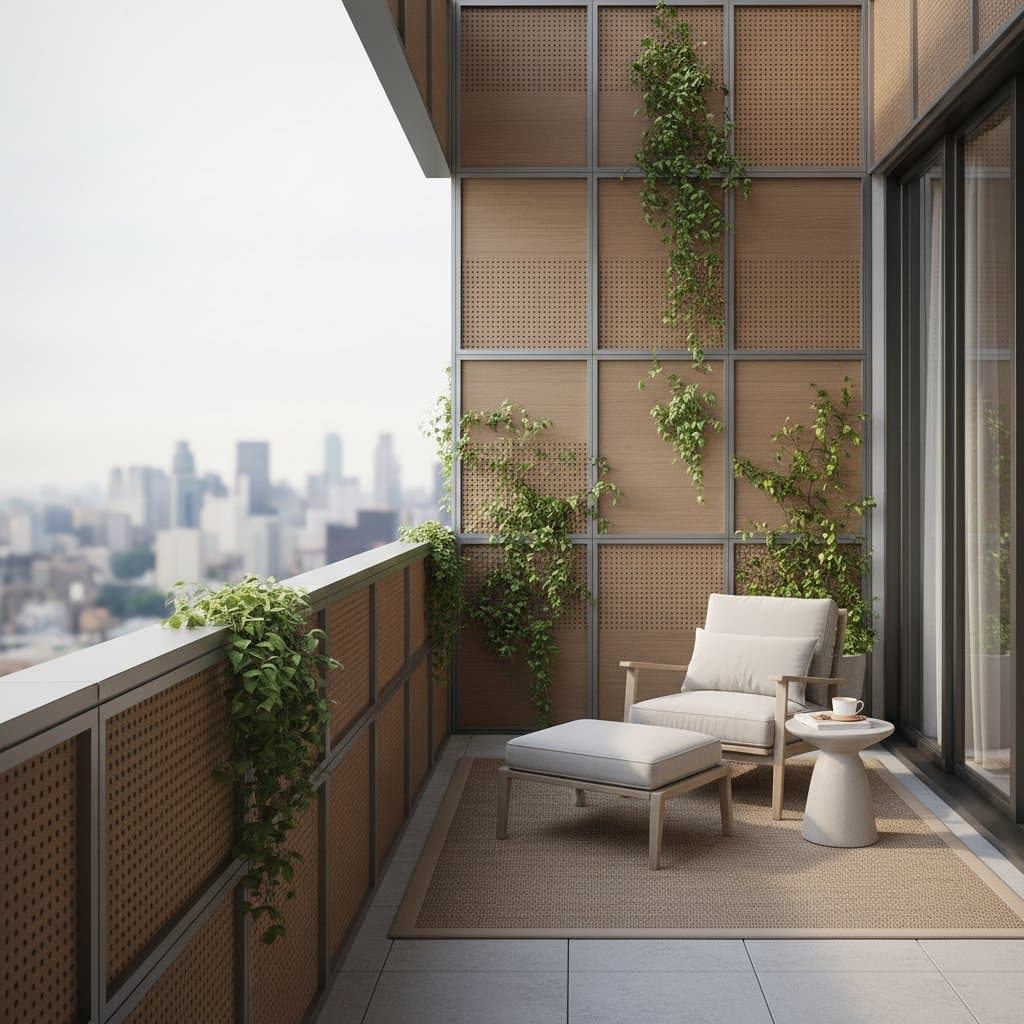
Step 4: Seal and Protect
Apply a narrow line of weather-resistant sealant along the edges of drilled holes and any exposed surfaces. This step blocks moisture entry and prevents corrosion in mounting hardware. Remove surplus sealant with a cloth prior to curing to maintain a clean appearance.
For balconies exposed to prolonged sunlight, install a UV-resistant fabric cover or an overhead shade structure. Such protections shield the panels from color degradation and prolong durability across multiple seasons. Regular checks ensure these safeguards remain effective.
Step 5: Test and Adjust
Position yourself on the balcony and evaluate the ambient sound levels. A successful installation produces a noticeably muffled and less reverberant environment. Target persistent noisy areas by incorporating a compact corner absorber or a vertical plant barrier; thick foliage effectively dampens higher-pitched sounds while blending into the landscape.
Safety Considerations
Position panels away from drainage openings and ventilation systems to avoid obstructions. Maintain clearance around electrical wiring and lighting fixtures during mounting. Select non-combustible adhesives to minimize fire risks.
On elevated balconies, particularly those above ground level, employ a safety harness for installations extending beyond the railing. Professional assistance proves essential for such scenarios to ensure compliance with building codes and personal safety.
Common Issues and Solutions
Water accumulation behind panels.
Inspect for clogged drainage spaces immediately. Elevate the lower panel edges by a minimum of one inch to facilitate proper water flow and prevent stagnation.
Panels vibrating in windy conditions.
Secure additional fixings or insert rubber gaskets at connection points. This approach allows slight movement while eliminating rattling disturbances.
Development of mold or surface staining.
Wash affected areas using a solution of mild detergent and warm water. Allow complete air drying before reapplying protective covers. Substitute any persistently moist coverings to avert recurrence.
Persistent high noise levels.
Incorporate a thick-pile outdoor rug with sound-absorbing underlay or install an additional panel layer on facing surfaces for enclosure effects. Each successive layer enhances absorption capacity by approximately 20 percent, yielding measurable improvements.
Ongoing Maintenance and Storage Practices
Acoustic panels for outdoor applications require consistent attention to preserve performance. Conduct inspections every few months with the following routine:
- Gently sweep away accumulated dust, pollen, and debris using a soft-bristled brush.
- Examine all fasteners and mounts for signs of corrosion or instability.
- Renew sealant applications wherever gaps or cracks appear.
- Relocate detachable panels to an indoor area ahead of severe weather events, such as heavy storms or subfreezing temperatures; store them vertically in a dry location.
In cases where panels become saturated or excessively weighted, detach and dry them thoroughly prior to remounting. Extended exposure to dampness diminishes sound-dampening efficiency over time.
Cost Estimates and Installation Timeline
Expenses depend on panel dimensions, composition, and quantity. Typical pricing includes:
- Foam or textile-based panels: 25 to 45 dollars per unit.
- Panels constructed from metal or mineral wool: 60 to 110 dollars per unit.
- Essential mounting supplies: 15 to 30 dollars for setups on compact balconies.
A standard small balcony accommodates four to six panels effectively. Two individuals can complete the installation in three to five hours. Hiring a specialist may incur fees of 200 to 400 dollars, influenced by elevation and site accessibility.
Seasonal Care Guidelines
Perform thorough assessments during spring and autumn, as fluctuating humidity and temperatures often compromise fastener integrity. Reinforce or reseal connections in preparation for winter extremes.
During summer periods, monitor for fabric bleaching or foam expansion due to heat. Intervene by replacing or applying protective coatings to panels exhibiting fissures. In winter, clear accumulated snow promptly to avoid frame distortion from ice formation.
Professional Installation Recommendations
Engage a certified contractor for balconies situated above the fifth floor or requiring anchors in load-bearing metal elements. Inquire specifically about:
- Maximum weight capacities for railing attachments.
- Methods for sealing penetrations to ensure water resistance.
- Availability of fire-resistant materials suitable for residential complexes.
Experts can quantify noise reduction through pre- and post-installation decibel measurements, validating the system's efficacy.
Essential Insights
Properly selected and positioned balcony acoustic panels attenuate external noise by as much as 50 percent. They function through sound wave absorption and diffusion rather than total enclosure.
Core principles:
- Conduct precise measurements, prioritizing the primary noise source.
- Opt for robust, all-weather panels compatible with outdoor conditions.
- Fasten securely while preserving airflow and drainage pathways.
- Review and service panels at the start of each season.
- Integrate decorative elements that contribute to acoustic control.
Practical Actions to Take
- Assess your balcony's acoustics by noting peak disturbance zones and estimating required coverage.
- Evaluate material options and aesthetic matches to harmonize with existing furnishings.
- Allocate time for the setup process, transforming your space into an inviting sanctuary with minimal effort.
Urban environments present constant auditory challenges, yet strategic interventions allow balconies to remain airy and serene. Acoustic panels offer a balanced solution, preserving openness while fostering peace.