
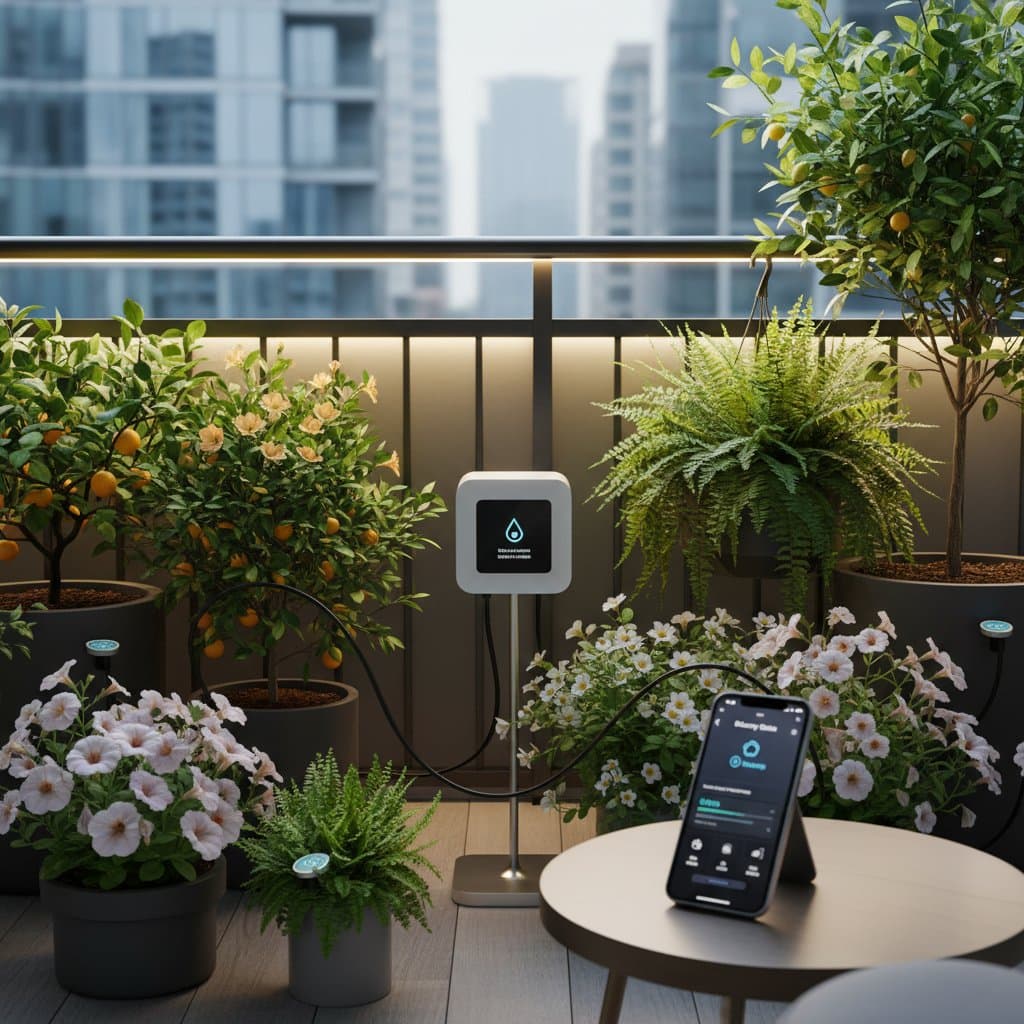
How AI Irrigation Creates Self-Watering Balconies
Balcony plants often suffer from inconsistent watering due to busy schedules and changing weather. An AI-driven irrigation system measures conditions and supplies water only when needed. This approach reduces waste and supports healthier growth without daily effort.
Core Benefits
The system tracks soil moisture, light levels, and temperature through small sensors. It activates a pump or valve to deliver measured amounts of water to each container. Users view data and make adjustments through a phone app.
Key advantages include:
- Steady root moisture that limits plant stress.
- Water reduction of 30 to 50 percent versus hand watering.
- Reduced daily tasks for people with limited time.
- Improved plant performance from regular hydration.
Required Components
A basic setup for a small balcony includes these items:
- Wi-Fi controller or hub.
- One soil moisture sensor per planter or zone.
- Low-pressure pump or solenoid valve.
- Quarter-inch drip tubing with emitters.
- Outdoor power source or solar panel.
- Three- to five-gallon reservoir if no faucet is present.
- Companion mobile app.
Starter kits range from 100 to 200 dollars. Larger installations with multiple zones may reach 350 dollars.
Installation Process
Plan the Layout
Draw the balcony and note each container. Group plants by similar water needs. Herbs and annual flowers typically require more frequent watering than succulents.
Install Sensors
Place each sensor halfway down in the soil near the main roots. Position them away from fast-draining edges. Label sensors in the app to match their plant groups.
Lay Out Tubing
Cut tubing to reach every container. Fasten it to railings or walls with clips every 12 inches. Fit a half-gallon-per-hour emitter in small pots and a one-gallon-per-hour emitter in larger ones.
Connect the Water Source
Link the tubing to the pump or valve. Elevate a reservoir above the pots if gravity assist is useful. Fill the reservoir with clean water only.
Set Thresholds and Test
Enter moisture targets in the app. Begin with 30 to 40 percent for drought-tolerant plants and 50 to 60 percent for leafy crops. Run a test cycle and adjust emitter size or position as needed.
Activate Learning Mode
Allow the controller to record patterns over several days. It will refine schedules based on sunlight and humidity readings. Review the app every few days at first.
Safety Measures
Use only outdoor-rated cords and keep connections away from standing water. Do not overfill reservoirs. Cap unused tubing ends. Verify GFCI protection on any outlet before use.
Common Fixes
Clogged emitters cause uneven flow. Soak affected parts in vinegar for 15 minutes. Reposition or replace sensors that report dry readings. Confirm Wi-Fi reach if the pump fails to start. Lower thresholds if overflow occurs.
Reset the system and repeat calibration when issues continue.
Routine Care
Clean emitters and filters monthly. Rinse reservoirs to limit algae. Inspect tubing for sun damage. Apply firmware updates through the app. Drain all lines before winter and store sensors indoors.
Storage Practices
Coil spare tubing loosely and secure it with soft ties. Keep small parts in labeled bags inside a covered bin away from direct light.
Cost and Time Expectations
Five to ten containers require roughly two hours for setup. Water use typically falls by half after the system learns local patterns. Daily watering time drops by 10 to 15 minutes.
Seasonal Adjustments
Recalibrate settings at the start of each growing season. Flush lines before reconnecting sensors. Sanitize emitters with diluted vinegar when growing edible crops. Check reservoir levels more often during extended dry periods.
Professional Help
Contact a licensed plumber for direct indoor water connections or complex plumbing. Request a backflow preventer, pressure regulation below 25 psi, and weatherproof fittings.
Practical Outcomes
The completed system measures conditions, learns from data, and waters with precision. Plants receive consistent care, water bills decrease, and daily maintenance disappears. Measure the space, select a kit, and test the setup on a clear afternoon to begin.