
Combat Urban Heat for Cooler Rooftop Decks
Rooftop decks enhance urban living by providing elevated views and fresh air, yet intense summer sunlight transforms them into heat traps. Dark roofing materials absorb solar energy, often pushing surface temperatures above 150 degrees Fahrenheit, which discourages relaxation and gatherings. Through targeted applications of shade, lighter colors, improved airflow, and evaporative cooling, it is possible to decrease these temperatures by 20 degrees Fahrenheit or greater. The result is a more habitable extension of indoor living spaces that prioritizes comfort and safety.
This guide outlines proven strategies to achieve these reductions, starting with foundational preparations and progressing to installation techniques. Each method balances effectiveness with practicality, suitable for decks of varying sizes in dense city settings.
Essential Tools and Materials
Most cooling upgrades require only standard household or easily sourced items, minimizing the need for professional equipment. Prepare these in advance to streamline the process.
Tools:
- Cordless drill equipped with various screwdriver bits for secure fastenings
- Retractable measuring tape for precise layout planning
- Utility knife for trimming fabrics and tubing
- Garden hose featuring an adjustable nozzle for testing water flow
- Sturdy ladder supporting at least 250 pounds, with non-slip feet for safe access
Materials:
- High-reflectivity deck paint in light shades, where one gallon covers approximately 350 square feet
- Durable shade cloth or sail fabric with ultraviolet protection ratings
- Corrosion-resistant stainless steel hooks, turnbuckles, and anchors for mounting
- Heat-tolerant potted plants or modular raised planters including drainage trays
- Complete misting kit comprising flexible tubing, fine nozzles, and connectors
- Hose splitter valve paired with an automatic timer for efficient water management
- Weatherproof outdoor fan on a clamp or freestanding base for directed airflow
- Handheld infrared thermometer to monitor surface temperature changes
Initial investments vary by scope: basic paint and planting options start below 150 dollars, while comprehensive shade and misting setups approach 800 dollars for standard deck sizes.
Implementing Shade Solutions
Shade forms the cornerstone of heat reduction, blocking direct sunlight before it warms surfaces. Begin by assessing sun patterns across your deck using the infrared thermometer during peak hours.
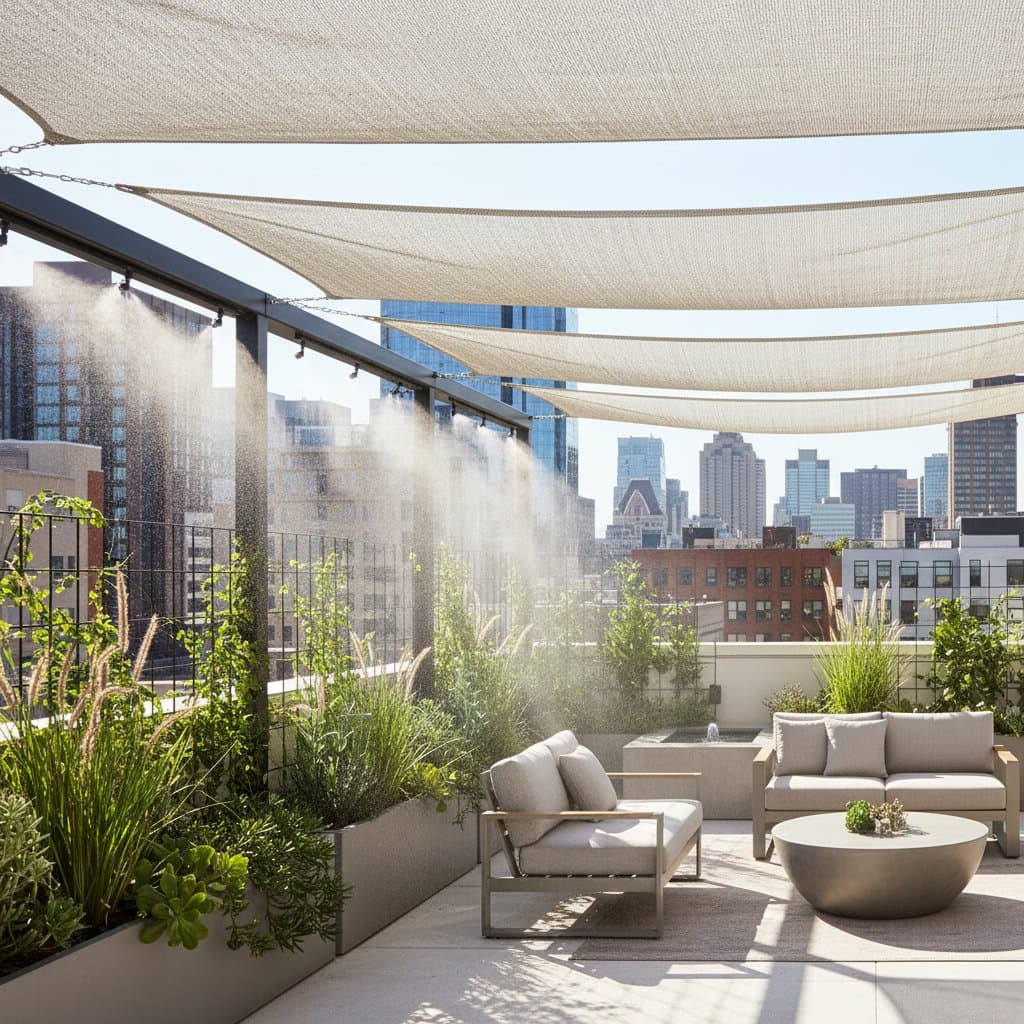
Install shade sails by anchoring stainless steel hooks into structural beams, ensuring even tension with turnbuckles. Position sails to cover 70 percent of the area, allowing dappled light for aesthetics. For temporary options, deploy retractable umbrellas or pergolas with adjustable louvers, which adapt to changing light angles.
Incorporate vegetation for natural shading. Select drought-resistant species like succulents or ferns in raised planters along perimeter edges. These not only diffuse heat but also improve air quality, with mature plants providing up to 10 degrees Fahrenheit of cooling through transpiration.
Enhancing Surface Reflectivity
Dark surfaces exacerbate heat buildup, so transitioning to reflective coatings offers immediate relief. Choose paints with a solar reflectance index above 0.65, applying two coats after thorough surface cleaning and sanding.
For wood decks, opt for oil-based formulas that penetrate without peeling. On concrete or metal roofs, use elastomeric coatings that expand and contract with temperature shifts. Measure progress by comparing pre- and post-application temperatures; expect a 5 to 10 degree Fahrenheit drop from this step alone.
Boosting Airflow and Evaporative Cooling
Stagnant air intensifies perceived heat, so strategic ventilation circulates cooler breezes. Mount oscillating fans at deck height, directing airflow across seating zones and away from heat sources. Combine with open railings or partial screens to facilitate natural wind movement.
Misting systems provide evaporative relief, transforming water droplets into cooling vapor. Connect the kit to a standard hose, spacing nozzles every 3 feet along railings or overhead lines. Activate during temperatures above 85 degrees Fahrenheit, running in short bursts to avoid over-saturation. This method can yield an additional 10 degrees Fahrenheit reduction through humidity-balanced cooling.
Prioritizing Safety Measures
Safety underpins every modification, preventing accidents in elevated environments.
- Verify load capacities before adding elements like filled planters or heavy sails, consulting building plans or an engineer if uncertain.
- Utilize ground-fault circuit interrupter outlets for all electrical devices, routing cords along protected paths to evade moisture.
- Regularly inspect and tighten all fastenings against wind forces, performing weekly checks during stormy seasons.
- Apply non-slip treatments or mats in misted areas, extending coverage to pathways and entry points.
- Regulate water pressure below 80 pounds per square inch to maintain system integrity, using inline regulators if needed.
Estimating Costs and Timelines
For decks smaller than 200 square feet, core upgrades like paint, shade cloth, and planters total under 300 dollars, completable over one weekend. Larger installations incorporating misting and multiple fans escalate to 800 to 1,000 dollars, requiring two weekends for measured execution.
Operational expenses remain modest. Daily misting for two hours consumes roughly 40 gallons, offset by timers targeting peak heat periods. Fan electricity draws about 60 watts each, while durable stainless components outlast cheaper alternatives in harsh rooftop conditions.
Maintenance for Year-Round Performance
Consistent upkeep ensures longevity and efficiency.
In early spring, sweep debris, flush water lines, and refresh faded paint sections. During mid-summer, adjust shade tensions and mist cycles to account for rising humidity levels. As fall arrives, drain all tubing and relocate nozzles indoors against frost damage.
Winter preparations include insulating planters or relocating them to sheltered spots. Secure or store shade fabrics to withstand gales, preserving their condition for the next cycle.
Efficient Storage Practices
Organized storage prevents clutter and eases seasonal transitions. Reserve a dedicated 3-by-3-foot weatherproof bin for hoses, nozzles, and tools, positioning it adjacent to access points. Suspend folded shade materials on rust-resistant wall hooks for quick drying and retrieval.
Nest empty planters compactly and seal spare fittings in airtight containers to ward off corrosion. Such habits reduce setup time and enhance overall deck usability.
Engaging Professional Assistance
Certain scenarios demand expert intervention to avoid risks. Seek a licensed contractor for addressing beam deflections, sealant failures, or drainage issues, which involve specialized assessments.
Hire a certified electrician for permanent fan installations tied to building power, ensuring compliance with local codes. Plumbers prove invaluable for expansive misting networks exceeding 300 square feet, installing pressure controls and indoor valves.
Request detailed quotes encompassing insurance verification and structural load evaluations.
Achieving Lasting Comfort on Your Rooftop
By integrating these shade, reflectivity, airflow, and misting techniques, your rooftop deck evolves into a resilient haven against urban heat. Immediate temperature drops foster extended outdoor time, while thoughtful maintenance sustains benefits across seasons. Start with a single upgrade, such as reflective paint, to experience tangible improvements and build toward a fully optimized space.