
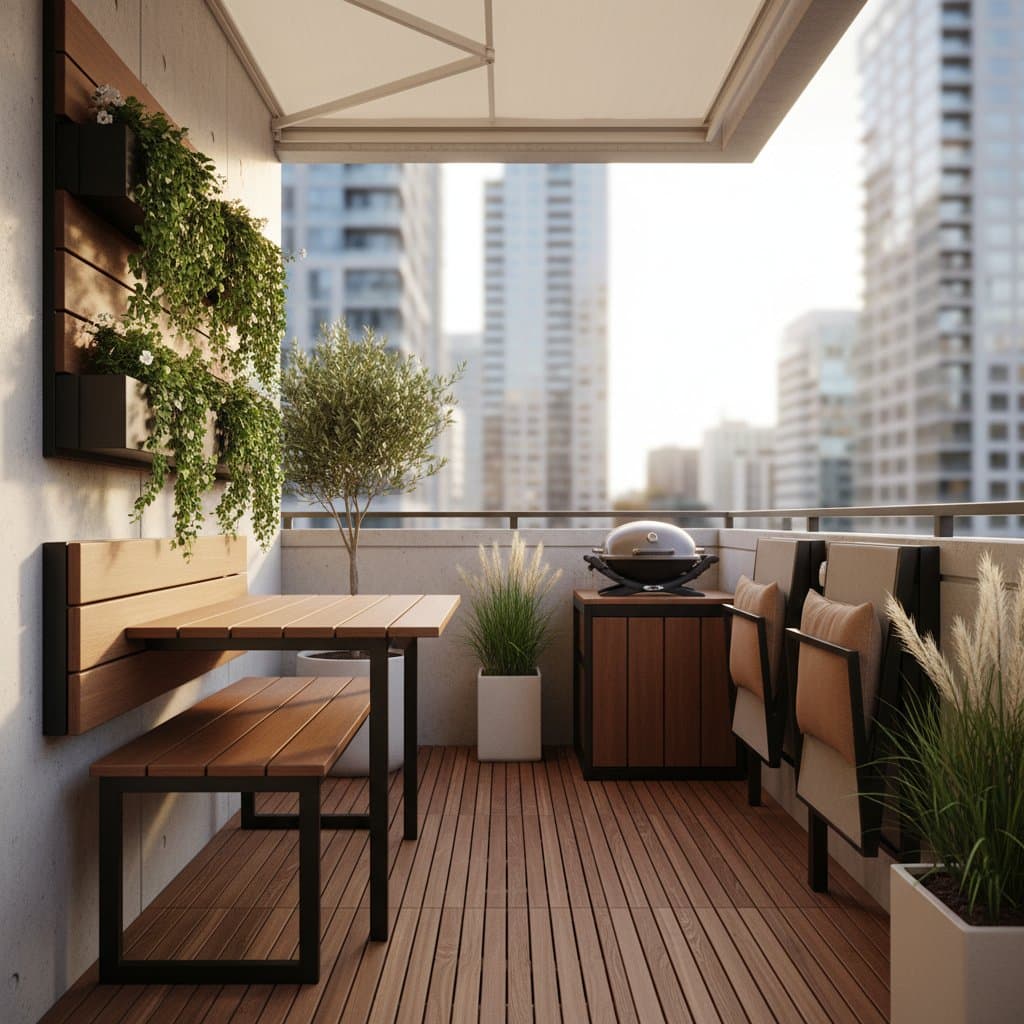
Maximizing Urban Balconies: The Fold-Away Furniture Solution
Urban dwellers often view balconies as precious yet restrictive outdoor spaces. Residents desire areas for relaxation, such as sipping coffee or nurturing plants, yet fixed furniture quickly reduces available room. Fold-away furniture, inspired by Murphy bed designs, offers a practical solution to double usable space without expanding the physical footprint.
This guide details the essentials of fold-away balcony furniture, its advantages in compact environments, and precise methods for planning, installation, and upkeep. Readers gain insights into selecting durable materials, ensuring structural integrity, and adapting setups for seasonal changes. The result enables balconies to serve multiple purposes efficiently.
Understanding Fold-Away Balcony Furniture
Fold-away balcony furniture consists of pieces designed to collapse against walls, railings, or posts when idle. Options include tables, benches, and shelving units that retract seamlessly. The primary objective remains maximizing openness for activities like walking or exercising while providing instant access to seating or surfaces.
Flexibility defines the core appeal. Balconies burdened by permanent fixtures regain versatility through these designs. Users fold items away for maintenance tasks, then deploy them for meals or reading sessions. This dual functionality effectively creates two distinct balcony configurations within the same area.
Essential Tools and Materials
Assembling a fold-away system requires basic equipment tailored to balcony constraints. Begin by verifying compatibility with the specific layout and surface types.
Required Tools:
- Measuring tape extending to at least 10 feet (3 meters)
- Power drill equipped with masonry bits for concrete or brick
- 24-inch (60-centimeter) level
- Screwdriver or socket set
Recommended Materials:
- Hardware kit for fold-away tables or benches
- Weather-resistant wood or composite panels, 1 to 2 inches (2.5 to 5 centimeters) thick
- Stainless steel screws and brackets
- Outdoor sealant or clear coat for wooden elements
- Wall anchors supporting at least 100 pounds (45 kilograms)
For those avoiding custom builds, consider pre-assembled Murphy-style balcony kits. These feature pre-drilled components and wind-resistant locks, optimized for confined outdoor areas.
Installation Process
Step 1: Measure and Plan Layout
Assess balcony dimensions thoroughly, noting width and depth. Ensure at least 24 inches (60 centimeters) of clearance remains for movement when surfaces deploy. Position hinge mounts on the wall, setting the lower edge no lower than 28 inches (71 centimeters) from the floor to achieve comfortable table height.
Step 2: Evaluate Wall Composition
Identify the balcony's wall material, which may include concrete, brick, metal, or wood. Select anchors and bits accordingly; masonry types suit solid surfaces, while clamps work for railings to prevent drilling. Consult building maintenance if the structure appears unstable or hollow.
Step 3: Secure Hinge Brackets
Position the bracket at the marked spot and confirm level alignment. Drill pilot holes, then insert screws firmly. Enlist assistance to maintain straightness during attachment, and verify smooth folding action prior to adding the main panel.
Step 4: Mount the Fold-Down Panel
Fasten the table or bench surface to the hinge using a minimum of four evenly spaced screws. Incorporate fold-out support legs if stability demands it, then test the full range of motion.
Step 5: Apply Protective Sealant
Coat all exposed wooden edges with weatherproof sealant. Allow complete drying before any folding or loading. This treatment guards against moisture absorption, preserving surface integrity over time.
Step 6: Test Stability and Fine-Tune
Deploy the furniture and apply gradual weight to detect instability. Adjust by tightening fasteners or adding reinforcements as necessary. Conduct thorough checks before placing substantial loads.
Prioritizing Safety
Adhere strictly to load capacities; standard hinges support 40 to 60 pounds (18 to 27 kilograms). Secure items flat during high winds to avoid wind catch and detachment. Exercise caution around moving parts to prevent injuries from pinching.
Perform annual inspections for corrosion, loosening, or material degradation. Replace components promptly to maintain reliability. These practices ensure safe, dependable use in variable outdoor conditions.
Common Issues and Solutions
Sagging often stems from uneven mounting; re-level and readjust screws to resolve it. Sticky hinges benefit from silicone lubricant applied sparingly, followed by repeated cycles to restore fluidity. Noisy operations indicate loose bolts; tighten them uniformly across the assembly.
For non-drillable railings, opt for clamp-mounted units that install without permanent alterations. In sunny exposures, select composites or metals to resist UV-induced fading or distortion.
Upkeep and Seasonal Care
Maintain cleanliness by wiping surfaces with mild soap and water biweekly. During heavy precipitation, retract and latch items securely. For winter protection, detach panels and store indoors to avert freeze damage.
Annually lubricate metal components and reapply UV sealant to wood biennially. Organize spare parts in labeled storage for straightforward reassembly. These routines sustain performance amid exposure to elements.
Cost Considerations and Timeline
DIY projects range from 60 to 150 dollars, varying by material choices. Ready-made kits cost 150 to 400 dollars. Beginners complete installations in one to two hours with standard tools; professional assistance adds about 100 dollars for precise execution.
Upgrading to composites elevates initial expenses but reduces ongoing efforts. Renters favor removable clamp designs for flexibility during relocations.
Adapting to Seasons
Inspect and reseal during spring preparations. Clean frequently in summer to clear debris like pollen. Secure against leaf accumulation in autumn, and protect metals from rust in winter by indoor storage of removable elements.
Consistent attention transforms fold-away systems into enduring features. Treat them as integral outdoor assets subject to environmental stresses.
Professional Assistance Indicators
Seek expert help if walls show structural weaknesses, loads exceed 60 pounds, or installations involve high-rise railings. Professionals ensure compliance with building codes and provide warranties on custom work.
Essential Insights
Fold-away designs enable dual-use balconies, alternating between open and furnished states. Precise measurements and material selection align with site-specific needs. Ongoing maintenance guarantees longevity and security.
Practical Implementation
- Measure the space and draft a layout preserving pathways.
- Select and install a single item, like a table, within the week.
- Incorporate sealant and latching mechanisms for protection.