
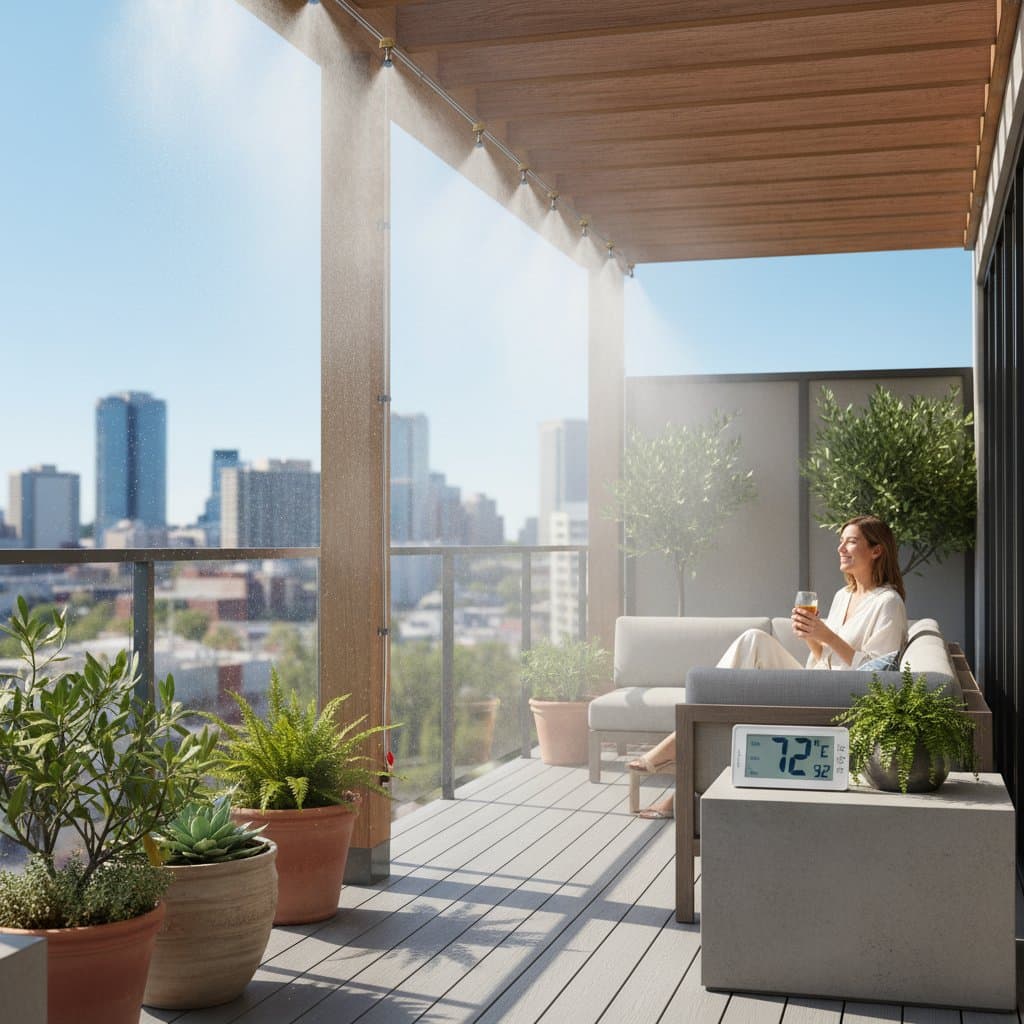
Understanding Micro-Misting for Balcony Cooling
Micro-misting systems offer an effective solution for transforming hot urban balconies into comfortable outdoor spaces. These systems release a fine mist of water droplets that evaporate quickly, absorbing heat from the surrounding air. This process, known as evaporative cooling, can lower temperatures by up to 20 degrees Fahrenheit within moments of activation.
The technology relies on high-pressure pumps and specialized nozzles to create mist particles small enough to evaporate before reaching surfaces. Unlike traditional sprinklers, micro-misting minimizes water waste and avoids puddling. Homeowners in warm climates find this method particularly useful for extending usable outdoor time during peak summer heat.
The Science Behind the Cooling Effect
Evaporation plays a central role in how micro-misting reduces heat. When water droplets turn into vapor, they draw heat energy from the air, creating a cooling sensation similar to standing near a waterfall. Studies show that in dry conditions, this can achieve significant temperature drops, often 15 to 20 degrees.
Factors such as humidity levels influence performance. In arid environments, the system excels, while higher humidity may yield milder results. Placement of nozzles ensures even distribution, maximizing the cooling zone across the balcony area.
Benefits of Installing a Micro-Misting System
One key advantage is the efficiency in water usage. These systems consume far less water than conventional methods, making them suitable for water-conscious urban dwellers. They also enhance comfort without relying on energy-intensive air conditioning units.
Additional perks include improved air quality through dust suppression and the creation of a soothing ambiance. For balcony gardeners, the gentle mist can support plant health by providing humidity without overwatering. Overall, the investment pays off in extended enjoyment of outdoor spaces.
Step-by-Step Guide to Setting Up Your System
Selecting the Right Components
Choose a kit based on your balcony's size, typically ranging from 50 to 200 square feet. Essential parts include a pump, tubing, nozzles, and a water source connection. Opt for stainless steel nozzles to resist corrosion from mineral buildup.
Consider pump power: a 100 PSI unit suffices for small spaces, while larger balconies require 200 PSI or more. Ensure compatibility with your water supply, such as a garden hose adapter.
Planning the Layout
Map out nozzle positions to cover the entire area evenly. Space them 2 to 4 feet apart along railings or overhead structures. Avoid directing mist toward electrical outlets or sensitive furniture to prevent moisture damage.
Secure tubing along balcony edges using clips or ties. For overhead installation, use sturdy mounting brackets attached to the ceiling or pergola framework.
Installation Process
-
Connect the pump to a power source and water line, following manufacturer guidelines for pressure settings.
-
Run tubing from the pump to nozzle locations, cutting lengths as needed and securing connections with clamps.
-
Install nozzles by twisting them into fittings, ensuring they point downward at a 45-degree angle for optimal spread.
-
Test the system by turning on the water and pump, adjusting flow to produce a visible mist without drips.
-
Secure all components to withstand wind, using weatherproof tape if necessary.
The entire setup often takes 1 to 2 hours for a standard balcony.
Maintenance Tips for Longevity
Regular cleaning prevents nozzle clogs from minerals or debris. Flush the system weekly by running clean water through it for 10 minutes. For deeper maintenance, disassemble nozzles quarterly and soak them in a vinegar solution to dissolve buildup.
Inspect tubing for leaks monthly, tightening fittings as required. In winter, drain the system completely to avoid freezing damage. Store the pump in a dry area during off-seasons.
Monitor water quality; if using tap water, a filter attachment can extend component life by reducing sediment.
Water-Saving Strategies and Budget Considerations
To conserve water, install a timer to operate the mist only during the hottest hours, such as midday. Pair the system with shade elements like umbrellas to amplify cooling effects and reduce runtime.
Budget options start at $50 for basic DIY kits, scaling to $200 for professional-grade setups. Source materials from hardware stores or online retailers specializing in outdoor cooling. Long-term savings come from lower energy bills compared to fans or AC units.
Creating Your Ideal Outdoor Retreat
With a micro-misting system in place, your balcony becomes a versatile haven for relaxation or entertaining. Experiment with mist intensity to match weather conditions, ensuring consistent comfort. This simple upgrade not only combats heat but also encourages more time spent enjoying fresh air and natural surroundings.