
Planning Your Installation
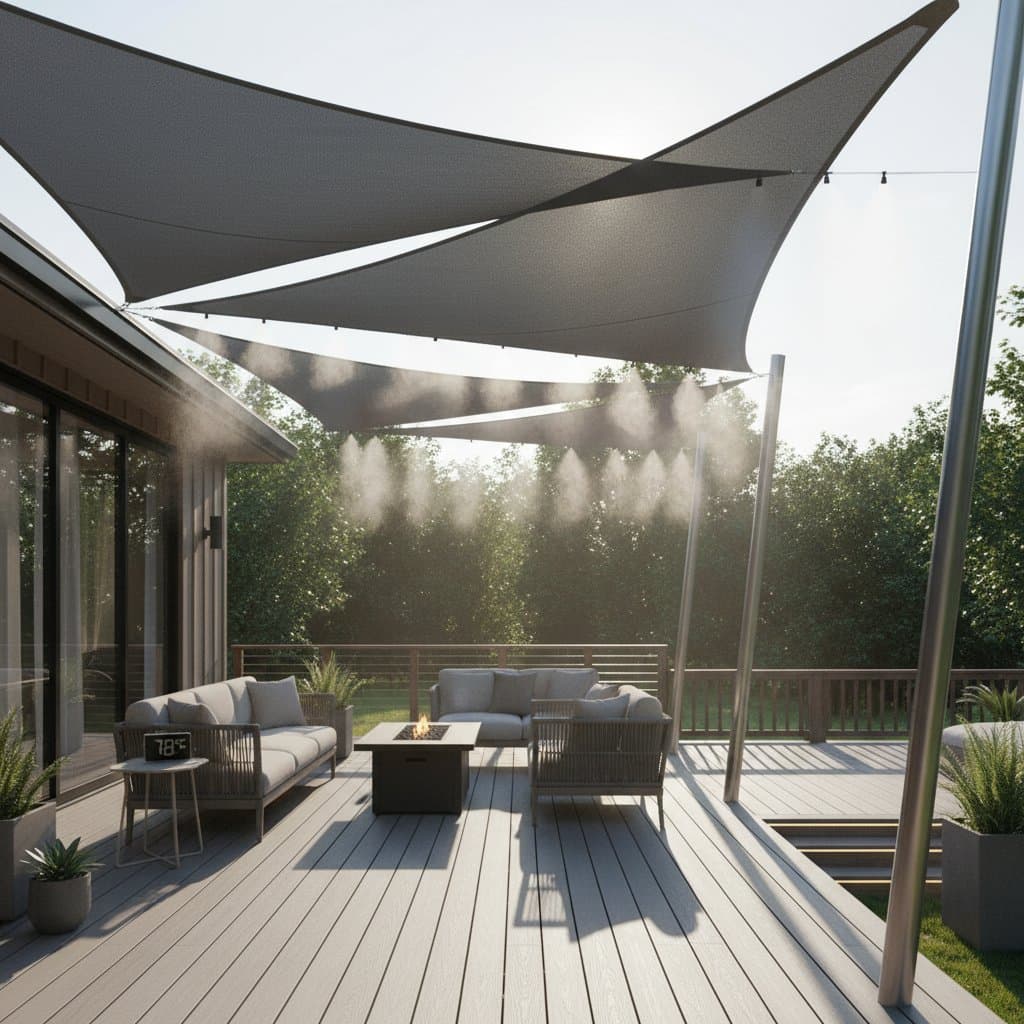
Select a location on your deck where the shade sail will cover the primary seating area. Consider the sun's path to maximize coverage during peak afternoon hours. Choose a triangular or rectangular sail size that fits the space without overhanging edges excessively.
Gather materials including UV-resistant fabric, stainless steel hardware, misting tubing, nozzles, a solar pump, and tools such as a drill, ladder, and tensioning devices. Verify that anchor points like posts or beams can support at least 50 pounds per corner under wind load. Sketch a diagram to mark attachment spots for precise setup.
Step 1: Prepare Anchor Points
Identify four sturdy points around the deck perimeter, spaced to create a slight slope for water drainage. For wooden posts, drill pilot holes and insert eye bolts rated for outdoor use. Secure them with nuts and washers to prevent loosening over time.
If attaching to house eaves or railings, use lag screws or brackets designed for the surface material. Test each anchor by applying firm pressure to ensure stability. Space anchors 10 to 15 feet apart depending on sail dimensions.
Step 2: Hoist the Sail
Unfold the shade sail on a flat surface and inspect for any manufacturing defects or tears. Attach temporary ropes to each corner and raise the sail using a ladder or helper. Position it loosely over the anchor points to confirm alignment before final securing.
Adjust the height so the lowest corner clears head level by at least two feet. This allows comfortable passage underneath while providing effective shade. Secure temporary ties to hold the position during attachment.
Step 3: Attach the Sail
Clip each corner of the sail to its designated anchor using turnbuckles or heavy-duty carabiners. Begin tightening from one end, working around to distribute tension evenly. Achieve a firm tautness that eliminates sagging in the center without straining the fabric seams.
Monitor for wrinkles or uneven pulls, which indicate improper alignment. The final tension should allow the sail to withstand moderate wind without flapping excessively. Recheck all connections after initial tightening.
Step 4: Add the Misting Line
Route the misting tubing along the sail's perimeter or diagonally across its surface for uniform coverage. Fasten it securely with UV-resistant zip ties placed every 12 inches to prevent shifting. Position nozzles downward or at a 15-degree angle to direct mist toward the deck floor and seating zones.
Space nozzles 18 to 24 inches apart based on the manufacturer's recommendations for your kit. Avoid placing them too close to edges where wind might disperse the mist prematurely. Test the line's path for any potential rubs against hardware.
Step 5: Connect Water and Power
Link the misting line to a hose splitter or dedicated faucet adapter. Install an inline filter near the water source to block sediments and minerals that could clog the system. For a solar-powered pump, position its panel southward on a railing or post to capture maximum sunlight.
Connect the pump outlet to the tubing and secure all fittings with clamps. Prime the system by running water through without nozzles attached to flush air pockets. Inspect joints for leaks under low pressure before full activation.
Step 6: Test and Adjust
Activate the water supply gradually to observe mist distribution. Ensure the spray forms a fine cloud rather than large droplets, adjusting flow rates as necessary. Reposition nozzles if coverage gaps appear in high-use areas.
Run the system for 10 minutes to check for drips or uneven patterns. Fine-tune pressure using the pump's regulator or by selecting nozzles with smaller orifices for lighter mist. Document adjustments for future reference.
Safety Considerations
Position all electrical components, including the solar pump wiring, away from mist trajectories to avoid short circuits. Opt for GFCI-protected outlets and outdoor-rated extension cords limited to 25 feet in length. Never position high-pressure nozzles directly above walkways or furniture.
In freeze-prone areas, disconnect and drain lines completely before cold weather arrives. Wear protective eyewear during installation to shield against drilling debris. Consult local building codes for installations exceeding 100 square feet.
Common Issues and Solutions
Uneven mist distribution or dripping nozzles. Examine each nozzle for blockages caused by minerals. Soak affected units in a vinegar-water solution for 15 to 20 minutes, then rinse thoroughly before reinstalling.
Insufficient pressure resulting in weak mist output. Scan the entire tubing for kinks, loose connections, or pinhole leaks. Verify that the water source delivers at least 30 PSI and that the pump operates without obstructions.
Sail fabric sagging after rainfall. Loosen and retighten turnbuckles sequentially to restore tension. Incorporate a 5 to 10 percent slope in the design to facilitate quicker water shedding.
Persistent overheating under the sail. Layer an additional shade panel for denser coverage or relocate misting nozzles nearer to the relaxation zone. Supplement with reflective deck mats to bounce heat away.
Upkeep Routines
Perform monthly nozzle cleaning by disassembling and treating with vinegar to maintain flow efficiency. Gently clean the sail surface every two to three weeks using a soft brush and diluted mild soap solution, then rinse with fresh water.
Examine all anchor hardware and tension points biannually for signs of corrosion or wear. Dust solar panels quarterly with a microfiber cloth to optimize energy capture. Store unused systems with caps on open ends to exclude insects and dirt.
Off-Season Storage
Prior to folding, allow the sail to air dry fully in a shaded area to prevent mildew growth. Place it inside a breathable storage bag and keep in a garage or shed where temperatures remain above freezing.
Coil misting lines without tight bends and bundle hardware in labeled compartments. Disassemble turnbuckles to reduce stress on components. Reinstall in spring after verifying all parts for damage.
Cost and Effort Overview
Expect to invest $150 to $400 for a standard misting solar shade sail kit, varying by sail dimensions and premium features like reinforced edges. Durable stainless steel components increase longevity but add 20 percent to the total.
A solo installer completes setup in two to three hours, faster with assistance for raising the sail. Operational expenses remain minimal, with misting consuming roughly one gallon per hour for every 10 nozzles. Solar power eliminates electricity bills, outperforming traditional cooling methods in efficiency.
Year-Round Care Schedule
In spring, reinforce anchors, launder the fabric, and flush lines to remove winter residues. During summer, monitor nozzles weekly and calibrate mist duration to peak heat periods. Come fall, empty all water components and secure loose parts.
Over winter, relocate the entire assembly indoors if sub-zero conditions prevail. This preserves materials and ensures reliable performance upon reactivation.
Professional Assistance Options
Engage a contractor for anchoring into masonry, concrete, or structural steel to assess weight limits and select industrial-grade fasteners. Involve a plumber for integrating a permanent water line if hose connections prove inadequate.
Professionals handle permitting for elevated or large-scale installations. Budget an extra $200 to $500 for expert services, which include warranties on workmanship.
Launching Your Deck Upgrade
Begin by measuring your space and selecting a compatible sail configuration aligned with daily sunlight patterns. Acquire a misting kit featuring corrosion-resistant brass nozzles and integrated filtration.
Incorporate accessible shutoff valves for water control and plan storage protocols from the outset. Upon completion, experience immediate relief from heat, enhanced ambiance, and extended time outdoors for dining or relaxation.