
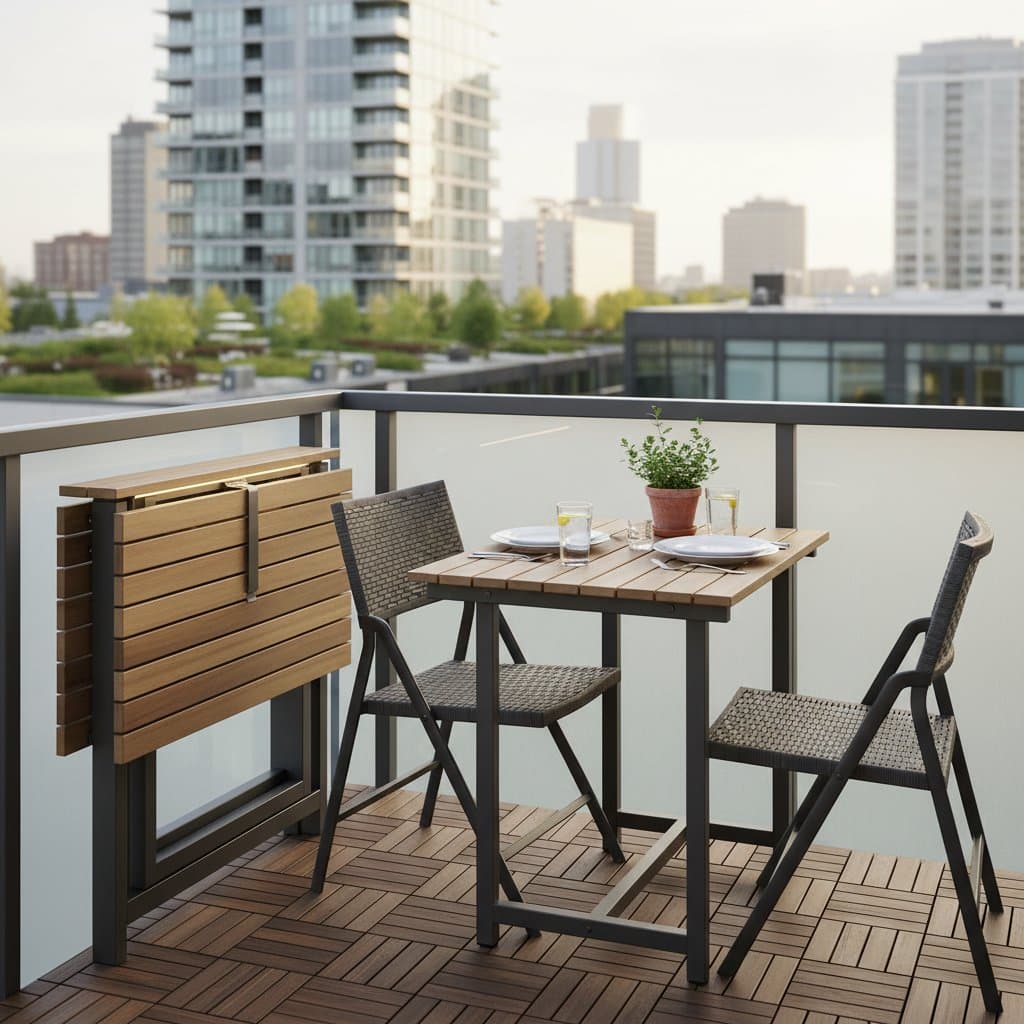
Transform Tiny Balconies into Cozy Dining Spots with Murphy Furniture
Small balconies often represent untapped potential in urban homes, particularly for those who desire outdoor meals or relaxation without ample room for permanent setups. Murphy-style fold-away furniture offers a practical solution by integrating seamlessly into walls, preserving floor space while enabling functional use. This approach allows residents to establish a dedicated dining area that folds away when not in use.
The following sections outline the essentials of Murphy balcony furniture, including its mechanics, required tools and materials, installation process, safety considerations, and ongoing maintenance. Readers gain specific guidance to implement these elements effectively, ensuring a setup that enhances daily living in constrained spaces.
Understanding Murphy Balcony Furniture
Murphy furniture derives its name from innovative wall-mounted designs that fold down for use and retract upward to save space. For balconies, this translates to tables and benches that attach directly to exterior walls, often featuring hinged mechanisms and supportive legs that deploy only during meals. Such systems prove ideal for city dwellers facing limited square footage, as they eliminate the need for bulky, standalone pieces that might obstruct pathways or invite weather damage when stored.
These units typically measure 24 to 36 inches in width to accommodate two to four people comfortably. Materials like treated wood, aluminum, or powder-coated steel withstand moisture and UV exposure, extending longevity in outdoor environments. Selecting a model with integrated storage for utensils or linens further streamlines the experience.
Essential Tools and Materials
Successful installation of a Murphy dining system requires precise tools and durable materials engineered for exterior durability. Prioritize components with corrosion-resistant finishes to combat humidity and temperature fluctuations common in balcony settings.
Required Tools:
- Power drill equipped with masonry bits for concrete surfaces and wood bits for framed walls.
- Level and a measuring tape extending at least 10 feet for accurate alignment.
- Stud finder to locate secure mounting points, or masonry anchors for solid surfaces.
- Comprehensive screwdriver set for various screw types.
- Safety goggles and heavy-duty gloves to protect against debris and sharp edges.
Necessary Materials:
- Murphy fold-away table, sized 24 to 36 inches wide to fit standard balcony dimensions.
- Foldable chairs or stools crafted from lightweight metal frames or pressure-treated wood.
- Wall brackets and heavy-duty hinges made of stainless steel or galvanized metal.
- Weather-resistant sealant applied to joints and screw heads.
- Outdoor-rated paint or protective finish for wooden elements.
- Rubber pads or adhesive bumpers to safeguard wall surfaces from scratches.
Pre-assembled Murphy tables are available through specialty retailers, complete with hardware kits and user manuals. For customization, construct a unit from marine-grade plywood paired with rust-proof hinges and adjustable leg brackets, ensuring all parts meet load-bearing standards of at least 100 pounds.
Step-by-Step Installation Guide
Begin by selecting a stable wall section free from windows, doors, or electrical outlets. Measure the desired height, typically 30 to 36 inches from the floor, to align with standard seating. Mark mounting points using the level to guarantee even positioning.
Secure the brackets to wall studs or use anchors in masonry, drilling pilot holes to prevent cracking. Attach the table frame to these brackets with provided screws, then test the folding mechanism for smooth operation. Install supportive legs that lock into place when extended, and apply sealant around all connections to repel water.
Position chairs nearby, opting for models with wall hooks for storage. The entire process demands attention to detail but yields a sturdy setup ready for immediate use. Allow time for the sealant to cure fully before exposing the assembly to rain.
Key Safety Considerations
Weight capacity forms the foundation of safe Murphy installations; verify that brackets and hinges support at least 50 pounds per user, with a margin for serving dishes. Avoid overloading by limiting gatherings to the rated number of occupants.
Position electrical elements, such as string lights or outlets, distant from moving parts to prevent pinching or short circuits. Conduct regular inspections every three months, tightening loose fasteners and replacing any corroded components promptly.
For renters or shared buildings, obtain approval from property management prior to drilling. Opt for removable tension-based mounts if permanent alterations pose concerns, ensuring compliance with local building codes.
Seasonal Maintenance Practices
Regular upkeep preserves the functionality and appearance of Murphy furniture against environmental stressors. Focus on cleaning, lubrication, and protective treatments to maintain integrity over time.
- Clean surfaces weekly using a mild soap solution and soft cloth to eliminate dirt, pollen, and salt residue from urban air.
- Lubricate hinges biannually with a non-toxic machine oil to ensure effortless folding.
- Examine seals and joints following inclement weather, reapplying sealant as needed to block moisture ingress.
- Refresh wood finishes biennially or upon signs of fading, selecting UV-resistant products for prolonged protection.
During extended rainy periods, dismount and store chairs indoors to avoid warping. The table remains viable year-round when folded and shielded with a breathable cover, facilitating quick deployment for spontaneous outdoor meals.
Cost Breakdown and Timeline
Budgeting for a Murphy balcony dining setup involves evaluating scale and quality of components. Entry-level options suit modest spaces, while premium materials elevate durability.
- Murphy fold-away table: $80 to $200, depending on size and material.
- Pair of foldable chairs: $40 to $120.
- Mounting hardware and sealants: $30 to $70.
- Optional protective awning or custom cover: $90 to $150.
Installation typically spans three to four hours for those familiar with basic DIY tasks. Fabricating a custom table extends the timeline to a half-day, though sourcing materials in advance offsets additional expenses.
Professional Assistance Options
Engage a qualified contractor when facing complex balcony structures, such as reinforced concrete or embedded utilities. Professionals excel in custom adaptations for irregular walls and ensure adherence to safety regulations.
Inquire about specific capabilities during consultations:
- The maximum load the mounting system can bear under varying weather conditions.
- Methods for reversible installation that minimizes surface damage.
- Strategies for weatherproofing hardware against corrosion and wear.
Such experts can integrate enhancements like reinforced railings or integrated lighting, transforming the space into a versatile evening venue.
Implementing Your Balcony Dining Setup
Initiate the project by identifying an underutilized wall area and recording precise measurements. Select hardware certified for outdoor endurance to guarantee reliability.
Actionable Next Steps:
- Assess balcony dimensions and choose a table width of 24 to 36 inches for optimal fit.
- Acquire stainless steel or galvanized components designed for exterior applications.
- Dedicate a weekend session to assembly, testing, and initial enjoyment of the space.
Murphy furniture empowers even the most confined balconies to serve as inviting dining areas across seasons. This investment in space efficiency fosters memorable outdoor experiences, centered on the simple pleasure of home-cooked meals enjoyed al fresco.