
Introduction to Self-Watering Solar Towers
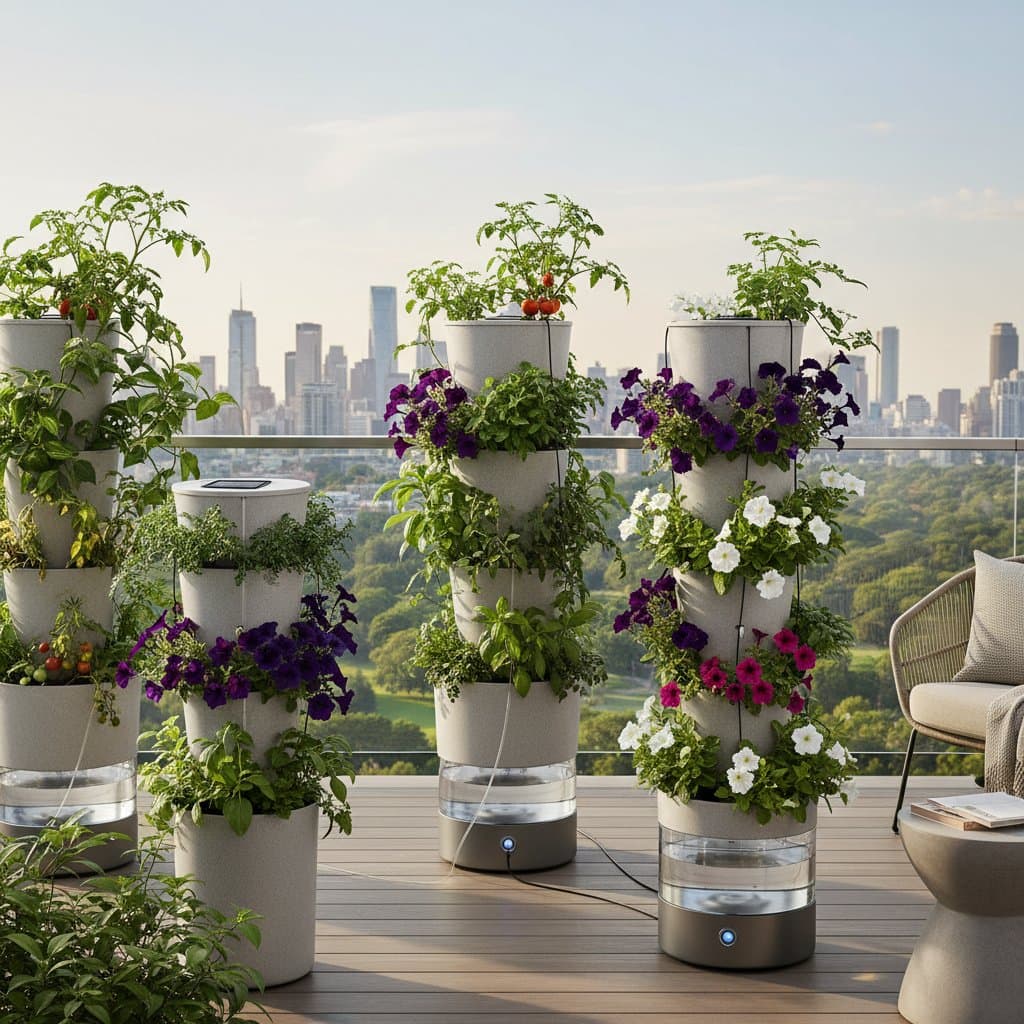
Urban dwellers often face challenges with limited outdoor space, yet the desire for fresh greenery persists. Self-watering solar towers address this by offering a vertical gardening solution powered entirely by sunlight. These structures stack planters in a tiered design, with a solar panel driving a pump that circulates water from a base reservoir to each level through tubing.
The result is a low-effort system that delivers consistent moisture to plants, reducing manual watering to occasional refills. Ideal for apartments and townhouses, these towers support herbs, vegetables, and flowers in environments where traditional gardens prove impractical. By integrating sustainability with convenience, they enable year-round cultivation even in dense city settings.
Key Benefits for Balcony Gardening
These towers optimize vertical space, allowing multiple plants to thrive without sprawling across the floor. Solar power eliminates reliance on electrical outlets, making installation straightforward on sunny balconies. Water efficiency stands out as a major advantage; the closed-loop irrigation minimizes waste and prevents overwatering, which can lead to root rot.
Maintenance demands remain minimal, freeing time for harvesting rather than tending. Environmentally, the design promotes biodiversity in urban areas, supporting pollinators and providing homegrown produce. Users report higher yields compared to conventional pots, thanks to the stable microclimatetower's structure.
Materials Required
Assembling a self-watering solar tower requires specific components to ensure reliable operation. For beginners, a pre-packaged kit simplifies the process.
Kit Essentials
- One self-watering solar tower kit, which includes a solar panel, submersible pump, distribution tubing, and modular planters.
- Potting soil mix, approximately one cubic foot for every ten planting sites to provide nutrient-rich support.
- Water, about two gallons for the initial reservoir fill to prime the system.
- Small trowel and gardening gloves for handling soil and assembly.
DIY Assembly Components
For those preferring customization, gather these items to build from scratch.
- One vertical planter frame made of plastic, composite, or lightweight metal for durability.
- One submersible water pump rated for one to two gallons per minute to ensure adequate flow.
- One small solar panel rated for at least five watts to power the pump effectively.
- One rechargeable battery as an optional backup for cloudy days.
- PVC tubing, about six feet long, to transport water across tiers.
- One large bucket or container serving as the base reservoir.
- Drip nozzles or small drilled holes for controlled, even water distribution.
- Potting mix blended with perlite and compost to retain moisture without compaction.
Consider the tower's weight when selecting materials. A fully loaded unit with soil and water may weigh 40 to 60 pounds, so opt for a sturdy base and secure anchoring against wind exposure.
Step-by-Step Setup Guide
Position the tower in a south-facing spot to maximize solar exposure, ideally receiving six hours of direct sunlight daily. Begin by assembling the frame according to kit instructions or securing DIY tiers with brackets for stability.
Install the solar panel at the top, angling it slightly toward the sun for optimal charging. Connect the panel to the pump via waterproof wiring, placing the pump in the base reservoir. Run tubing from the pump upward, attaching emitters at each planter level to release water slowly.
Fill the reservoir with water, add the soil mix to planters, and insert seedlings or seeds. Activate the system by exposing the panel to light; the pump should cycle water every few hours, depending on battery settings. Monitor the first cycle for leaks and adjust flow rates as needed.
Essential Safety Considerations
Prioritize precautions to protect users and the structure. Disconnect the solar panel before any wiring adjustments to prevent electrical hazards.
Position electrical components above water levels and seal connectors with waterproof covers to guard against moisture damage. Place the tower away from areas frequented by children or where cords might cause tripping.
Verify your balcony's weight limits by consulting building guidelines prior to full assembly. Wear gloves during soil handling and tubing installation to minimize risks of minor injuries.
Cost and Time Investment
A complete kit typically ranges from 80 to 200 dollars, varying by size and included features. DIY builds offer savings, potentially as low as 40 dollars when repurposing containers or sourcing affordable parts.
Initial setup requires two to three hours for most individuals. Weekly maintenance involves checking water levels and inspecting plants, totaling under 15 minutes.
Spare parts prove economical; a replacement pump costs around 10 dollars and endures two years or longer with proper use.
Organizing Your Balcony Space
Efficient storage enhances the gardening experience by streamlining access to supplies. Position tools and materials close to the tower to facilitate quick checks.
Incorporate these strategies:
- Select a narrow storage bench to store extra soil, gloves, and a backup watering can.
- Install small hooks beneath a railing shelf for hanging scissors and plant ties.
- Coil reserve tubing in a labeled container to prevent knots and ease retrieval.
- Maintain a spray bottle filled with diluted soap solution for prompt pest management.
Such organization reduces search time, allowing focus on plant growth and enjoyment.
Seasonal Maintenance Schedule
Adapting care to weather patterns ensures plant health throughout the year.
Spring Preparation
Refill the reservoir, replant with fresh starts, and inspect for winter-induced cracks. Introduce quick-maturing options such as lettuce and herbs to build momentum.
Summer Adjustments
Elevated temperatures accelerate evaporation, so extend pump run times modestly or shield the reservoir with a lightweight cover.
Autumn Cleanup
Harvest lingering crops, flush tubing to remove debris, and reduce reservoir volume by half to prevent stagnation.
Winter Strategies
In temperate climates, sustain cold-tolerant greens with reduced pump frequency. For freezing conditions, relocate the tower indoors beside a window for continued viability.
Set phone reminders for these shifts to maintain routine without oversight.
Advanced Techniques for Optimal Results
Refine your setup with these targeted practices.
- Assign plants by stature: Position taller varieties like tomatoes at upper levels for superior light access.
- Select soil with moisture retention: Incorporate 30 percent perlite to distribute water uniformly.
- Optimize panel orientation: A 30-degree tilt enhances energy capture.
- Apply labels: Waterproof tags help monitor performance of different plant types.
- Integrate companions: Pair edibles with pest-repelling flowers such as marigolds or nasturtiums.
These refinements boost productivity and mitigate common issues over seasons.
Launching Your Tower Garden
Commence modestly by installing one tower in a sunlit nook, selecting three plant varieties, and consolidating tools in a dedicated bin. Verify water circulation, fine-tune after initial runs, and observe for a week prior to expanding.
This approach builds confidence and reveals system nuances early. Over time, your balcony evolves into a productive haven, yielding fresh produce and aesthetic appeal with minimal intervention. Embrace the process to cultivate not just plants, but a deeper connection to sustainable living.