Loading...

DIY Micro-Drip Irrigation Setup for Deck Containers | Urban Gardening in NYC | Urban Outdoors - Small-Space Gardens, Rooftop Decks, Balconies, Decks, Backyard Design
Skip to main content
Urban Outdoors
Search
Home
  1. Home
  2. /
  3. Deck Construction & Remodeling
  4. /
  5. Set Up Drip Irrigation for Deck Containers
Deck Construction & Remodeling

Set Up Drip Irrigation for Deck Containers

byDawn Hayden
2026-03-08 05:35:50March 8, 2026
8 min read
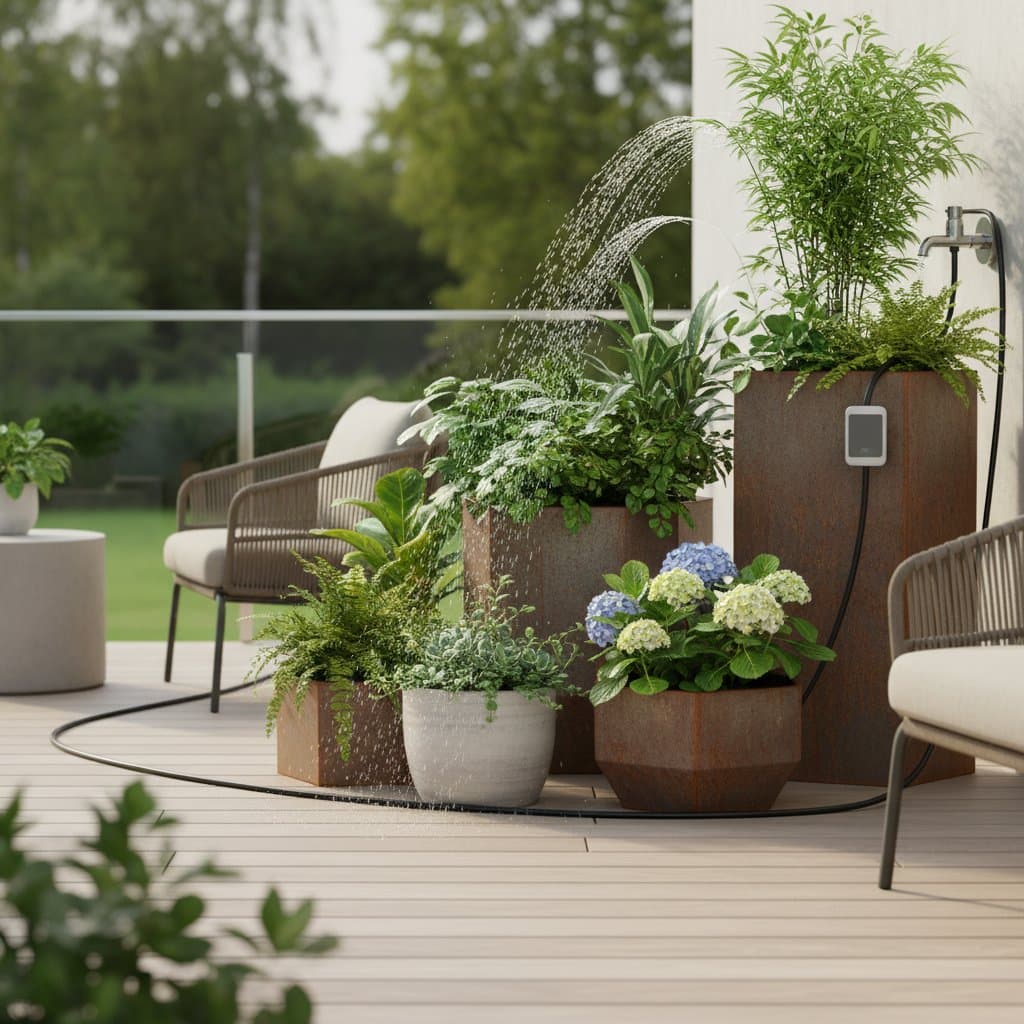
Featured image for Set Up Drip Irrigation for Deck Containers

Categories

Navigation

  • Home
  • All Articles
  • About Us
  • Privacy Policy
  • Terms of Service

© 2026 Urban Outdoors. Crafted for bold city dwellers.

2026-03-11 04:20:15
Urban Outdoors - Small-Space Gardens, Rooftop Decks, Balconies, Decks, Backyard Design

Install Drip Irrigation for Effortless Deck Plant Care

You step onto your deck on a warm morning and notice the basil appears droopy, the flowers show crisping at the edges, and the soil feels bone dry. Daily watering often becomes a chore, particularly when schedules fill or travel plans arise. Fortunately, an automatic watering system for deck containers ensures plants thrive without ongoing attention.

The objective remains straightforward: install a micro-drip irrigation system that provides consistent moisture to container plants throughout the summer. This approach conserves water, shields plants from stress, and reclaims valuable time.

System Fundamentals

A micro-drip irrigation system consists of a compact network of tubing, connectors, and emitters that transport water precisely to the soil surface near plant roots. It operates at low pressure, typically between 10 and 30 pounds per square inch, and dispenses water gradually, measured in gallons per hour rather than gallons per minute.

Deck gardeners benefit from this setup as it removes the necessity of carrying watering cans or maneuvering hoses around furniture. The system maintains uniform soil moisture, which minimizes leaf scorch, blossom drop, and root rot. Connect it to a timer for automated watering cycles, even during absences.

Core Advantages

  • Water conservation: Delivers up to 70 percent less water compared to manual methods by focusing directly on roots.
  • Plant vitality: Avoids the fluctuations between dry and wet conditions that strain container roots.
  • Deck preservation: Eliminates runoff or splashing that could stain surfaces or railings.
  • Efficiency gains: Functions automatically for extended periods after initial setup.
  • Adaptable scale: Suits a handful of pots or an extensive deck garden.

Essential Tools and Materials

Acquire components from garden centers or online irrigation kits. For a foundational setup supporting 8 to 12 medium containers, assemble the following:

  • One battery-operated faucet timer with straightforward programming options.
  • One backflow preventer to prevent irrigation water from contaminating household supply lines.
  • One pressure regulator calibrated to approximately 25 pounds per square inch to safeguard tubing integrity.
  • One mesh-screen filter designed for micro irrigation systems.
  • 50 feet of 1/4-inch tubing for compact decks or 100 feet of 1/2-inch mainline tubing for expanded configurations.
  • Drip emitters, with one or two per container, rated at 0.5 to 2 gallons per hour.
  • Barbed connectors, tees, elbows, and end plugs to facilitate the layout.
  • Tubing stakes or clips to anchor lines securely.
  • Small scissors or a dedicated tubing cutter.
  • Optional: a Y-hose splitter to allow shared use of the faucet with a standard garden hose.

Store spare parts in a dedicated bin. Adjustments to flow rates or pot positions may occur as plants develop.

Installation Process

Step 1: Design the Layout

Draw a sketch of your deck or patio on paper. Indicate the faucet position, container locations, and potential obstacles. This planning aids in determining tubing lengths and emitter quantities.

Position main lines along deck edges, then extend smaller branches to individual containers. Cluster water-intensive plants, such as tomatoes or herbs, to simplify flow rate management.

Step 2: Link to the Water Source

Secure the backflow preventer to the outdoor faucet, followed by the filter and pressure regulator in sequence. Install a Y-splitter at the outset if faucet sharing is required.

Test for leaks by activating the water supply momentarily. Address any drips using plumber's tape or by hand-tightening fittings. Refrain from excessive force on plastic components.

Step 3: Position the Main Tubing

Uncoil the mainline tubing and allow it to warm in sunlight for 10 to 15 minutes to enhance flexibility. Route it along the deck rail or baseboard, fastening it at intervals of 2 to 3 feet with clips or stakes.

Sever the tubing with scissors at branch points for containers. Insert barbed tees or elbows to navigate corners or divide lines.

Step 4: Extend Branch Lines

From each tee, extend a segment of 1/4-inch tubing to a specific container. Insert one end into the tee and the other into a drip emitter. Position the emitter close to the plant base, approximately 1 inch from the main stem.

Employ two emitters on opposite sides for larger pots to promote uniform coverage. Anchor the lines with stakes to prevent displacement during container relocation.

Step 5: Seal Ends and Verify Flow

Cap the terminus of each mainline with a plug or figure-eight clamp. Activate the water supply gradually. Observe each emitter for consistent dripping rather than spraying.

If certain emitters fail to operate, inspect for kinks or insecure connections. Modify emitter ratings if a pot dries more rapidly; for instance, upgrade from 0.5 gallons per hour to 1 gallon per hour for sun-exposed plants.

Step 6: Integrate the Timer

Mount the timer to the faucet ahead of the backflow preventer. Program it for one or two daily sessions lasting 10 to 20 minutes, adjusted according to pot dimensions and weather conditions.

Monitor soil moisture after several days. Reduce duration if sogginess develops. Extend time or elevate emitter flow if dryness persists beyond 2 inches in depth.

Step 7: Organize and Conceal Tubing

With functionality confirmed, arrange the lines methodically. Employ clips to guide tubing along railings or beneath furniture edges. Conceal lines under planters or decorative gravel for aesthetic appeal.

Document timer configurations and store reserve emitters in a container proximate to the faucet for prompt repairs.

Safety Considerations

  • Deactivate the water supply prior to cutting or joining tubing.
  • Minimize tripping risks by adhering lines closely to deck perimeters.
  • Refrain from consuming water from the irrigation components.
  • Verify voltage and pressure levels in pump-supported systems on elevated decks.
  • Wear gloves during tubing cuts to avoid minor injuries.

Common Issues and Solutions

Plants Remaining Dry

Examine emitters for obstructions. Dislodge and rinse them under running water, or substitute blocked units. The faucet filter mitigates most clogs, though monthly cleaning proves essential.

Leaks at Connections

Scrutinize joints for fractures or lax fittings. Soften tubing in sunlight for easier reinsertion. Substitute degraded barbs that fail to secure firmly.

Excessive Watering

If soil remains saturated, diminish emitter output or abbreviate timer intervals. Pots with inadequate drainage require shorter cycles.

Pressure Imbalances

Should distant pots exhibit reduced flow, the mainline length may prove excessive. Introduce a secondary line originating nearer the faucet to equalize distribution.

Ongoing Care Routines

Preserve system efficacy through these periodic tasks.

  • Flush lines monthly by detaching end plugs and running water until clear.
  • Rinse the filter screen under a faucet every few weeks.
  • Inspect emitters for mineral deposits, particularly with hard water sources.
  • Survey tubing for animal damage or ultraviolet degradation. Renew affected segments promptly.
  • Prepare for winter by evacuating water and relocating compact parts indoors prior to freezes.

Consistent maintenance guarantees uniform hydration and prolongs system durability across multiple seasons.

Off-Season Storage

At season's close, coil tubing orderly and place it in a moisture-free container. Label coils by container groupings to accelerate future assembly. Shelter the timer and fittings indoors against humidity and rust.

For recurring layouts, capture photographs prior to disassembly. These images facilitate swift reconfiguration.

Cost and Time Estimates

A compact setup for 10 to 12 containers ranges from 60 to 120 dollars, varying by manufacturer and timer capabilities. Expansive decks with numerous pots approach 200 dollars.

Initial installation demands two to three hours for novices, with kits reducing this time. Subsequent weekly inspections require mere minutes.

Seasonal Adjustment Guide

Early Summer Preparation

Validate all emitters ahead of intense heat. Replace timer batteries as needed. Increment watering frequency with rising temperatures.

Peak Season Monitoring

Prune tubing around maturing plants for accessibility. Incorporate additional emitters for newly added containers. Clean filters to clear accumulated residue.

Late Season Wind-Down

Decrease cycle frequency as plant growth decelerates. Fully drain lines before storage. Review and tag fittings for subsequent use.

Professional Assistance Indicators

Engage a certified irrigation specialist when:

  • Linking to a permanent water line surpasses faucet dependency.
  • Routing tubing beneath pavers or deck planks becomes necessary.
  • Electrical issues arise in pumps or advanced timers.

Inquire about expertise in container systems and solicit a setup schematic for ongoing reference.

Essential Insights

A micro-drip system represents the optimal method for automated watering of deck containers through summer. It supplies precise root-level moisture, conserves resources, and liberates time from routine tasks. Simple components and deliberate planning yield a dependable framework that sustains plant health amid peak heat.

Implementation Actions

  1. Measure deck dimensions and tally containers to gauge tubing requirements.
  2. Purchase a foundational kit encompassing timer, filter, regulator, and emitters.
  3. Assemble and evaluate the system during temperate conditions, then calibrate the timer for optimal hydration.

With self-sustaining deck containers, attention shifts to outdoor leisure rather than manual irrigation. This modest endeavor delivers enduring rewards in vibrant plants and serene seasonal enjoyment.

You Might Also Like

Mushroom-Based Deck Tiles Cut Carbon and Maintenance

Smart Shade Sails Cut Rooftop Heat by 30 Degrees

Living Pergolas Cool Decks Through Natural Shade

Shape Deck Zones to Stay Comfortable All Year

Smart Drip Systems Keep Balcony Plants Thriving

Tagged:

Automation,deck,systems,micro,container,drip,irrigation,micro-drip-irrigation,watering,container-watering-systems

Recent by Dawn Hayden

Image for Balcony Microclimates: Your Key to Year-Round Comfort

Balcony Microclimates: Your Key to Year-Round Comfort

Mar 22, 2026
Image for Mushroom-Based Deck Tiles Cut Carbon and Maintenance

Mushroom-Based Deck Tiles Cut Carbon and Maintenance

Mar 22, 2026
Image for Garden Walls That Block 70% City Noise in Small Spaces

Garden Walls That Block 70% City Noise in Small Spaces

Mar 21, 2026
Image for Smart Shade Sails Cut Rooftop Heat by 30 Degrees

Smart Shade Sails Cut Rooftop Heat by 30 Degrees

Mar 20, 2026
Image for Rooftop Decks Stay 40% Cooler with Shade Sails

Rooftop Decks Stay 40% Cooler with Shade Sails

Mar 17, 2026

Automation

Image for Micro-Drip Systems Cut Balcony Watering by 70 Percent

Micro-Drip Systems Cut Balcony Watering by 70 Percent

Mar 17, 2026
Image for AI Irrigation Systems Cut Balcony Watering to Zero

AI Irrigation Systems Cut Balcony Watering to Zero

Mar 15, 2026
Image for Self-Watering Solar Towers for Balcony Gardens

Deck Construction & Remodeling

Mushroom-Based Deck Tiles Cut Carbon and Maintenance

Mycelium deck tiles, derived from fungal roots, redefine urban outdoor living. These lightweight, eco-degradable, and insulating options enable simple DIY setup and reduced upkeep. Delve into their green advantages, precise installation process, and care strategies for an earth-friendly deck that enhances comfort and sustainability.

Mar 22, 2026

Living Pergolas Cool Decks Through Natural Shade

Transform your deck into a shaded, verdant escape using a living pergola. This comprehensive guide details material selection, structural assembly, irrigation setup, and vine choices that flourish. Explore techniques to enhance shade, optimize airflow, and cultivate a sustainable oasis that enhances comfort and beauty with each passing season.

Mar 18, 2026

Shape Deck Zones to Stay Comfortable All Year

Elevate your deck into a versatile outdoor haven by implementing microclimate zones. This approach involves assessing light patterns, wind flow, and thermal areas, then applying targeted elements like portable heaters, shade structures, and strategic plantings to ensure comfort across all seasons.

Categories

Deck Construction & Remodeling(224)
Balcony Design(192)
Small-Space Gardens(82)
Rooftop Decks(81)
Backyard Design(21)

Self-Watering Solar Towers for Balcony Gardens

Mar 7, 2026
Image for Drip Tape Keeps Balcony Plants Alive While You Travel

Drip Tape Keeps Balcony Plants Alive While You Travel

Feb 25, 2026
Image for Solar Drip Systems Turn Balconies Into Auto Gardens

Solar Drip Systems Turn Balconies Into Auto Gardens

Feb 20, 2026
Mar 18, 2026

Cool Decks Stay 20 Degrees Cooler in Summer Heat

Turn urban decks from hot hazards into cool havens with heat-reflective materials. This guide covers composites, thermally modified woods, and strategies to maintain surfaces up to 20 degrees cooler, plus practical advice on design, budget, and care for year-round enjoyment.

Mar 16, 2026

Micro-Misting Drops Deck Temperature 15 Degrees

Combat summer heat by installing a micro-misting system that reduces deck temperatures up to 15°F. This guide covers the cooling process, energy-efficient benefits, and adaptable designs for various outdoor areas. Find detailed installation instructions, troubleshooting advice, and seasonal maintenance to sustain a refreshing backyard environment.

Mar 16, 2026

Mycelium Decks Break Down Instead of Piling Up

Mycelium decks revolutionize urban outdoor areas with panels grown from fungal networks and agricultural byproducts. These lightweight, water-resistant, and fully biodegradable options provide a green alternative to traditional plastic composites. This guide covers installation, upkeep, budgeting, and strategies to maximize their lifespan while minimizing environmental impact.

Mar 15, 2026

Creating Deck Zones That Work in Every Season

Elevate your deck into a seasonal haven by developing microclimates that provide tailored comfort throughout the year. Explore strategies for zoning, shading, heating, and organizing with durable materials, strategic lighting, and efficient storage solutions. Achieve prolonged outdoor use while enhancing energy efficiency, visual appeal, and safety measures.

Mar 15, 2026

Glass Domes Keep Your Deck Open All Year

Elevate your deck into a versatile, all-season haven using glass domes or retractable pergolas. Gain insights into selecting materials, executing installations, and performing upkeep to maintain a bright, comfortable area for winter mornings or summer evenings alike.

Mar 14, 2026

Solar Pavers Store Sunlight and Charge Your Phone

Elevate your outdoor spaces with solar pavers that capture daylight to provide nighttime illumination and device charging capabilities. This comprehensive guide details their functionality, installation requirements, upkeep recommendations, expense considerations, and safety protocols to help you build an efficient, luminous environment that performs reliably throughout the year with little ongoing work.

Mar 14, 2026

Smart Apps Map Microclimates for Ideal Deck Builds

Smart apps uncover microclimate nuances in your yard, from sunlight exposure to wind flow and moisture levels. These tools guide material selection, layout planning, and design choices to create durable, comfortable decks. Transform local data into a strategic plan for your perfect outdoor area.

Mar 13, 2026

Pergola Pods Turn Decks Into Year-Round Retreats

Elevate your deck with a pergola pod, a versatile structure that provides shade, protection, and aesthetic appeal. This guide covers planning, construction, upkeep, and strategies to maximize seasonal use, ensuring comfort in any weather.

Mar 12, 2026

Solar Pergolas Cut Cooling Costs While Powering Your Deck

Elevate your deck with a solar pergola that offers shade and produces clean energy. This comprehensive guide details planning, material choices, installation steps, safety measures, troubleshooting, budgeting, and maintenance. Discover how to build a durable structure that cuts energy expenses and enhances outdoor comfort.

Mar 11, 2026

Micro-Misting Drops Deck Heat 15° Without Puddles

Micro-misting provides an effective solution to transform sweltering decks into comfortable retreats, reducing temperatures by up to 15 degrees through fine water droplets. This guide details the science behind the cooling, lists necessary tools and materials, outlines installation processes, addresses safety considerations, and offers maintenance advice for reliable performance throughout the season.

Mar 11, 2026

Mycelium Decks Grow Strength from Fungal Roots

Mycelium decks leverage fungal networks to create biodegradable, waste-derived outdoor flooring that enhances urban sustainability. This resource provides practical instructions for building resilient panels that integrate nature into city living, including material selection, assembly techniques, and long-term care strategies.

Mar 11, 2026

Micro-Clover Borders Cut Deck Upkeep in Half

Revitalize weary deck borders using resilient micro-clover, a self-sustaining ground cover that thrives with little intervention. This guide details installation, care essentials, and advantages like reduced mowing and enhanced aesthetics for compact urban spaces.

Mar 10, 2026

Set Up Drip Irrigation for Deck Containers

Elevate deck gardening with a micro-drip irrigation system that automates watering for consistent plant health. This guide covers planning, installation, and maintenance to save time, reduce water use, and ensure thriving containers in urban settings.

Mar 8, 2026

Soundproof Your Deck with Layers and Soft Surfaces

Convert a bustling urban deck into a serene haven through effective soundproofing techniques. This guide details sealing gaps, layering soft materials, installing acoustic panels, and integrating natural barriers like plants and curtains to foster a private, relaxing environment that balances style and acoustic control.

Mar 8, 2026

Solar Pergolas Cut Deck Heat While Powering Your Home

Elevate your deck with a solar pergola that offers shade from heat and produces renewable energy. This comprehensive guide details design options, material choices, step-by-step installation, safety measures, and upkeep strategies to boost comfort, cut costs, and promote eco-friendly living in your outdoor area.

Mar 7, 2026

Native Plants Transform Deck Edges Into Pollinator Havens

Convert a plain deck into a bustling pollinator sanctuary using native plant borders. This guide covers design principles, plant selection, planting techniques, and maintenance strategies to attract bees, butterflies, and birds with minimal effort. Explore practical advice, recommended species, and care essentials for a vibrant, eco-friendly outdoor space.

Mar 7, 2026

Acoustic Panels Cut Deck Noise by 30 to 50 Percent

Elevate a bustling deck to a tranquil sanctuary via outdoor acoustic panels. This resource covers selecting resilient materials, orchestrating installations, and upholding acoustic efficacy throughout the year. Acquire actionable guidance, cost-saving advice, and aesthetic concepts to neutralize city clamor, enhance seclusion, and foster relaxed, conducive outdoor interactions.

Mar 6, 2026