
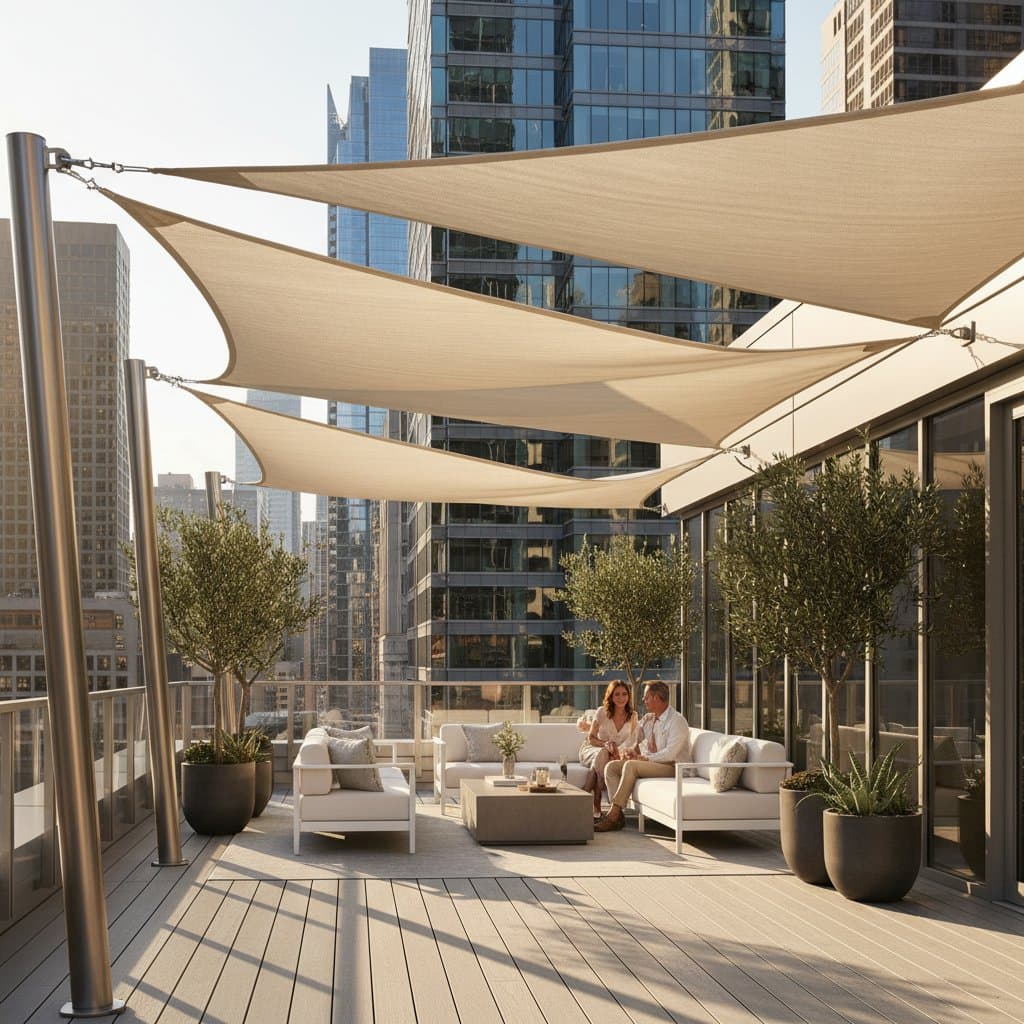
4. Attach and Tension the Sail
Secure each corner of the sail to its designated anchor using a turnbuckle and snap hook. Adjust the turnbuckle to tighten the fabric until it holds firm with no visible wrinkles. Test the tension by pressing down at the center; the material should yield only slightly under hand pressure. Excessive tightening risks fabric tears, whereas insufficient tension leads to flapping that accelerates wear.
5. Verify Shade Coverage
Position yourself beneath the sail during various times of the day to assess sunlight penetration. Modify the tension or adjust the angle if direct rays reach the seating zones. Consider adding a secondary sail with a slight overlap to eliminate any remaining gaps. Maintain a minimum separation of six inches between overlapping sails to avoid fabric abrasion.
6. Fasten All Hardware Securely
Secure turnbuckles with wire ties or compact carabiners to prevent loosening from wind forces. Cut away any surplus rope lengths. Examine every connection prior to the initial full day of exposure to ensure stability.
Safety Considerations
Always wear protective gloves when manipulating metal cables or hardware with sharp edges. Collaborate with a partner during ladder use; designate one individual to stabilize the ladder while the other handles drilling or fitting attachments. Postpone installation during periods of strong winds and select calm conditions instead. Confirm the absence of electrical lines below or adjacent to anchor locations. Maintain unobstructed pathways across the roof surface to minimize tripping hazards from scattered hardware.
Common Issues and Solutions
Issue: Sail sags following a storm.
Solution: Release the closest turnbuckle, then retighten all sides uniformly to restore balance. Remove any accumulated water from the surface. Introduce additional slope to the installation if sagging occurs repeatedly.
Issue: Corners exhibit fraying or tears.
Solution: Substitute damaged corner fittings with corrosion-resistant stainless steel components. Carefully trim frayed edges and apply a low-heat setting from a heat gun to seal the fabric.
Issue: Wind generates excessive flapping noises.
Solution: Increase overall tension or incorporate a short bungee cord segment to dampen vibrations. Verify the firmness of all anchors to rule out shifts.
Issue: Shade pattern shifts excessively throughout the day.
Solution: Reposition a single anchor point by several inches to realign the sail. Account for daily variations in sun trajectories, as minor adjustments yield significant improvements.
Cost and Timeline Estimates
A typical medium-sized rooftop configuration with two sails requires an investment of 150 to 600 dollars. Expenses vary based on fabric durability, hardware specifications, and the necessity for support poles. Two individuals can complete the installation in four to six hours. Additional costs for tool rentals, such as a hammer drill or ladder, range from 25 to 40 dollars. Utilizing existing structural walls as anchors reduces both material needs and preparation time.
Ongoing Maintenance Practices
Conduct inspections every few weeks throughout the height of summer exposure. Focus on detecting rust accumulation on bolts and any loosening in turnbuckles. Perform fabric cleaning twice per season with a solution of mild soap, a soft-bristled brush, and a garden hose rinse. Refrain from using bleach or high-pressure washers, which may damage the material. Allow the sail to air dry completely before reapplying tension. In regions prone to heavy snowfall or intense winter winds, remove the sails entirely and store them folded within a dry container or breathable storage bag.
Seasonal Maintenance Schedule
Spring Preparation: Reinstate the sails ahead of impending heat waves. Inspect and tighten all hardware components while checking for corrosion developed over winter.
Summer Upkeep: Clean away accumulated dust and bird droppings on a monthly basis. Maintain a reserve of spare snap hooks in the tool collection for prompt replacements.
Fall Procedures: Dismantle or adjust the sails prior to the onset of stormy weather. Assign labels to each sail according to its designated area to facilitate easier setup in the following season.
Consistent adherence to these practices safeguards the installation and prolongs fabric longevity well beyond five years.
Efficient Storage Strategies
When designing the rooftop layout alongside furniture, plants, or grilling equipment, prioritize spacing to prevent overcrowding. Ensure at least three feet of clearance between the sail's edge and any potential ignition sources, such as open flames or chimneys. Place cushions in sealed waterproof containers situated within the shaded zones. Install hooks beneath anchor points for suspending gardening implements or lighting fixtures. Position a wall-mounted shelf adjacent to the entry door for storing essentials like sunscreen and refillable water bottles.
For off-season storage, fold the sails methodically instead of rolling them tightly, as enclosed moisture fosters mildew growth. Include silica gel packets within storage bins to combat elevated humidity levels.
Professional Assistance Indicators
Engage a licensed contractor or structural engineer for anchor installations into load-bearing roof beams or parapet walls. Professionals verify attachment integrity and mitigate risks of water infiltration. Obtain approval from the building management or property association before any drilling activities. Certain rooftops demand wind-resistant fixtures or approved materials to comply with regulations. Seek expert help for setups exceeding one story in height or those inaccessible via standard ladders. Labor fees typically fall between 200 and 500 dollars, influenced by site accessibility and hardware intricacies.
Essential Insights
Shade sails effectively lower rooftop temperatures by up to 20 degrees Fahrenheit while providing protection against ultraviolet rays for both skin and furnishings. Secure anchoring remains paramount; rely on structural walls or poles embedded in concrete bases. Incorporate a minimum slope of one foot for every ten feet of span to facilitate water runoff. Regular maintenance proves crucial; seasonal cleaning and hardware inspections avert premature deterioration. Invest in premium materials such as stainless steel fittings and ultraviolet-resistant fabrics, which demonstrate superior endurance against environmental stresses.
These principles ensure the installation withstands diverse weather patterns while delivering reliable performance.
Implementation Steps
-
Assess the Area: Measure the rooftop dimensions and identify high-sunlight zones, marking potential coverage areas accordingly.
-
Select Materials: Opt for light-colored polyethylene fabrics paired with stainless steel hardware, as these combinations offer optimal durability and weather resistance.
-
Schedule Installation: Assemble necessary tools, validate anchor suitability, and coordinate with a partner for a secure work session.
Upon completing the initial setup, the transformation becomes evident immediately. Ambient air temperatures decrease, harsh glare diminishes, and the rooftop evolves into a practical and enjoyable extension of living space.