
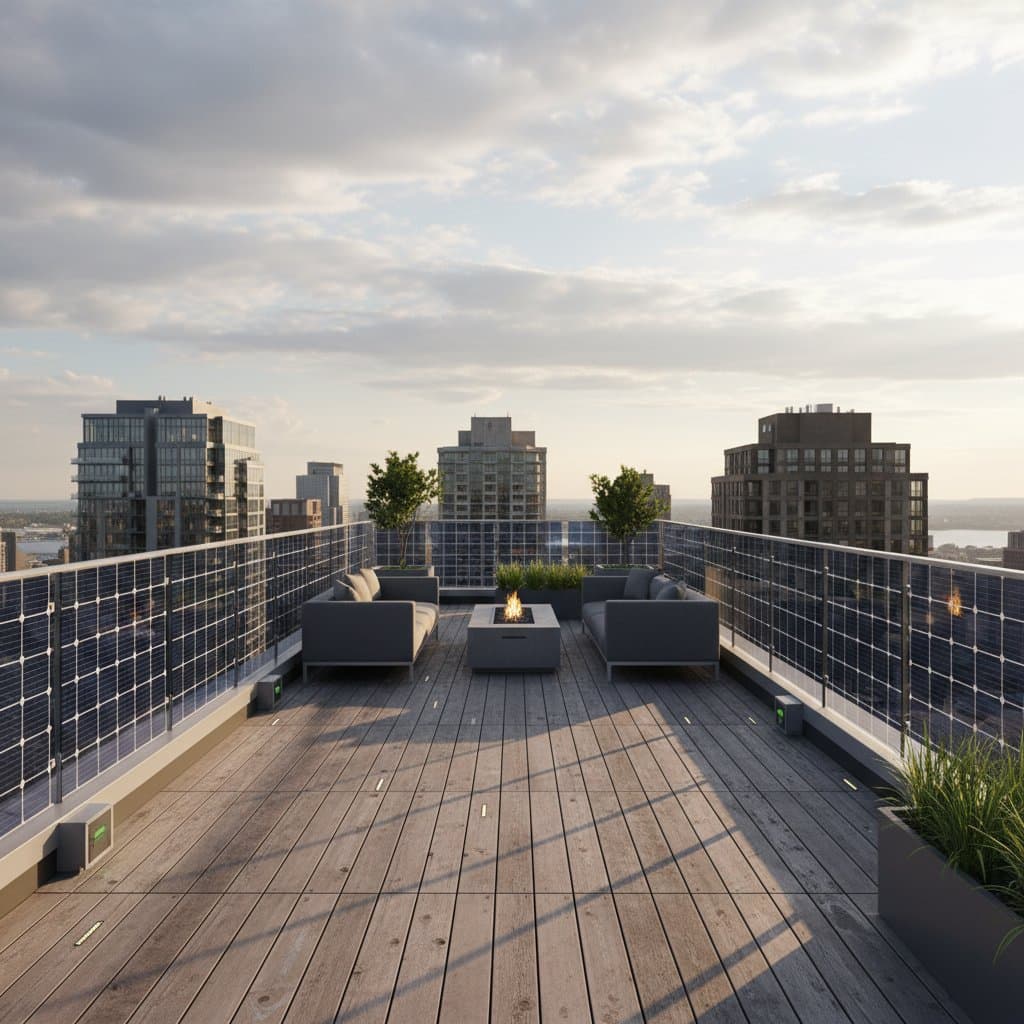
Step 5: Mount the Glass Panels
Position one individual on each side of the solar glass panel to lower it carefully into the space between the posts. Ensure precise alignment with the slot in the bottom rail. Attach the top rail and secure the clamps with even pressure. Refrain from excessive tightening, which could induce stress on the glass.
Attach the panel's electrical leads to the wiring within the posts using connectors designed for outdoor conditions. Clearly label every connection to facilitate future maintenance tasks.
Step 6: Connect to the System
Direct all wiring from the posts to a central junction box. Link this box to an inverter or individual microinverters for each row of panels. These devices convert the direct current output into alternating current suitable for home appliances. For integrations with battery storage or the electrical grid, a qualified electrician manages the connections.
Important Warning: Engage only a licensed electrician for the final electrical linkages. Faulty wiring poses risks of electrical shock or fire hazards.
Step 7: Test and Seal
Activate the system during daylight hours once all connections are complete. Measure voltage output at multiple locations using a reliable tester. Verify that the inverter's display registers active power production. Apply a transparent sealant rated for exterior use to all exposed edges and joints. Wipe the glass surfaces with a soft cloth to eliminate any accumulated dust.
Essential Safety Guidelines
Wear footwear with non-slip soles and secure a safety harness whenever operating near rooftop perimeters. Refrain from manipulating energized wires or panels exposed to direct sunlight unless they are properly covered. Exclude children and pets from the installation zone throughout the process.
Select only tempered or laminated glass varieties, since ordinary glass risks shattering under applied pressure. Confirm the roof's structural capacity to support additional loads prior to any drilling or fastening activities.
Common Troubleshooting Solutions
Reduced Power Generation
Examine the area for obstructions such as adjacent walls, ventilation units, or machinery that cast shadows. Partial shading alone can diminish output by up to 30 percent. Perform monthly cleaning to eliminate dust accumulation and avian waste.
Unstable Connections
When the inverter displays irregular data, scrutinize the connectors for signs of corrosion or moisture penetration. Secure or substitute affected parts as required. Coat the terminals with dielectric grease to shield against environmental damage.
Internal Condensation on Glass
Such moisture signals a compromised seal. Reach out to the manufacturer for a replacement unit. Avoid creating ventilation openings by drilling, as this action invalidates the warranty.
Intermittent Lighting Behavior
Should rooftop lights flicker upon activation of the solar setup, request that your electrician evaluate the inverter's frequency output and grounding integrity.
Routine Maintenance Practices
Solar glass railings demand minimal ongoing care compared to traditional systems. Wash the panels every one to two months using a solution of mild soap and water. Steer clear of abrasive tools or cleaners containing ammonia, which may scratch the surface.
Conduct annual inspections of the metal posts to detect rust formation or deterioration of protective coatings. Monitor power production via the inverter's application or interface. A consistent decline in readings often indicates soiling or degraded solar cells; timely cleaning or professional servicing typically revives efficiency.
In cases of snow accumulation or substantial debris, remove it gently with a soft-bristled broom. Metal implements must never contact the glass to prevent damage.
System Storage Procedures
Should the installation require deactivation for roof maintenance or seasonal shutdowns, follow the manufacturer's protocol to disconnect the inverter. Drape opaque tarps over the panels to halt electricity production. Organize minor elements such as connectors, junction box lids, and replacement fuses in a clearly marked, watertight container.
Investment and Timeline Overview
Estimated Costs: Residential solar glass railing systems typically range from 150 to 250 dollars per linear foot. This figure encompasses posts, mounting hardware, and basic electrical components. Commercial installations often incur higher expenses based on custom designs and regulatory compliance.
Installation Duration: A 40-foot rooftop boundary requires approximately two to three days with a team of two skilled workers. Additional time, about one full day, accounts for electrical integrations.
Potential Returns: These setups can supply sufficient energy to offset 5 to 15 percent of demands for rooftop illumination or nearby appliances. Across multiple years, such contributions recoup portions of the upfront investment and enhance overall property appeal.
Seasonal Care Protocols
Spring Preparation: After winter freezes, review all seals and connections for integrity. Adjust and tighten any loosened fixtures.
Summer Upkeep: Flush the panels monthly to clear pollen residues and airborne particles. Monitor for excessive reflections and introduce shading elements if glare becomes an issue.
Fall Maintenance: Remove fallen leaves prior to rainfall to mitigate excess water exposure.
Winter Management: Assess snow weight tolerances and clear accumulations from panels with care following precipitation events.
Regular adherence to these practices sustains reliable performance and supports system longevity exceeding 20 years in optimal conditions.
Professional Assistance Indicators
Summon a licensed electrician immediately upon encountering inverter error messages or the need for wiring corrections. Consult a structural engineer if observations include railing instability or fractures at post foundations. For substitutions of impaired glass units, source identical products from the original supplier to ensure compatible electrical specifications.
Pose these inquiries to prospective contractors:
- What power rating, measured in watts, does each panel provide?
- How does the system safeguard wiring against moisture ingress?
- Which inverter model aligns with my existing grid infrastructure?
- What duration covers the product warranty?
Obtaining precise responses prior to agreement execution minimizes unforeseen expenses and ensures component compatibility.
Advancing Your Rooftop Solar Initiative
-
Assess Your Space: Calculate the rooftop's perimeter length and estimate daily sunlight exposure. Systems perform effectively with a minimum of five hours of unobstructed sun each day.
-
Solicit Multiple Bids: Contact at least two installers experienced in photovoltaic integrations. Require detailed breakdowns of materials, labor, and total pricing.
-
Design Electrical Integration: Determine early whether generated power will support rooftop features, shared building spaces, or dedicated storage solutions.
-
Allocate for Ongoing Care: Incorporate funds and scheduling for periodic cleanings and inspections across seasons.
-
Document and Inspire: After completion, log production metrics. Share findings with community members to promote broader adoption of urban solar innovations.