
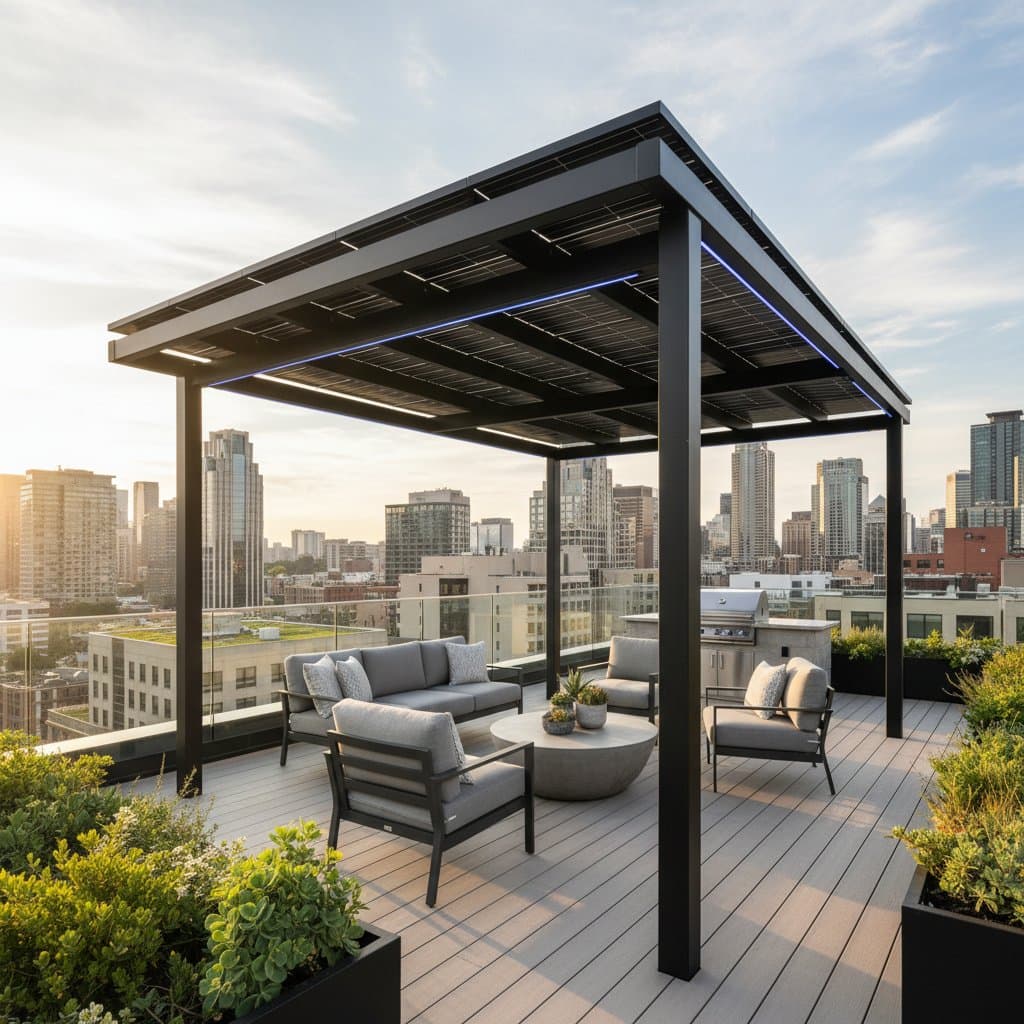
Mounting the Panels
Attach brackets to the beams and rest each panel in position. Secure panels with stainless steel bolts while maintaining a one inch gap between units for airflow. Route wiring under the roof line to shield connections from rain.
Wiring the System
Extend conduit to the inverter and link the array to an existing solar circuit or grid tied system. Label every wire for clear identification. Hire a licensed electrician when electrical tasks exceed personal expertise.
Testing and Sealing
Measure voltage output with a multimeter after connections are complete. Seal all penetrations around posts and conduit entries. Apply UV resistant finish to exposed wood surfaces. The completed structure now supplies shade while producing electricity.
Troubleshooting
Panels underperform
Inspect surroundings for new shade from buildings or trees. A single branch can reduce output by twenty percent. Clean panels every few months using mild soap and a soft brush.
Water collects on the deck
Create a one inch per foot slope beneath the structure to direct runoff. Add a gutter along the outer edge when additional control is required.
Structure moves in wind
Add diagonal braces between posts and beams. Retighten bolts on a regular schedule because wind load gradually loosens hardware.
Space becomes too warm
Install ceiling fans or a misting system. Preserve the gap between panels to maintain airflow and limit heat buildup.
These corrections safeguard the investment and increase daily comfort.
Maintenance
Solar pergolas require modest attention. Perform these tasks every few months.
- Clean panels with a soft brush or mop and mild soap. Skip abrasive pads.
- Tighten bolts on posts and beams.
- Examine sealant around anchors and conduit. Reapply at the first sign of cracks.
- Trim nearby trees that begin to cast shade.
- Review inverter readings for expected performance.
A maintained system operates for two decades or longer. Bifacial panels often sustain output longer because they collect diffuse light from both faces.
Seasonal Care
Performance shifts with the seasons. Adjust routines accordingly.
Spring
Remove winter residue from panels. Check joints for rust or decay. Reapply UV sealant to wood.
Summer
Verify fans and outlets ahead of peak use. Clear pollen and droppings from panels. Place light colored rugs to bounce additional light onto bifacial surfaces.
Fall
Clear leaves from gutters. Confirm output levels before daylight shortens. Ensure drainage routes remain open.
Winter
Sweep snow away with a soft broom. Avoid salt and metal tools on panel surfaces. Watch for ice accumulation near mounting points.
Consistent seasonal attention preserves efficiency throughout the year.
Project Planning
Begin with a compact layout of two panels to power basic fixtures. Expand later by adding modules to the same inverter. Measure deck dimensions, verify load capacity, and prepare a simple sketch. Consult local building officials about permit requirements. Order components early because solar parts often require several weeks for delivery.
Stage tools and materials in one location before starting. Check level and alignment after each step. Monitor production through the inverter display or companion application once the system operates.
Long Term Value
A solar pergola combines shade with renewable generation on limited urban roof space. Solid construction, routine inspection, and seasonal adjustments deliver reliable performance for many years.