
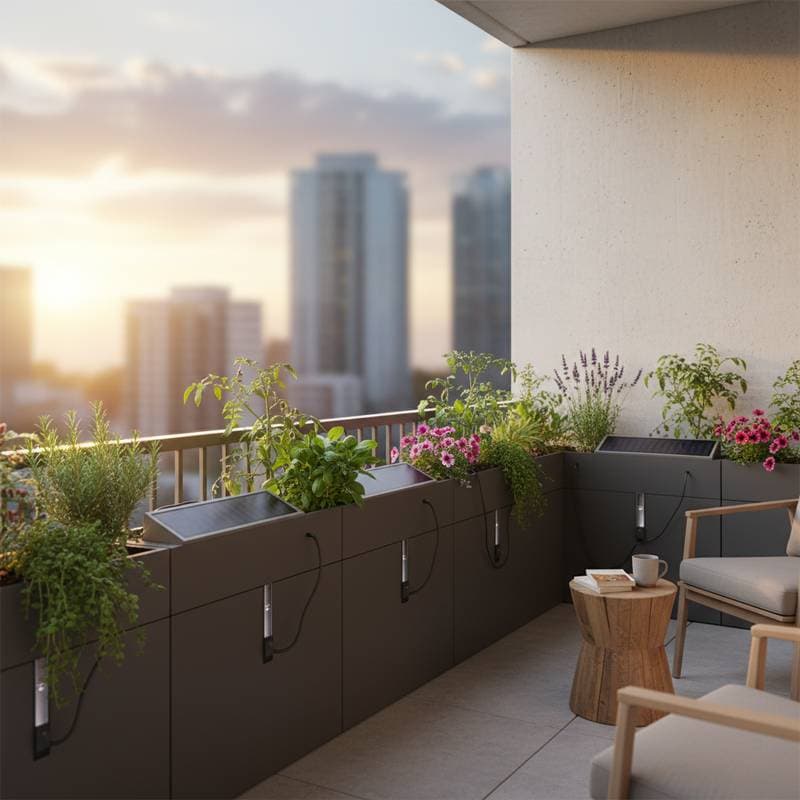
Solar Planters That Water Your Balcony Garden for You
Solar powered self watering planters combine photovoltaic panels with automated irrigation systems. These units capture sunlight to operate small pumps that deliver water from a built in reservoir to plant roots. Urban residents gain consistent moisture levels without daily intervention.
How Solar Self Watering Systems Operate
A solar panel mounted on the planter converts daylight into electricity. This power runs a timer controlled pump that moves water through tubes to the soil. Excess liquid drains back into the reservoir for reuse, which reduces overall consumption.
The reservoir typically holds enough water for several days or weeks depending on plant type and weather. Sensors in some models detect soil moisture and adjust delivery accordingly. This closed loop design supports steady growth even when residents are away.
Practical Benefits for Balcony Settings
These planters conserve water by minimizing evaporation and runoff. They also free up time that would otherwise go to manual watering schedules. Compact designs fit narrow railings or tight floor spaces common in city apartments.
Plants receive hydration at optimal intervals, which promotes healthier root development. The absence of extension cords keeps setups safe on outdoor ledges. Many models include overflow protection that prevents water from dripping onto lower balconies.
Selecting the Right Unit
Measure available sunlight hours on the balcony before purchase. Choose planters with at least five watts of solar capacity for reliable pump operation. Verify reservoir volume matches the number and size of plants intended.
Look for UV resistant materials that withstand temperature swings. Adjustable solar panels allow repositioning to capture maximum light. Check weight ratings to ensure the structure can support soil, water, and mature plants.
Installation Steps
Position the planter in a spot that receives direct sun for most of the day. Secure the unit to railings or walls with provided brackets to resist wind. Fill the reservoir with clean water and add plants suited to the local climate.
Test the pump manually during setup to confirm flow. Angle the solar panel southward in the northern hemisphere for best results. Allow a few days for the system to stabilize moisture levels before extended absences.
Ongoing Care and Seasonal Adjustments
Inspect tubing and connections monthly for clogs or wear. Clean the reservoir periodically to prevent algae buildup. In winter, drain the system and store the pump indoors if temperatures drop below freezing.
Replace solar panels every three to five years as efficiency declines. Monitor plant health and adjust reservoir fill frequency during heat waves. These routines keep the setup functional across multiple growing seasons.
Suitable Plants and Layout Ideas
Herbs such as basil, thyme, and mint thrive under automated watering. Leafy greens and compact tomatoes also perform well in self contained systems. Group plants with similar water needs in the same planter to maintain balance.
Vertical models maximize space on small balconies while providing privacy screens. Hanging versions free floor area for seating. Rotate planters occasionally to encourage even growth on all sides.
Getting Started This Season
Assess balcony conditions and select a model that matches sun exposure and space limits. Install during mild weather to allow plants to acclimate. Consistent monitoring in the first weeks ensures the system meets specific garden requirements.