
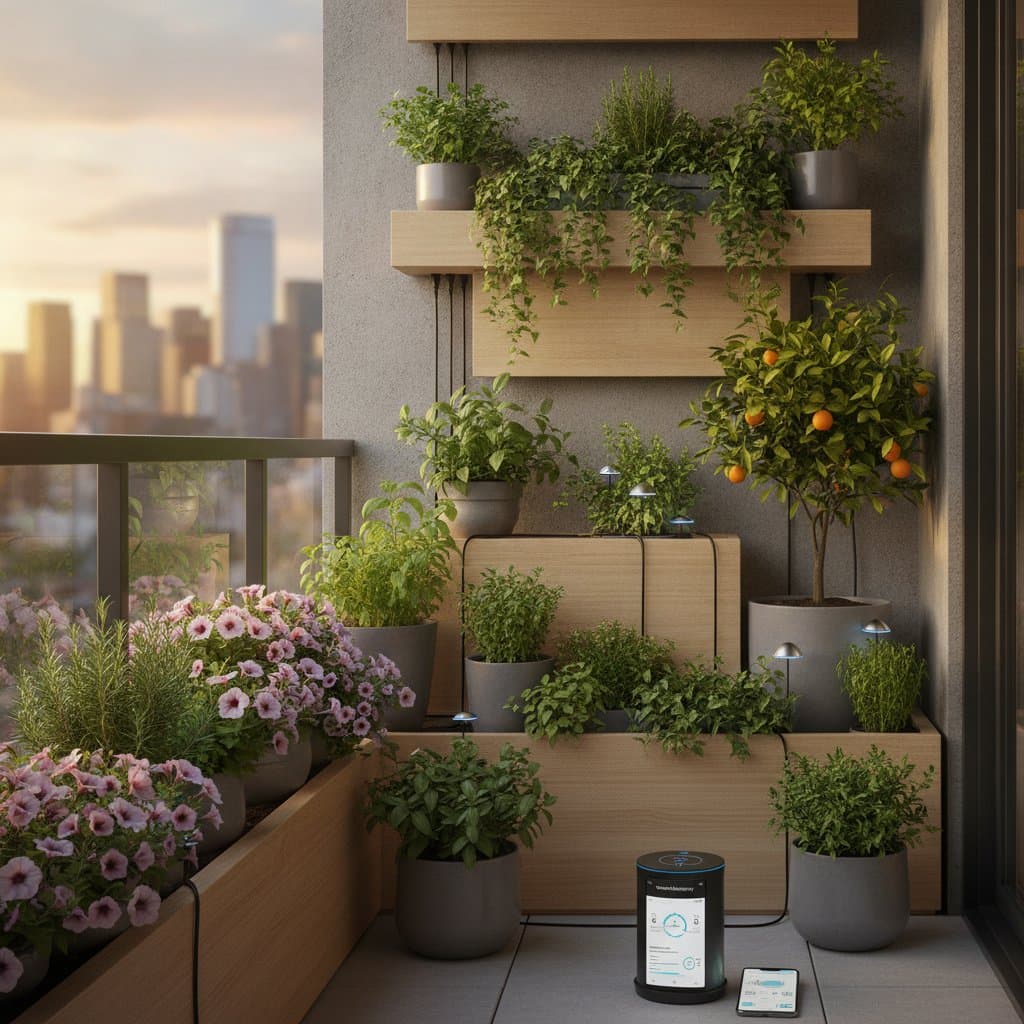
AI Micro-Drip Systems Simplify Balcony Garden Care
Your balcony garden should bring calm rather than constant worry. It remains easy to stress about watering. Missing a day causes herbs to wilt. Excess water turns soil soggy. Smart irrigation changes that pattern.
The goal centers on steady moisture with reduced guesswork so plants thrive during busy periods. This guide explains what an AI micro-drip system involves, how the components function together, the items required for setup, and the steps to maintain smooth operation.
Required Tools and Materials
An AI micro-drip system relies on several core components. Most commercial kits supply these items, yet individual assembly remains possible.
Core materials include the following:
- Main tubing in 1/4 inch flexible vinyl or polyethylene.
- Adjustable drippers rated between 0.5 and 2 gallons per hour.
- Connectors such as tees, elbows, and end plugs.
- A water supply adapter that matches the balcony faucet or indoor line.
- A filter to block debris and prevent clogs.
- An AI controller that connects sensors and manages flow.
- Two to four moisture sensors for a typical balcony.
- A power supply in battery, solar, or plug-in form.
Optional upgrades add a fertilizer injector for steady feeding, a backflow preventer for shared plumbing safety, and a Wi-Fi or Bluetooth module for app control. Measure railing-to-pot distances and add slack when selecting tubing length.
Safety Considerations
Install a backflow preventer whenever the system connects to a shared building line. This step blocks contaminated water from entering the main supply. Keep electrical cords away from wet zones by elevating and covering the controller power source. Verify balcony drainage before installation because standing water can damage floors or reach lower units. Use only a drip punch when piercing tubing to avoid leaks.
Routine Maintenance
Monthly checks keep the system efficient. Flush the line once each month to clear sediment. Clean filters with a soft brush and mild soap. Inspect sensors for corrosion or buildup. Review app data to identify trends or errors early. Tighten fittings after temperature changes. Update controller firmware every few months when available to improve accuracy and security.
Cost and Time Estimates
A small balcony setup for 8 to 12 pots costs between 80 and 180 dollars based on brand and connectivity options. Larger systems with extra sensors and hubs reach 250 dollars. First-time installation requires two to three hours. Ongoing maintenance averages 15 minutes each month.
A sample cost breakdown lists tubing and drippers at 30 to 50 dollars, the controller and sensors at 60 to 120 dollars, and optional accessories at 20 to 40 dollars. Most systems allow later expansion through added tubing and emitters.
Situations That Require Professional Help
Most balcony drip systems suit DIY installation. Contact a professional when connection to building plumbing or a new faucet line is needed. Seek help if the balcony lacks proper drainage or slope. Water damage on walls or floors also warrants expert review. Repeated controller connection or calibration failures call for technician support. A licensed plumber or irrigation specialist can confirm backflow protection and pressure ratings suitable for container gardens.
Begin Your Installation
Three focused actions prepare the garden for automated care. Measure the balcony layout and count containers to determine correct tubing length and dripper quantity. Select an AI micro-drip kit matched to the water source and phone system, ensuring adjustable drippers and at least two moisture sensors. Gather tools, install the app, and label pots by water needs on the chosen installation day. The system then maintains consistent moisture levels that support steady growth and reduce wilted foliage while conserving water and time.