
Troubleshooting Common Issues
Micro-drip fog systems generally operate reliably, yet occasional problems may arise. Addressing them promptly ensures consistent performance and extends the system's lifespan. Below are solutions to frequent challenges.
Weak Mist Output
Insufficient mist often stems from low water pressure. Verify that your setup delivers between 40 and 60 pounds per square inch, as most residential outdoor faucets meet this range. If pressure appears adequate, inspect the nozzle tips for mineral buildup from hard water; gently clean them using a soft-bristled brush and a mild vinegar solution to restore flow without damaging the components.
Dripping Nozzles After Shutdown
Post-operation drips result from lingering pressure in the lines. To resolve this, incorporate a check valve near the water source to prevent backflow, or add a drain valve at the tubing's lowest point for complete emptying. These additions, available at hardware stores, require minimal tools and installation time.
Uneven Cooling Across the Space
Inconsistent temperature reduction typically occurs due to irregular nozzle placement. Ensure nozzles are spaced every 2 to 3 feet along the tubing for uniform coverage. In areas receiving direct sunlight, such as corners or edges, position one or two additional nozzles to direct mist toward those hot spots, enhancing overall effectiveness.
White Residue on Nearby Surfaces
Hard water minerals evaporate and leave a powdery film on furniture or railings. Mitigate this by installing an inline water filter before the pump or reservoir to capture impurities. For delicate items, opt for distilled water during operation, which eliminates residue while maintaining the system's cooling benefits.
Proper Storage Practices
Seasonal storage protects your micro-drip fog system from environmental damage and simplifies reactivation. Follow these steps to prepare components safely.
Begin by disconnecting all tubing from the water source and allowing the system to drain fully. Coil the tubing into loose loops no wider than 12 inches to avoid creases that could restrict flow later. Thoroughly dry each section using a clean cloth, then store the assembly in a sealed plastic container to shield it from dust and moisture.
Label the storage bin clearly as "Balcony Fog System" for easy retrieval. Place fittings, nozzles, and any valves into individual zip-top bags to prevent tangling. Include a written record of your nozzle spacing and layout diagram inside the bin; this detail streamlines reinstallation and helps replicate optimal coverage.
Seasonal Maintenance Reminders
Integrating routine checks into your calendar maximizes the system's reliability. Proactive care prevents issues before they disrupt your outdoor enjoyment.
Initiate setup at the onset of warmer weather, ideally before peak heat arrives. Inspect the outdoor faucet for clarity, removing any accumulated winter sediment or debris that might impede water flow. Test the entire line for leaks during the first run to confirm integrity.
In periods of high humidity, operate the system in controlled intervals to balance cooling with dryness. A cycle of 10 minutes of misting followed by a 20-minute pause maintains comfortable air without excessive wetness on surfaces. Monitor weather patterns and adjust timing to optimize results.
As temperatures drop, transition to storage mode by capping the faucet securely and relocating tubing indoors. This practice blocks entry of dirt, pests, or freezing water, preserving the lines for the next season. Schedule a full system flush annually to clear any residual minerals.
Professional Assistance Scenarios
While DIY installation suits most balcony setups, certain situations demand expert intervention for safety and compliance.
Seek a licensed plumber if your building shares plumbing infrastructure or requires connection to an indoor water line. Professionals ensure proper installation of a backflow preventer to safeguard the main supply and verify that pressure levels align with system specifications.
Engage a qualified technician for integrations involving smart timers, pumps, or electrical components. Select someone experienced in low-pressure irrigation or misting technologies to handle wiring and automation securely, avoiding potential hazards like water damage or electrical faults.
Essential Insights
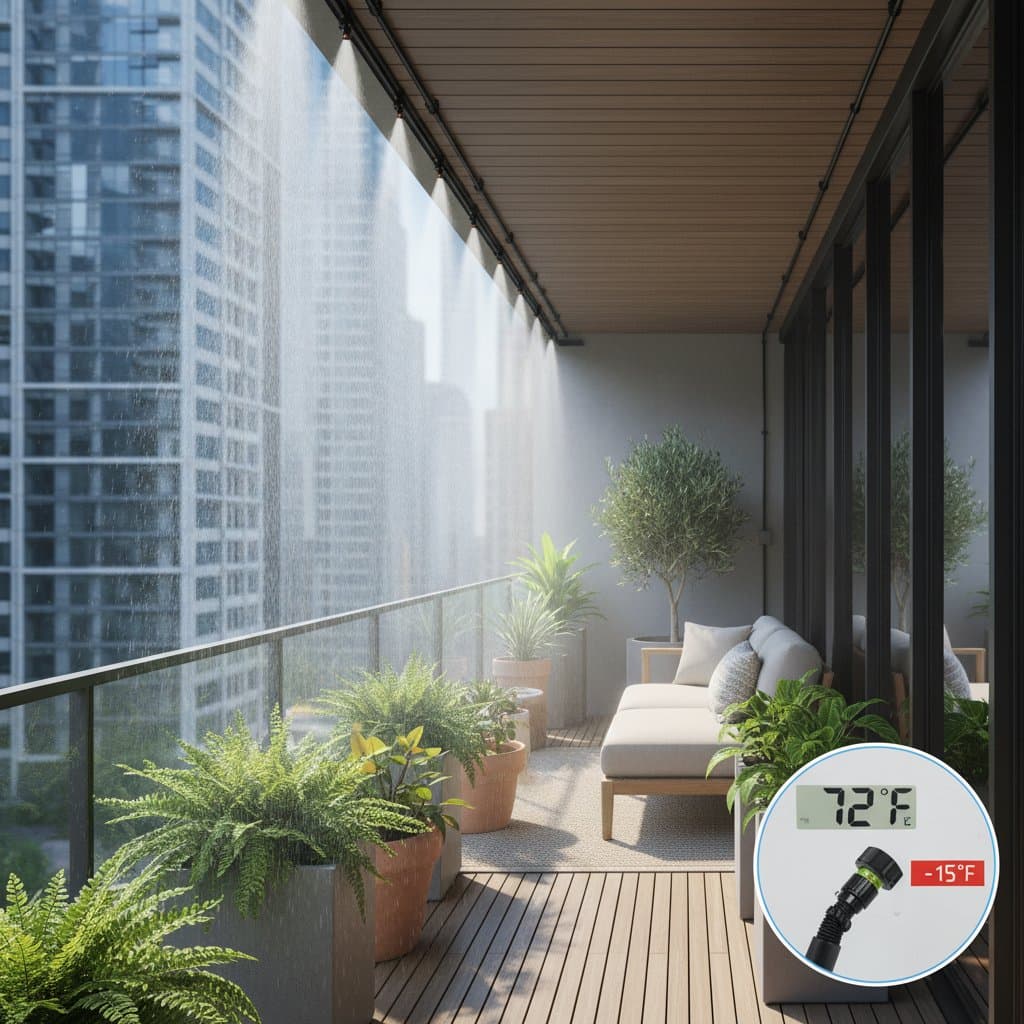
Micro-drip fog systems achieve balcony cooling of up to 15 degrees Fahrenheit through the natural process of water evaporation, creating a fine mist that absorbs heat from the air. Basic kits assemble in less than two hours with everyday tools such as pliers, a drill, and zip ties. Regular nozzle cleaning and dry storage practices significantly prolong component durability.
These systems consume minimal water, often less than a garden hose in the same timeframe, promoting efficiency and environmental responsibility. Adhering to safe installation protocols and seasonal maintenance routines safeguards your balcony furnishings and protects your investment from wear.
Implementing Your System
-
Assess Your Balcony Dimensions: Measure the perimeter accurately and select a kit scaled to your space, ensuring sufficient tubing length for full coverage.
-
Secure and Test the Tubing: Route the line along railings or overhead beams, fastening it firmly with clips. Activate the water to test mist dispersion, then fine-tune nozzle directions for even, comfortable cooling.
-
Incorporate Automation: Attach a programmable timer to activate misting during the hottest parts of the day, such as afternoons, for hands-free operation.
These actions transform your balcony into a serene haven amid urban heat. The gentle mist combines with prevailing breezes to deliver refreshing relief, fostering enjoyable outdoor moments throughout the summer.