
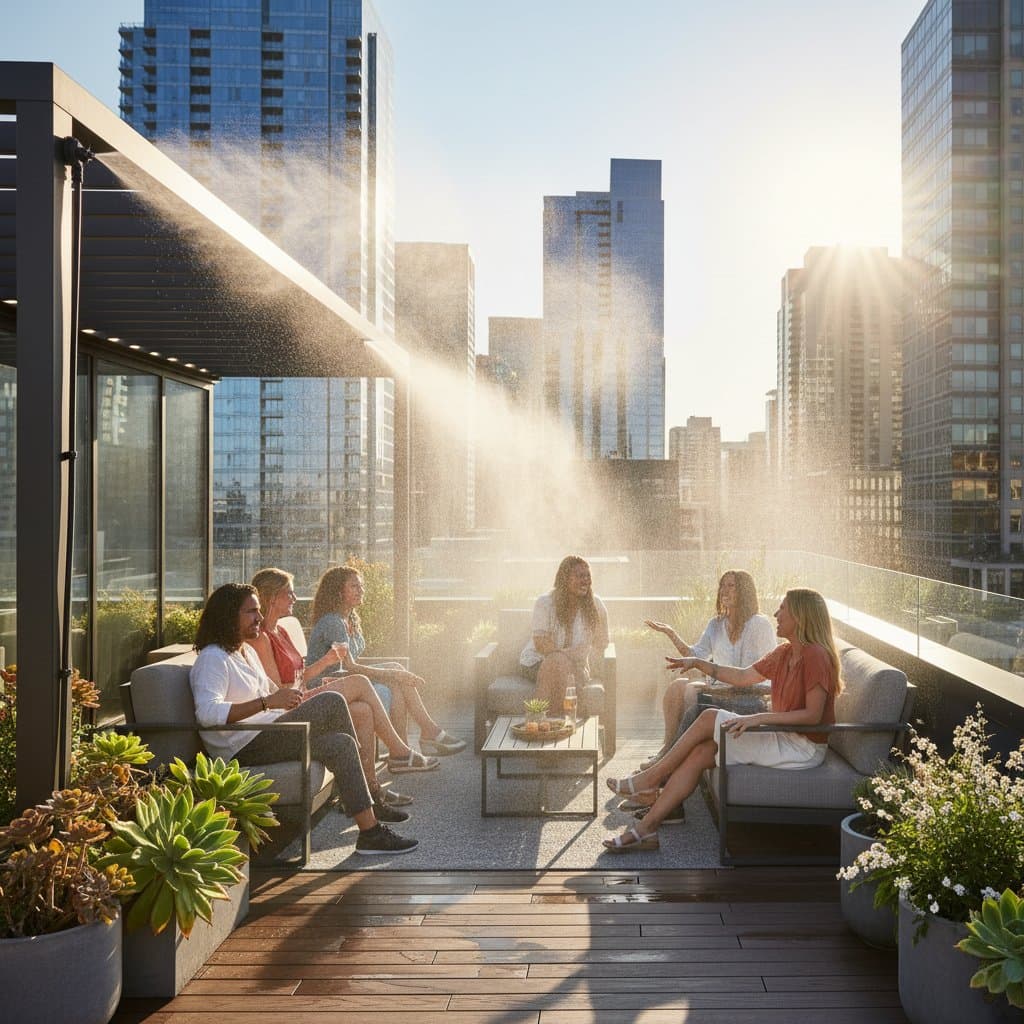
Rooftop Decks Cooled by 20°F with Micro-Drip Fog Systems
Elevated urban rooftops often become intense heat zones during summer months. Surface temperatures can exceed ambient levels by 20°F, rendering decks unpleasant for relaxation or gatherings. A micro-drip fog system provides an effective solution to mitigate this issue, restoring usability to these outdoor spaces.
The primary objective involves achieving rapid, secure, and resource-efficient cooling without excessive water or energy demands. This comprehensive guide outlines the operational principles of micro-drip fog systems, essential installation components, and strategies for ongoing performance to maintain comfort across the season.
System Overview
A micro-drip fog system employs high-pressure nozzles to disperse an exceptionally fine water mist into the surrounding air. Droplets measure less than 10 microns in size, enabling near-instantaneous evaporation upon release. This process draws heat from the air, resulting in a measurable temperature reduction near the deck surface.
Cooling effects typically achieve up to 20°F under optimal conditions, influenced by ambient humidity and ventilation. Water consumption remains minimal, frequently below 1 gallon per hour for modest deck areas. Since evaporation occurs before droplets settle, surfaces such as furniture and decking remain unaffected by moisture.
Key Advantages of Micro-Drip Cooling
- Targeted temperature reduction throughout primary seating and activity zones.
- Water efficiency surpassing traditional misting methods by up to 70 percent.
- Silent functionality suitable for multi-unit residential structures.
- Straightforward setup utilizing adaptable tubing and snap-fit connectors.
- Enhanced environmental comfort for occupants, vegetation, and animals during peak heat.
Required Tools and Materials
Assemble the necessary elements prior to commencement. For a typical 200-square-foot rooftop deck, procure these items:
- Micro-drip fog kit containing 10 to 20 specialized nozzles.
- High-pressure pump capable of delivering at least 1000 psi.
- Quarter-inch tubing crafted from UV-resistant PVC or polyethylene.
- Mounting clips or cable ties designed for secure attachment to railings and structural beams.
- Inline water filter, pressure regulator, and automated timer for operational management.
- Connection adapter compatible with a bucket or standard hose bib from a reliable water supply.
Prepare additional tools including an adjustable wrench, tubing cutter, and spirit level. Wear protective gloves and safety glasses during tasks involving tubing severance or pressure line adjustments.
Installation Steps
Step 1: Design the Layout
Create a detailed sketch of the deck configuration. Identify locations for seating arrangements, planters, and circulation paths. Position nozzles at a minimum height of 8 feet above the deck floor to ensure uniform mist distribution. Direct nozzles away from electrical installations or active grilling areas to prevent hazards.
Step 2: Secure the Tubing
Route the tubing parallel to railing edges or beneath protective awnings. Secure attachments at intervals of 2 feet to maintain alignment and stability. Incorporate extra length at bends to accommodate thermal expansion.
Step 3: Install the Nozzles
Affix fog nozzles along the tubing at 3-foot spacings for optimal coverage. Orient each nozzle downward with a gentle tilt to channel the mist into ambient air, avoiding direct contact with furnishings.
Step 4: Integrate the Pump and Filter
Link the pump to the water source via the integrated filter assembly. The filter safeguards against mineral deposits that could obstruct nozzle orifices. Secure all joints manually, followed by a thorough inspection for potential leaks.
Step 5: Conduct Initial Testing
Activate the pump for a brief interval to observe mist generation. A consistent, drip-free dispersion indicates proper pressure levels. Fine-tune nozzle angles to promote even fog dispersal over the entire deck area.
Step 6: Incorporate Timing Controls
Employ a plug-in timer to automate pump cycles, such as 1-minute activations every 10 minutes. This regimen sustains cooling benefits while conserving water and preventing system saturation.
Essential Safety Guidelines
Disconnect the pump power source prior to any tubing modifications. Position electrical cords distant from potential moisture exposure. Refrain from directing mist toward ignition sources or power receptacles. For properties with communal water systems, obtain approval from building management before accessing shared lines.
Common Issues and Resolutions
Issue: Inconsistent Cooling Distribution
Resolution: Verify nozzle intervals and cleanse obstructed tips using a soft-bristled brush.
Explanation: Uniform placement and unobstructed nozzles ensure balanced pressure throughout the system.
Follow-up Action: Substitute any persistently clogged nozzles affected by mineral accumulation.
Issue: Fluid Leaks at Connection Points
Resolution: Fully insert tubing into fittings and perform a retest under pressure.
Explanation: Inadequate seating diminishes system efficiency and promotes unnecessary water loss.
Follow-up Action: Apply thread-seal tape to threaded components if persistent seepage occurs.
Issue: Reduced Mist Output Pressure
Resolution: Inspect and clean the water filter; validate pump performance specifications.
Explanation: Obstructions in the filter restrict overall water flow to the nozzles.
Follow-up Action: Schedule filter replacements biweekly in environments with high particulate matter.
Ongoing Maintenance and Off-Season Storage
Preserve system efficacy by flushing the filter on a weekly basis and examining tubing for signs of degradation. At the conclusion of the warm season, detach components and fully drain all lines to eliminate residual moisture. Store nozzles in a sealed, arid container. Shield the pump with a protective cover or relocate it to an indoor space. Routine cleaning averts scale buildup that impairs spray precision.
Cost Estimates and Installation Timeline
An entry-level micro-drip fog configuration ranges from $250 to $600, varying with pump capacity and kit dimensions. Allocate 2 to 4 hours for assembly, assuming proximity to a water outlet. Upkeep demands remain low, confined to periodic filter servicing and nozzle inspections. Relative to alternatives like powered fans or mobile evaporative units, this setup demonstrates superior efficiency in energy and water utilization per operational hour.
Adapting to Seasonal Variations
In periods of elevated humidity, shorten mist durations to minimize surface condensation risks. Extend cycle lengths during arid conditions to maximize heat dissipation. Prior to subfreezing temperatures, evacuate all water from lines to avert structural damage. Clearly mark tubing segments during disassembly to facilitate swift reconfiguration in subsequent seasons.
Professional Assistance Indicators
Engage qualified professionals for installations requiring dedicated water conduits or electrical integrations. Licensed plumbers or electricians can incorporate backflow prevention devices and ground-fault circuit interrupter outlets for enhanced safety. Request comprehensive pressure evaluations and leak detections prior to operational commencement.
Implementing Cooling Enhancements
Initiate with a compact, portable fog unit to assess deck-specific performance. Monitor temperature variances using an inexpensive digital thermometer. Prioritize frequent filter maintenance and pressure monitoring to sustain optimal function. A micro-drip fog system represents a practical enhancement, converting overheated rooftops into serene, ventilated sanctuaries with minimal resource demands.