
Introduction
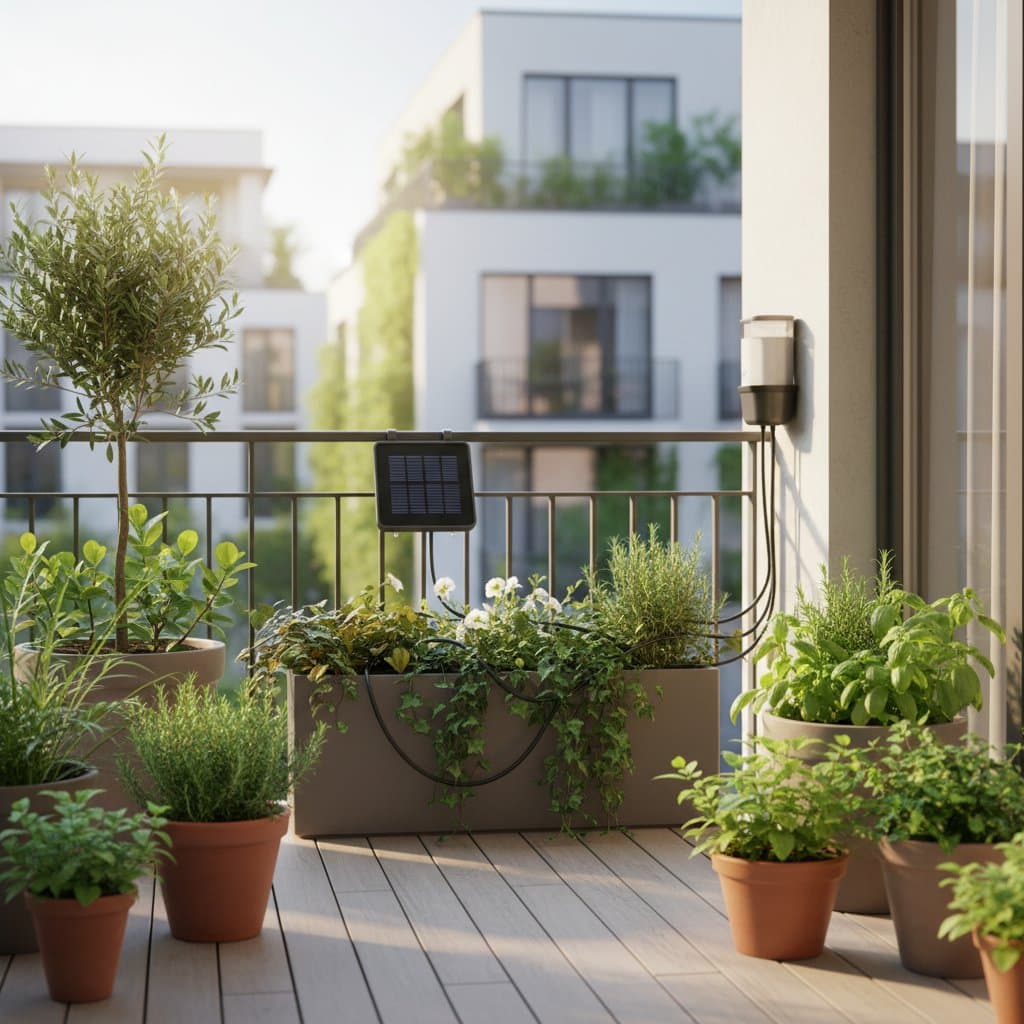
A micro drip solar kit turns any balcony into a self sufficient garden. The system draws power from a small panel and moves water from a reservoir to individual pots through narrow tubing. Plants receive consistent moisture while you conserve resources and avoid daily chores.
Selecting Equipment and Location
Choose a kit sized for the number of containers on your balcony. Confirm the pump can lift water the required vertical distance and that the solar panel receives at least four hours of direct sun. Place the reservoir on a level surface near a railing or wall where tubing can run without crossing walkways.
Preparing the Reservoir and Pump
Fill a clean five gallon bucket or decorative container with water. Submerge the pump completely and route its outlet tube upward to the highest point on the balcony. Secure the solar panel to face south or southwest and keep its cable clear of foot traffic.
Connecting Tubing and Drippers
Measure tubing runs to each pot. Cut sections with scissors and attach them to the main line using T connectors. Push drippers into the ends and anchor them with stakes near plant bases. For even watering, space drippers about 6 to 8 inches from the stems.
If your kit allows, adjust each dripper flow. Start with a slow drip of one drop per second and check moisture after two days.
Powering and Testing the System
Connect the pump cable to the solar panel output. When sunlight reaches the panel the pump starts automatically. Watch water move through the tubing and adjust drippers until flow is steady without splashing. Shut the pump off immediately if the reservoir runs dry and refill it to protect the motor.
Securing Lines and Labeling
Fasten tubing along railings or behind pots with clips or ties. Keep lines away from sharp edges and walking paths. Coil extra length neatly and label the reservoir so no one adds soap or chemicals by mistake.
Safety Considerations
Keep all electrical connections dry. Disconnect the solar panel before handling the pump. Avoid chlorinated pool water because it damages roots. Cover the reservoir with mesh if children or pets are present. Drain the pump and store it indoors before freezing temperatures arrive.
Common Issues and Fixes
No flow usually means the panel is shaded or dirty. Wipe the surface with a soft cloth and verify that connections are tight. Uneven watering often results from clogged drippers. Remove and rinse them or soak them in vinegar for ten minutes before reinstalling.
A reservoir that empties too fast indicates excessive flow. Reduce the drip rate or use fewer emitters. A five gallon bucket typically supplies eight small pots for several days. Air trapped in the pump causes noise. Tilt the unit slightly underwater to release bubbles.
Ongoing Care and Winter Storage
Clean the solar panel monthly with a damp cloth to maintain output. Inspect tubing every few weeks for cracks or algae and replace brittle sections promptly. At the end of the season disconnect the pump, allow it to dry, and coil the tubing loosely. Store drippers in a labeled bag for easy retrieval next year. Flush a rainwater system monthly with tap water to prevent mineral buildup.
Cost and Installation Time
A basic kit ranges from 40 to 80 dollars. Add 10 to 20 dollars for a simple bucket or decorative reservoir. Most users complete installation in one to two hours. The solar design eliminates ongoing electricity costs and reduces water waste compared with timer based systems.
Situations Requiring Professional Help
Small balcony setups under 10 watts remain straightforward DIY projects. Larger rainwater tanks or rooftop arrays call for an installer who understands voltage requirements, waterproof connectors, and local codes.
Preparing for Each Season
Measure pot locations and count emitters before ordering a kit. Test the full system on a sunny weekend and fine tune flow rates until every plant receives adequate moisture. Regular refills and occasional cleaning keep the garden thriving with minimal effort throughout the year.