
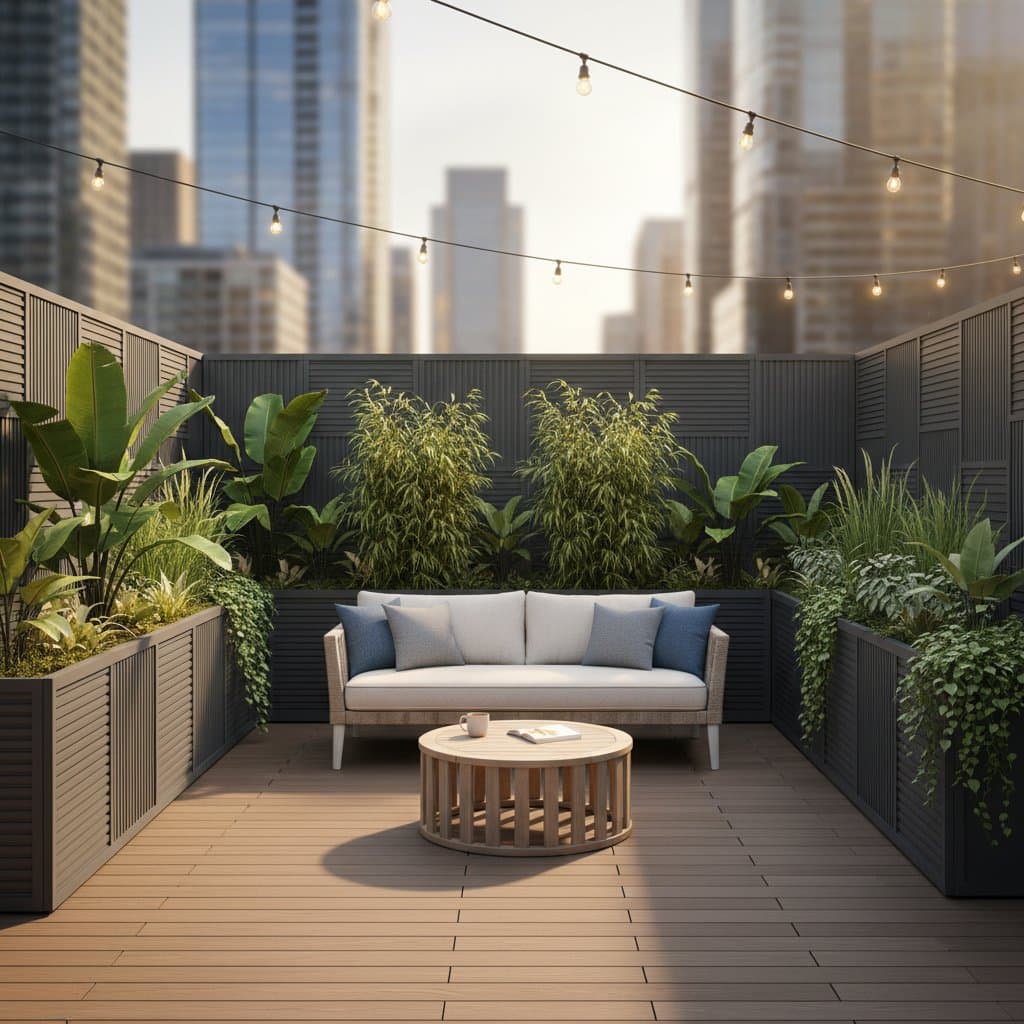
Introduction to Quieting Urban Decks
City living offers excitement, but the constant hum of traffic, horns, and neighbors can overwhelm outdoor spaces like decks. Acoustic panels provide an effective solution to dampen this noise without constructing full walls, which often face restrictions in urban settings. These panels absorb sound waves, creating a more peaceful environment for relaxation or entertaining.
Outdoor acoustic panels differ from indoor versions through their weather-resistant materials, such as treated fiberglass or foam encased in durable fabrics. They measure noise reduction using the Noise Reduction Coefficient (NRC), with ratings from 0.0 (no absorption) to 1.0 (full absorption). For urban decks, aim for panels with an NRC of at least 0.7 to noticeably lower ambient sound levels.
This guide outlines a step-by-step approach to installing and optimizing acoustic panels, integrated with natural elements like plants. By following these strategies, you can reduce perceived noise by up to 30 percent, transforming your deck into a serene retreat.
Step 1: Assess Your Deck's Noise Sources
Begin by identifying the primary noise directions during peak hours. Stand on your deck and note where sounds originate, such as nearby streets, elevated highways, or adjacent buildings. Use a free smartphone app to measure decibel levels, targeting reductions from 70-80 dB (loud urban noise) to below 60 dB (conversational levels).
Sketch a simple diagram of your deck, marking walls, railings, and open areas. Consider the deck's size and layout; smaller spaces under 200 square feet benefit from targeted panel placement, while larger ones may require broader coverage. Factor in wind patterns, as they carry sound, and prioritize barriers on the noisiest sides.
Step 2: Select the Right Acoustic Panels
Choose panels designed for exterior use, featuring UV-resistant coverings and water-repellent cores. Popular options include mineral wool panels wrapped in mesh fabric or rigid foam boards with perforated metal faces. Sizes typically range from 2x2 feet to 4x8 feet, allowing customization to your deck's dimensions.
Prioritize panels with high-density cores for better low-frequency absorption, essential for traffic rumble. Look for modular designs that connect seamlessly, reducing gaps where sound leaks through. Test samples by tapping them; effective panels produce a dull thud rather than a sharp echo.
Step 3: Plan Panel Placement and Installation
Position panels along perimeter walls or railings facing the noise source, covering at least 30 percent of the surface area initially. Mount them vertically or at slight angles to deflect sound away from seating areas. For balconies, attach to railings using adjustable brackets to avoid drilling into structures.
Secure panels with corrosion-resistant screws or clips, ensuring stability against wind. Keep panels about 1 inch from the wall surface to create a small air gap. This improves absorption by about 10 percent by allowing sound waves to dissipate more effectively.
Use lightweight aluminum frames for easy handling, and apply weatherproof sealant around edges to prevent moisture ingress. Space panels 6 to 12 inches apart to balance absorption with airflow.
4. Integrate Sound-Absorbing Plants
Plants enhance panel performance by filling visual and acoustic gaps while adding aesthetic appeal. Select tall, dense species like bamboo, juniper, or boxwood, which feature thick foliage that scatters sound waves. A row of shrubs in 18-inch-wide planters can reduce noise by 3 to 5 decibels.
Incorporate hanging plants, such as ivy or ferns, to interrupt vertical sound paths from upper levels. Position them strategically between panels to create layered barriers. The objective is to scatter and absorb sound through natural diffusion, not merely block it with solid masses.
Choose native or low-maintenance varieties suited to urban conditions, ensuring they thrive in partial shade or full sun depending on your deck's exposure.
5. Test and Refine the Setup
After installation, sit in your primary seating area and evaluate the soundscape. Play ambient city noises via a speaker if needed to simulate conditions. If traffic persists, add a second row of panels or incorporate a solid privacy screen behind the initial layer.
Adjust individual panel angles to redirect sound; even a 15-degree shift can significantly alter reflections. Sound often penetrates small openings, so align edges precisely and seal joints with acoustic caulk. Supplement with outdoor rugs or fabric shades to target midrange frequencies, such as voices or music from nearby units.
Re-measure decibel levels to quantify improvements, aiming for iterative tweaks until satisfaction.
Essential Safety Considerations
Before proceeding, review local building codes, especially for installations on shared walls or balconies, to ensure compliance. Position electrical cords and lighting away from mounting points to prevent hazards. Wear protective gloves when working with mineral wool or fiberglass to avoid skin irritation.
Never cover ventilation openings or obstruct emergency exits with panels or planters. Secure all elements to withstand gusts up to 50 mph, using guy wires for taller plantings if necessary.
Common Issues and Solutions
Problem: Panels sag or accumulate water.
**Solution: Drill drainage holes in frames and secure mounts firmly. Apply outdoor-grade caulk to reseal edges annually.
Problem: Noise reduction appears insufficient.
**Solution: Expand coverage to 40 percent of exposed surfaces. Greater area directly correlates with enhanced absorption; consider stacking panels in high-impact zones.
Problem: Plants wilt or drop leaves excessively.
**Solution: Opt for self-watering planters and perform regular trims. Vigorous, healthy growth maximizes acoustic benefits through denser leaf coverage.
Ongoing Maintenance Practices
Examine panels every few months for mold, cracks, or color fading. Clean surfaces with mild soap and water using a soft brush; avoid pressure washing to preserve integrity. Replace any compromised sections immediately to sustain overall effectiveness.
For plants, remove dead foliage promptly and rotate containers for uniform development. Apply fertilizer in the growing season to promote thick, sound-diffusing canopies.
If panels feature detachable fabric covers, store them indoors during extreme weather to prolong durability. Annually inspect hardware for rust and lubricate as needed.
Storage Guidelines for Off-Season
Store unused panels flat in a dry shed or garage, elevated at least 4 inches from the floor to avert moisture damage. Label each by dimensions or intended position for straightforward retrieval and reinstallation.
For seasonal plant removal, partially empty soil to lighten loads before transport. Clean pots thoroughly to eliminate salt residues from winter de-icing.
Cost Estimates and Timeline
For a compact deck, budget as follows:
- $250 to $500 for six weatherproof acoustic panels
- $100 to $200 for planters, soil, and plants
- $50 to $100 for hardware and sealants
Complete a DIY setup in half a day using standard tools like a drill and level. Professional assistance for raised decks or intricate supports adds $200 to $400.
Such investments yield substantial returns in daily comfort, with even basic configurations slashing noise perception by 30 percent.
Seasonal Care Schedule
Install or update panels in spring, verifying mounts post-storm. In summer, rinse to clear dust and pollen from porous areas.
Fall suits edge sealing and indoor relocation of delicate plants. Winter requires checks for ice accumulation and open drainage paths.
Professional Assistance Options
Engage a licensed contractor for structural reinforcements or attachments to communal walls. An acoustics specialist can assess your site, suggesting precise NRC values and configurations for optimal results.
Request from professionals:
- Detailed diagrams of panel positions and elevations
- Specifications verifying material resilience outdoors
- Projections of decibel drops post-implementation
Expert installations ensure reliable outcomes, backed by warranties on products and workmanship.
Implementing Your Plan
Soundproofing the whole building proves unnecessary; focus efforts on your deck's most intrusive noise entry points with initial panels and plants.
Quick starting actions:
- Measure the deck and map dominant sound trajectories.
- Acquire one or two outdoor-rated panels boasting at least 0.7 NRC for trial positioning.
- Select a few dense plants and place them experimentally to gauge combined effects.
Progressive adjustments foster a tranquil, functional outdoor area. Blending acoustic panels with lush greenery allows your urban deck to deliver the relaxation it visually promises.