
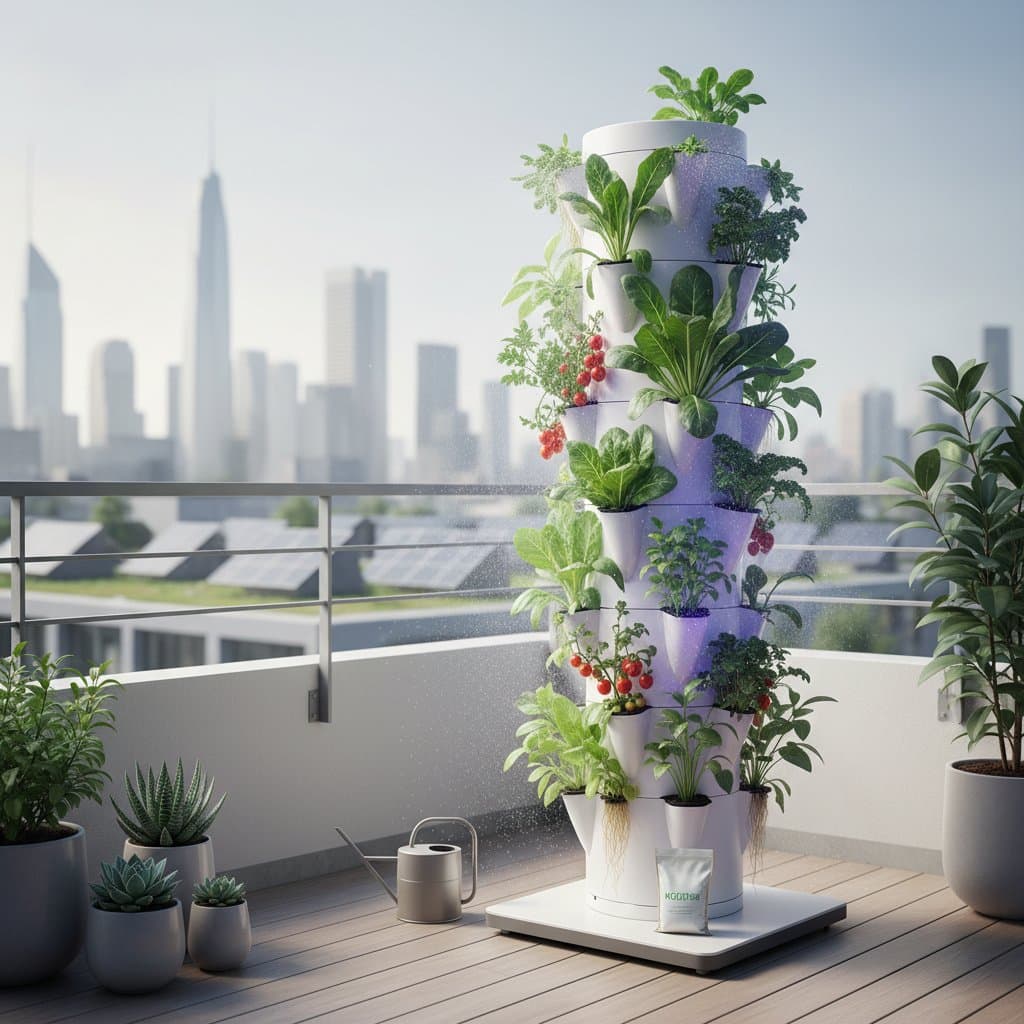
Grow Abundant Crops on Soil-Free Balcony Towers by 2026
Your balcony might measure only two feet wide, yet it holds the potential to yield a full season of greens, herbs, and vegetables without any soil. Aeroponic towers deliver nutrients through a fine mist, allowing plants to thrive in vertical layers within compact spaces. This approach enables you to grow food directly where you live, conserve water, and eliminate the mess of dirt. Begin with a modest setup today, and expand your system progressively to achieve reliable harvests by 2026.
This guide outlines the process for selecting, constructing, and maintaining a soil-free balcony tower. You will discover essential tools to gather, strategies for ensuring safety, and techniques for achieving consistent yields throughout the year.
Tools and Materials
Assemble a basic aeroponic tower using everyday supplies combined with a few key components. Gather the following items prior to construction:
Core materials
- A pre-made vertical tower kit or a 4-inch (10 cm) diameter PVC pipe section, approximately 5 feet (1.5 m) in height.
- Twenty to thirty 2-inch (5 cm) net pots, sized to fit your tower's capacity.
- A submersible water pump capable of circulating 250 gallons per hour to ensure adequate mist distribution.
- A 10-gallon (38-liter) reservoir bucket to hold the nutrient solution.
- At least six fine mist nozzles positioned for uniform coverage across all plant sites.
- A nutrient solution formulated specifically for leafy greens or herbs, with balanced NPK ratios.
- Flexible tubing to connect water lines and, if needed, air lines for enhanced oxygenation.
Tools
- A drill equipped with a 2-inch hole saw attachment for creating net pot openings.
- A measuring tape to verify precise spacing and alignment.
- Waterproof sealant to secure joints and prevent leaks.
- A small screwdriver set for assembling fittings and timers.
- An electronic timer to automate misting cycles, typically set for short bursts.
Safety gear
- Gloves to protect hands during drilling and sealing tasks.
- Safety goggles to shield eyes from debris.
- A mask for use when preparing nutrient mixtures to avoid inhalation of particles.
Plan for a budget of $100 to $250, influenced by the quality of components and overall tower scale. The water pump and timer represent the primary expenses, as they drive the system's automation.
Safety Tips
Electricity and water require careful separation to prevent hazards. Position power cords elevated from the floor and connect to weatherproof outlets equipped with ground fault circuit interrupters.
Prevent accidents by addressing spills immediately in the reservoir vicinity. Secure the tower structure to a railing or wall bracket, particularly in areas prone to wind gusts.
Wear gloves whenever handling nutrient solutions to minimize skin contact and potential irritation. Always unplug the pump before performing maintenance or adjustments to avoid electrical risks.
Budget and Time
Constructing a single-tower system demands approximately four hours once materials are assembled. The initial crop cycle spans four to six weeks, varying by plant type; leafy greens such as lettuce and kale mature more rapidly than vining varieties.
Cost breakdown
- Tower materials: $40 to $80.
- Pump and timer: $50 to $70.
- Nutrients and pH testing kit: $20 to $30.
- Seedlings or plugs: $10 to $20.
A complete setup typically costs around $150. Expect monthly expenses for nutrient replenishment at about $15, with electricity consumption remaining low, often below $2 per month.
Seasonal Reminders
Warm Seasons
Increase misting frequency to every 10 minutes to support higher evaporation rates. Apply a shade cloth over the tower if leaf tips exhibit scorching. Harvest outer leaves every three to four weeks to promote continuous regrowth and bushier plants.
Cool Seasons
Adjust mist cycles to shorter intervals to avoid excess moisture buildup. Relocate the reservoir to a protected area to prevent freezing temperatures. Install a small aquarium heater if solution temperatures fall below 60°F (16°C), maintaining optimal root health.
Rainy Conditions
Decrease misting intervals to counteract external humidity and reduce root rot risks. Encase electrical elements in waterproof covers for added protection. Drain any accumulated water from the base tray promptly to maintain a dry foundation.
When to Call a Professional
Seek expert assistance if your electrical outlet requires waterproofing or rewiring to meet safety codes. Consult a technician for persistent pump failures despite thorough cleaning.
Address any signs of mold growth or structural weaknesses at the balcony's base immediately. Request verification that the outlet includes a ground fault circuit interrupter, which interrupts power flow to prevent shocks in wet environments.
Key Takeaways
Aeroponic towers support up to 30 plants within less than four square feet of space. Routine cleaning and pH monitoring resolve the majority of operational challenges.
A reliable timer and pump render the system largely automated, requiring minimal daily intervention. Begin with one tower and incorporate additional units as your confidence and space allow.
Urban gardeners frequently note the rapid recovery of plants from environmental stress once misting parameters are optimized. Roots respond to steady air and moisture exposure, resuming vigorous growth within a single day. This resilience simplifies balcony cultivation amid variable weather patterns.
Pro Tips for Success
Begin with forgiving crops like lettuce, basil, and mint, which establish quickly in aeroponic environments. Reserve more demanding fruiting plants for subsequent cycles after gaining experience.
Maintain a log of nutrient concentrations, mist durations, and plant performance to identify effective patterns across multiple harvests.
Examine all connections monthly; minor leaks can deplete resources and damage surfaces. Tighten fittings as needed to ensure efficiency.
Opt for filtered water to prevent mineral buildup that clogs nozzles; an inexpensive carbon filter, costing around $20, addresses common tap water issues.
Periodically rotate plant positions, elevating taller specimens to optimize light access for lower-level foliage.
Achieving Year-Round Yields
As your initial harvest approaches, you will master the interplay of light exposure, mist delivery, and nutrient balance for robust production. Over successive seasons, your balcony transforms into a dependable source of fresh greens, sufficient for regular meals, all without soil management or strenuous labor.